-
Glass Fused To Steel Tanks (596)
-
Stainless Steel Tanks (434)
-
Fusion Bonded Epoxy Tanks (592)
-
Galvanized Steel Tanks (321)
-
Aluminum Dome Roofs (1336)
-
Wastewater Storage Tanks (232)
-
Welded Steel Tanks (457)
-
Pressure Vessels (295)
-
Anaerobic Digester (202)
-
Industrial Water Tanks (349)
-
Glass Lined Steel Tanks (180)
-
Bolted Steel Tanks (389)
-
Sludge Storage Tank (115)
-
Biogas Storage Tank (173)
-
Leachate Storage Tanks (133)
-
Agricultural Water Storage Tanks (179)
-
Fire Water Tank (166)
-
Grain Storage Silos (146)
-
Biogas Projects (424)
-
Wastewater Treatment Projects (1268)
-
Double Membrane Roof (223)


|
Biogas Project Contractor Turns Pakistan’s Pennisetum Purpureum into Energy with GFS Tanks
| Place of Origin: | China |
| Brand Name: | CEC TANKS |
| Certification: | ISO 9001:2008, AWWA D103 , OSHA , BSCI |
| Model Number: | W |
| Minimum Order Quantity: | 1set |
| Price: | $5000~$20000 one set |
| Packaging Details: | PE poly-foam between each two steel plates ; wooden pallet and wooden |
| Delivery Time: | 10-30 days after deposit received |
| Payment Terms: | L/C,T/T |
| Supply Ability: | 60 sets per month |
|
Detail Information |
|||
| Place of Origin | China | Brand Name | CEC TANKS |
|---|---|---|---|
| Certification | ISO 9001:2008, AWWA D103 , OSHA , BSCI | Model Number | W |
| Tank Body Color: | Dark Green / Can Be Customized | Corrosion Integrity: | Excellent |
| Steel Plates Thickness: | 3mm To 12mm , Depends On The Tank Structure | Chemical Resistance: | Excellent |
| Size Of Panel: | 2.4M * 1.2M | Easy To Clean: | Smooth, Glossy, Inert, Anti-adhesion |
| Highlight: | Biogas project contractor Pakistan,Pennisetum Purpureum energy conversion,GFS tanks wastewater treatment |
||
Product Description
Pennisetum Purpureum, commonly known as Napier grass, is a fast-growing perennial grass that holds immense potential as a renewable energy source for Pakistan. As the country seeks sustainable solutions to manage agricultural waste and meet its growing energy demands, converting this high-yield biomass into biogas presents a viable and eco-friendly pathway. This article provides a comprehensive guide to the process, from feedstock handling to the technology that makes it all work, emphasizing the role of a reliable Biogas Project Contractor.
In Pakistan, Pennisetum Purpureum is increasingly recognized not just as animal fodder but as a powerful feedstock for biogas production. Its rapid growth cycle and exceptional biomass yield per hectare make it an ideal choice for farmers and energy developers alike. When processed through anaerobic digestion, this grass offers a favorable carbon-to-nitrogen ratio, which promotes stable and productive microbial activity. By utilizing this crop, Pakistan can significantly reduce agricultural waste, produce clean energy, and generate nutrient-rich digestate that serves as a high-quality organic fertilizer, thus strengthening the country's agricultural circular economy.
The journey of turning Pennisetum Purpureum into biogas is a biological sequence that operates in an oxygen-free environment. This process, known as anaerobic digestion, occurs through four key stages: hydrolysis (breaking down complex fibers into simple sugars), acidogenesis (fermenting these sugars into volatile fatty acids), acetogenesis (converting these acids into acetic acid, hydrogen, and carbon dioxide), and finally, methanogenesis, where methanogenic archaea produce the methane-rich biogas. For Pakistan's biogas projects, maintaining optimal conditions throughout this sequence is vital for maximizing methane yield. The process not only generates renewable energy but also mitigates the environmental pollution caused by the open burning of agricultural residues.
The Continuous Stirred-Tank Reactor (CSTR) process is the preferred technology for converting high-solid feedstocks like Pennisetum Purpureum into biogas. A CSTR is a closed, sealed tank equipped with a mechanical stirring device that ensures the fermentation materials and microorganisms are in a constant state of thorough mixing. This continuous agitation is crucial for maintaining a uniform temperature, preventing the formation of scum or sediment, and ensuring the efficient degradation of organic matter. Research has shown that this technology is successful in converting Napier grass into biogas, with studies achieving significant methane production under controlled conditions. For Pakistan's biogas projects, the CSTR process ensures stable and reliable gas production, even when dealing with challenging, high-solids feedstocks.
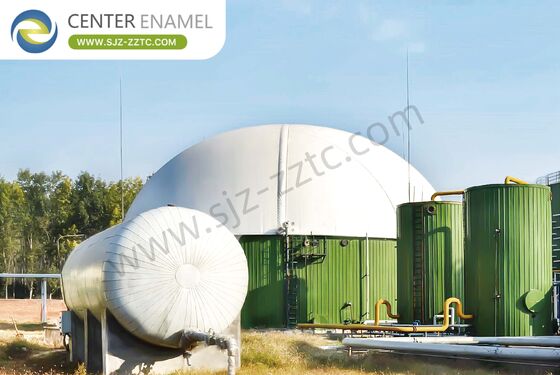
For the demanding environment of anaerobic digestion, storage infrastructure must offer exceptional durability and corrosion resistance. Glass-Fused-to-Steel (GFS) tanks are the premium choice, created by firing glass onto steel at over 820°C to form an inert, durable bond. This technology provides the strength and flexibility of steel combined with the outstanding corrosion resistance of glass, making GFS tanks ideal for withstanding the corrosive organic acids and hydrogen sulfide produced during digestion. When paired with a Double Membrane Roof, these systems create an airtight, cost-effective, and space-efficient solution for biogas collection and storage. This combination is the preferred solution for many anaerobic digestion processes.
Center Enamel provides a diverse range of storage tank cover solutions to meet various project requirements and environmental conditions:
- Aluminum Geodesic Dome Roof: Offers a durable option with expansive clear-span capability, ideal for large infrastructure projects.
- Glass-Fused-to-Steel Roof: Provides maximum airtightness for pressurized structures and effective odor control.
- Aluminum Alloy Trough Deck Roof: A cost-effective solution for general storage that shields contents from wind and rain.
- Stainless Steel Roof: Designed for aggressive environments, offering superior anti-corrosion performance and long service life.
- FRP Roof: A versatile, lightweight choice for applications where extreme airtightness is not required.
A fully functional biogas plant requires more than just a digester and storage tank. Center Enamel supplies a complete suite of auxiliary equipment, including:
- Gas Holder: Provides safe, flexible storage for the produced biogas.
- Solid-Liquid Separator: Divides digestate into solid waste and liquid fertilizer, creating valuable agricultural by-products.
- Dehydration and Desulfurization Tank: Purifies raw biogas by removing moisture and corrosive hydrogen sulfide to protect downstream equipment.
- Lifting Pump: Ensures reliable transfer of slurry between different processing units.
- Screw Sludge Dewatering Machine: Reduces the volume of final sludge, lowering disposal costs.
As a leading EPC (Engineering, Procurement, and Construction) contractor for biogas projects, Center Enamel offers a one-stop solution that simplifies the entire development process. The key advantages of this approach include:
- Comprehensive Expertise: Professional anaerobic solutions, from CSTR to UASB processes, tailored to the project's needs.
- Strong Manufacturing Strength: Asia's largest GFS tank production base with over 200 patented enamel formulas.
- International Quality Standards: Compliance with ISO 28765, AWWA D103, NSF/ANSI 61, CE, and OSHA standards.
- Rich Local Experience: Familiarity with regional regulations, construction norms, and site conditions, ensuring smooth project execution.
- Full Turnkey Service: Covers project design, manufacturing, on-site installation, commissioning, and after-sales support, reducing coordination difficulty and investment risk.
The conversion of Pennisetum Purpureum into biogas presents a significant opportunity for Pakistan to enhance its renewable energy capacity, manage agricultural waste, and support sustainable farming. By leveraging advanced technologies like the CSTR process and high-quality GFS tanks, and by partnering with an experienced Biogas Project Contractor, Pakistan can establish large-scale, efficient biogas plants. These projects not only contribute to the nation's energy independence but also foster a circular economy, creating value from agricultural by-products and supporting the country's green energy goals.