-
Glass Fused To Steel Tanks (596)
-
Stainless Steel Tanks (434)
-
Fusion Bonded Epoxy Tanks (592)
-
Galvanized Steel Tanks (321)
-
Aluminum Dome Roofs (1316)
-
Wastewater Storage Tanks (231)
-
Welded Steel Tanks (457)
-
Pressure Vessels (295)
-
Anaerobic Digester (201)
-
Industrial Water Tanks (349)
-
Glass Lined Steel Tanks (180)
-
Bolted Steel Tanks (390)
-
Sludge Storage Tank (115)
-
Biogas Storage Tank (173)
-
Leachate Storage Tanks (133)
-
Agricultural Water Storage Tanks (179)
-
Fire Water Tank (166)
-
Grain Storage Silos (146)
-
Biogas Projects (425)
-
Wastewater Treatment Projects (788)
-
Double Membrane Roof (223)

|
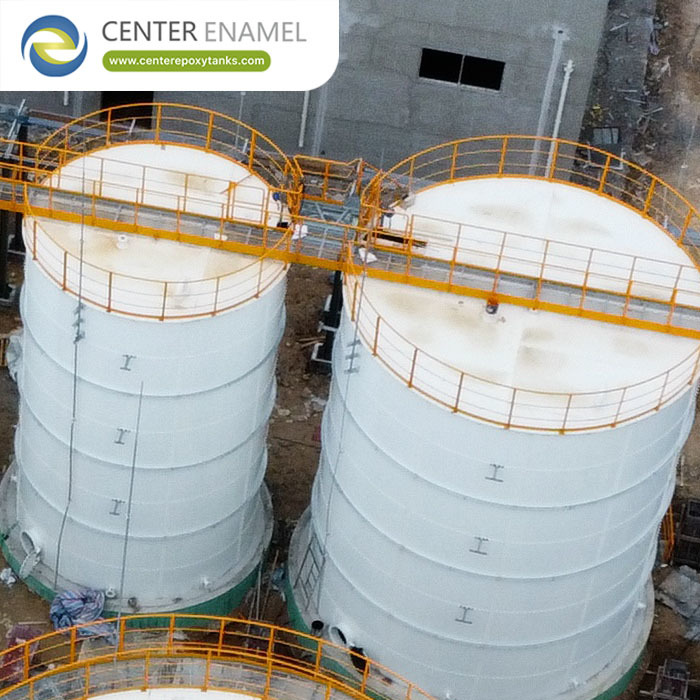
The Strategic Role of FBE Equalization Tanks in 2026 Wastewater Management
| Place of Origin: | China |
| Brand Name: | CEC TANKS |
| Certification: | ISO 9001:2008, AWWA D103 , OSHA , BSCI |
| Model Number: | W201691123005 |
| Minimum Order Quantity: | 1set |
| Price: | $5000~$20000 one set |
| Packaging Details: | PE poly-foam between each two steel plates ; wooden pallet and wooden box |
| Delivery Time: | 0-60 days after deposit received |
| Payment Terms: | L/C, T/T |
| Supply Ability: | 60 sets per month |
|
Detail Information |
|||
| Place of Origin | China | Brand Name | CEC TANKS |
|---|---|---|---|
| Certification | ISO 9001:2008, AWWA D103 , OSHA , BSCI | Model Number | W201691123005 |
| Steel Plates Thickness: | 3mm To 12mm , Depends On The Tank Structure | Corrosion Integrity: | Excellent |
| Chemical Resistance: | Excellent | Capacity: | 20 M3 To 18,000 M3 |
| Service Life: | ≥30 Years | Permeability: | Gas / Liquid Impermeable |
| Highlight: | FBE equalization tanks for wastewater,Fusion bonded epoxy wastewater tanks,FBE tanks with corrosion resistance |
||
Product Description
The Strategic Role of FBE Equalization Tanks in 2026 Wastewater Management
In modern industrial and municipal wastewater treatment, the Equalization Tank (EQ Tank) is the unsung hero of the process flow. As facilities face increasingly volatile effluent streams and stricter environmental regulations, the choice of storage material has shifted toward Fusion Bonded Epoxy (FBE) bolted steel tanks.
1. What is an FBE Equalization Tank?
An FBE equalization tank is a modular storage system designed to dampen the fluctuations in wastewater flow and characteristics (such as pH, temperature, and organic load). The "FBE" refers to the Fusion Bonded Epoxy coating—a high-performance polymer that is electrostatically applied and thermally fused to steel panels at temperatures exceeding 200°C.
This process creates a molecularly cross-linked barrier that protects the steel from the varying chemical compositions typically found in raw, unequalized wastewater.
2. Why Flow Equalization is Critical
Wastewater treatment plants operate most efficiently under constant conditions. Rapid spikes in flow or chemical concentration can "shock" biological reactors (like CSTR or UASB systems). An FBE EQ tank provides:
- Constant Discharge: Ensures a steady flow rate to downstream treatment units.
- pH Neutralization: Provides a volume for acid/base mixing to stabilize the effluent before it reaches sensitive biological stages.
- Pollutant Dilution: Dampens "slug loads" of high-concentration toxins.
3. The Technical Superiority of FBE for EQ Applications
In 2026, the transition from reinforced concrete to FBE bolted steel is driven by three primary performance factors:
Chemical Resilience Across Volatile pH Ranges
Raw effluent in an equalization tank is unpredictable. FBE coatings are engineered to resist a wide spectrum of chemicals, remaining stable from pH 3 to 11. Unlike concrete, which can suffer from biogenic sulfuric acid corrosion, FBE provides an inert barrier that prevents structural degradation.
Zero-Discontinuity Quality Assurance
Equalization tanks are high-risk areas for localized corrosion due to constant filling and emptying cycles. FBE panels undergo high-voltage Holiday Testing (≥1100V) at the factory to ensure a 100% pinhole-free surface.
Modular Scalability
As industrial production expands, waste volumes often increase. FBE bolted tanks offer the unique advantage of being expandable. Panels can be added to increase the height and volume of the tank without requiring a complete rebuild—a feat impossible with reinforced concrete.
4. Comparative Performance Matrix (2026)
| Feature | FBE Bolted Steel Tank | Reinforced Concrete (RC) |
| Construction Speed | High (Modular assembly) | Low (Formwork & curing) |
| Corrosion Resistance | Superior (Inert barrier) | Poor (Porous/prone to acids) |
| Maintenance | Minimal | High (Cracking/Leaking) |
| Total Cost of Ownership | Low (30+ year lifespan) | High (Structural repairs) |
| Sealing Integrity | Engineered Sealants | Subject to thermal expansion |
5. Global Project Excellence: Case Studies
Based on current global project data, FBE technology has been successfully deployed in massive stabilization projects:
- Industrial Effluent: The Ethiopia Textile Industrial Park utilized bolted tanks for a total volume of 32,838 m3 to manage diverse chemical waste.
- Municipal Balancing: The Sichuan Chengdu Wastewater Plant employs bolted tanks in a system with a 60,870 m3 capacity to handle urban flow fluctuations.
- Agricultural Stability: Large-scale projects for the Muyuan Group use FBE technology to equalize high-solids waste from intensive farming operations.
6. Engineering Standards and Compliance
To ensure long-term operational safety, FBE equalization tanks from industry leaders like Center Enamel adhere to the following:
- AWWA D103-19: The global standard for factory-coated bolted carbon steel tanks.
- ISO 28765:2016: Governing high-performance coatings for wastewater treatment.
- ASCE 7-22: Structural design for seismic and wind-load resilience.
The Strategic Investment
For facilities aiming to protect their downstream biological assets and ensure 24/7 compliance, the FBE equalization tank is the most reliable infrastructure choice. By combining the structural reliability of bolted steel with the chemical immunity of fusion-bonded epoxy, these tanks deliver a durable, low-maintenance, and future-proof solution.
Are you evaluating this for an upcoming municipal project, and would it be helpful to see a specific breakdown of the installation timeline compared to concrete?