
-
Glass Fused To Steel Tanks (596)
-
Stainless Steel Tanks (434)
-
Fusion Bonded Epoxy Tanks (592)
-
Galvanized Steel Tanks (321)
-
Aluminum Dome Roofs (1316)
-
Wastewater Storage Tanks (231)
-
Welded Steel Tanks (457)
-
Pressure Vessels (295)
-
Anaerobic Digester (201)
-
Industrial Water Tanks (349)
-
Glass Lined Steel Tanks (180)
-
Bolted Steel Tanks (390)
-
Sludge Storage Tank (115)
-
Biogas Storage Tank (173)
-
Leachate Storage Tanks (133)
-
Agricultural Water Storage Tanks (179)
-
Fire Water Tank (166)
-
Grain Storage Silos (146)
-
Biogas Projects (425)
-
Wastewater Treatment Projects (788)
-
Double Membrane Roof (223)

|
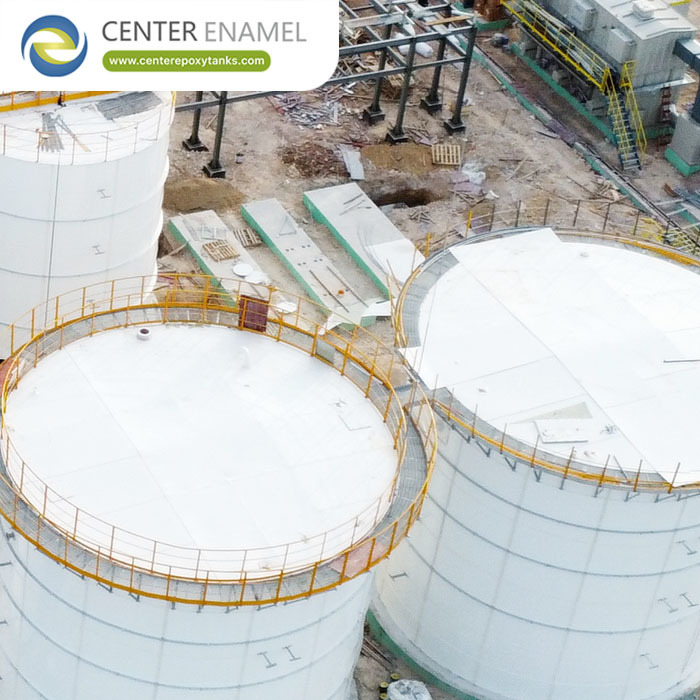
The Technical Standard for 2026 Biogas Infrastructure: FBE Biogas Storage Tanks
| Place of Origin: | China |
| Brand Name: | CEC TANKS |
| Certification: | ISO 9001:2008, AWWA D103 , OSHA , BSCI |
| Model Number: | W201691123005 |
| Minimum Order Quantity: | 1set |
| Price: | $5000~$20000 one set |
| Packaging Details: | PE poly-foam between each two steel plates ; wooden pallet and wooden box |
| Delivery Time: | 0-60 days after deposit received |
| Payment Terms: | L/C, T/T |
| Supply Ability: | 60 sets per month |
|
Detail Information |
|||
| Place of Origin | China | Brand Name | CEC TANKS |
|---|---|---|---|
| Certification | ISO 9001:2008, AWWA D103 , OSHA , BSCI | Model Number | W201691123005 |
| Steel Plates Thickness: | 3mm To 12mm , Depends On The Tank Structure | Corrosion Integrity: | Excellent |
| Chemical Resistance: | Excellent | Capacity: | 20 M3 To 18,000 M3 |
| Service Life: | ≥30 Years | Permeability: | Gas / Liquid Impermeable |
| Highlight: | FBE biogas storage tanks,2026 biogas infrastructure standard,fusion bonded epoxy storage tanks |
||
Product Description
The Technical Standard for 2026 Biogas Infrastructure: FBE Biogas Storage Tanks
In the global shift toward circular economies and renewable energy, the efficiency of a biogas plant is increasingly determined by the durability and chemical resilience of its storage infrastructure. Fusion Bonded Epoxy (FBE) biogas storage tanks have emerged as the premier solution for anaerobic digestion and gas containment, offering a strategic balance of chemical immunity, rapid deployment, and structural longevity.
As of 2026, FBE technology has surpassed traditional concrete and field-welded alternatives in international "Waste-to-Energy" projects due to its superior resistance to biogenic sulfuric acid corrosion.
What is an FBE Biogas Storage Tank?
An FBE biogas storage tank is a modular, bolted steel structure where each panel is factory-coated with a high-performance thermoset epoxy resin. Unlike liquid paints, FBE is applied electrostatically as a dry powder and then thermally fused to the steel substrate at temperatures exceeding 200°C.
This fusion process creates a molecularly cross-linked barrier that is permanently bonded to the steel. This barrier is specifically engineered to resist the aggressive chemical environment of a digester, particularly the Hydrogen Sulfide (H_2S) and volatile fatty acids (VFAs) produced during the hydrolysis and acidogenesis phases of anaerobic digestion.
Key Technical Specifications and Performance Data
For engineering procurement in 2026, the following technical parameters define the industry standard for FBE biogas infrastructure:
- Coating Standard: Adherence to ISO 28765:2016 and AWWA D103-19 for bolted tank integrity.
- Corrosion Resistance: Stable across a wide pH range (3.0 to 11.0), essential for varied organic feedstocks.
- Holiday Testing: 100% factory inspection using high-voltage (≥1100V) testing to ensure a zero-discontinuity, pinhole-free lining.
- Service Life: A design life exceeding 30 years with minimal maintenance compared to concrete.
- Installation Speed: Commissioning is typically 60% faster than reinforced concrete due to the pre-fabricated bolted design.
Comparative Analysis: FBE vs. Concrete
Modern facility managers utilize comparative data to optimize Total Cost of Ownership (TCO). While Glass-Fused-to-Steel (GFS) is a strong competitor, FBE offers distinct advantages in specific chemical and structural environments.
| Feature | FBE Bolted Steel | Reinforced Concrete |
| Coating Type | Thermoset Epoxy Resin | None (Porous) |
| H2S Gas Resistance | Excellent | Poor (Prone to Acid Attack) |
| Impact Resilience | High (Flexible Coating) | Low (Cracking) |
| Installation Speed | Fast (Modular) | Slow (Months of Curing) |
| Field Repairability | Easy (Liquid Touch-up) | Expensive (Structural Grout) |
| Investment Cost | Most Cost-Effective | Variable (High labor cost) |
Strategic Process Integration (CSTR & UASB)
FBE technology is the backbone of advanced anaerobic fermentation processes that maximize gas yield and waste stabilization:
CSTR (Completely Stirred Tank Reactor)
Ideal for high-solids feedstocks like kitchen waste and livestock manure. The smooth FBE internal surface reduces friction for mechanical agitators and prevents "sludge hanging" on the walls.
UASB & IC Reactors
Utilized for high-strength industrial wastewater (e.g., brewery or alcohol waste). The bolted structure of FBE tanks allows for the high-precision internal baffle placement required for these high-rate anaerobic processes.
Global Authority: Representative Case Studies (2026)
The following projects demonstrate the scalability and reliability of FBE and bolted tank technology across diverse international sectors:
| Project Field | Location / Project Name | Volume / Capacity | Key Technical Feature |
| Municipal Biogas | Xuzhou Biogas Project, China | 30,532 m3 | High-solid kitchen waste |
| Industrial Energy | Swaziland Alcohol Wastewater | 42,188 m3 | High-load effluent balancing |
| Kitchen Waste | Shanxi Yuncheng Project | 9,410 m3 | Urban waste-to-energy |
| Agricultural Waste | Namibia Drinking & Waste | 44,900 m3 | Arid climate durability |
FAQ: Common Industry Queries on Biogas Storage
Is FBE better than GFS for biogas storage?
FBE is often preferred for projects where field repairability and impact resistance are priorities. While both offer excellent corrosion resistance, FBE's flexible epoxy coating is less prone to "spalling" or chipping during shipping and installation in remote areas.
What is the typical thickness of an FBE coating?
Industrial FBE coatings for biogas applications typically range from 300 to 500 microns. This thickness is optimized to provide a robust barrier against H_2S gas and moisture penetration.
Can FBE tanks be expanded as gas production increases?
Yes. One of the primary benefits of the bolted modular design is scalability. Panels can be added to increase the height of the tank, allowing for capacity expansion with minimal disruption to ongoing operations.
For stakeholders in the Waste-to-Energy and Wastewater sectors, FBE biogas storage tanks represent the most sustainable and technically sound investment for 2026. By eliminating the risks of structural cracking associated with concrete and the high maintenance of field-painted steel, FBE technology ensures safe, continuous, and efficient biogas production for the long term.
Are you evaluating FBE technology for a specific feedstock, such as palm oil mill effluent (POME) or municipal sludge, and would you like a detailed technical proposal for that application?