-
Glass Fused To Steel Tanks (596)
-
Stainless Steel Tanks (434)
-
Fusion Bonded Epoxy Tanks (592)
-
Galvanized Steel Tanks (321)
-
Aluminum Dome Roofs (1316)
-
Wastewater Storage Tanks (231)
-
Welded Steel Tanks (457)
-
Pressure Vessels (295)
-
Anaerobic Digester (201)
-
Industrial Water Tanks (349)
-
Glass Lined Steel Tanks (180)
-
Bolted Steel Tanks (390)
-
Sludge Storage Tank (115)
-
Biogas Storage Tank (173)
-
Leachate Storage Tanks (133)
-
Agricultural Water Storage Tanks (179)
-
Fire Water Tank (166)
-
Grain Storage Silos (146)
-
Biogas Projects (425)
-
Wastewater Treatment Projects (788)
-
Double Membrane Roof (223)

|
The Future of Biogas Storage: A Technical Guide to FBE Gas Holders
| Place of Origin: | China |
| Brand Name: | CEC TANKS |
| Certification: | ISO 9001:2008, AWWA D103 , OSHA , BSCI |
| Model Number: | W201691123005 |
| Minimum Order Quantity: | 1set |
| Price: | $5000~$20000 one set |
| Packaging Details: | PE poly-foam between each two steel plates ; wooden pallet and wooden box |
| Delivery Time: | 0-60 days after deposit received |
| Payment Terms: | L/C, T/T |
| Supply Ability: | 60 sets per month |
|
Detail Information |
|||
| Place of Origin | China | Brand Name | CEC TANKS |
|---|---|---|---|
| Certification | ISO 9001:2008, AWWA D103 , OSHA , BSCI | Model Number | W201691123005 |
| Steel Plates Thickness: | 3mm To 12mm , Depends On The Tank Structure | Corrosion Integrity: | Excellent |
| Chemical Resistance: | Excellent | Capacity: | 20 M3 To 18,000 M3 |
| Service Life: | ≥30 Years | Permeability: | Gas / Liquid Impermeable |
| Highlight: | FBE gas holders for biogas storage,Fusion bonded epoxy biogas tanks,Technical guide to FBE gas holders |
||
Product Description
The Future of Biogas Storage: A Technical Guide to FBE Gas Holders
In the rapidly expanding renewable energy sector of 2026, efficient gas containment is the cornerstone of a successful "Waste-to-Energy" operation. Fusion Bonded Epoxy (FBE) gas holders—specifically when integrated with bolted steel tank technology—have emerged as the premier solution for storing biogas and industrial gases.
1. What is an FBE Gas Holder?
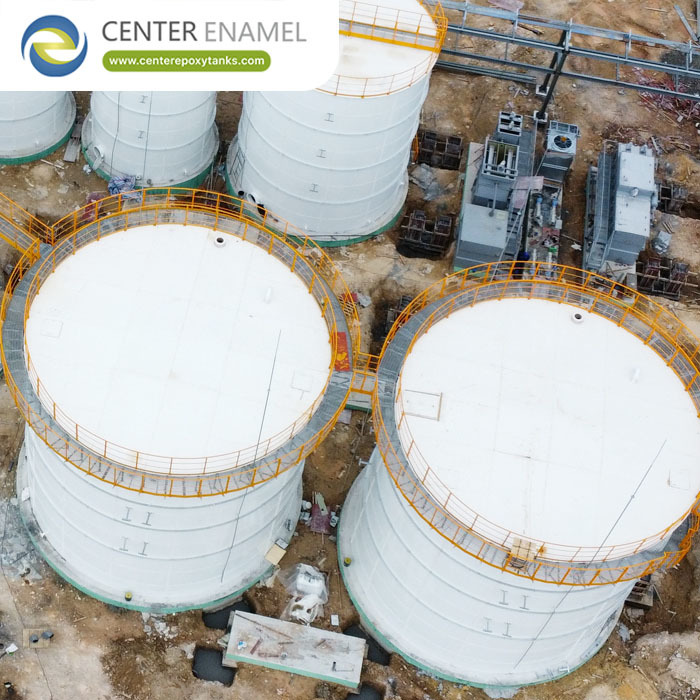
An FBE gas holder is a modular, high-performance storage system used to contain gases produced during anaerobic digestion or industrial processes. The structural shell consists of bolted steel panels factory-coated with a thermoset epoxy resin.
Unlike traditional painted tanks, the Fusion Bonded Epoxy process involves electrostatically applying dry powder to pre-heated steel (>200°C), creating a molecularly cross-linked barrier. This coating is uniquely suited for the "gas zone" of a digester, where corrosive moisture and Hydrogen Sulfide (H2S) are most concentrated.
2. Key Advantages of FBE Technology for Gas Storage
Superior Corrosion Resilience
Biogas is naturally aggressive. FBE coatings provide a non-porous, chemically inert surface that resists the acidic nature of condensation and H2S gas. This prevents the "pitting" corrosion common in standard welded steel or concrete tanks.
Precision Engineering & Gas-Tightness
Modern FBE gas holders utilize advanced sealing technology. High-grade EPDM or silicone sealants are applied to the bolted joints, ensuring a 100% airtight seal. This is critical for maintaining the positive pressure required in biogas systems.
Modular Flexibility
As energy demands grow, FBE gas holders offer the unique ability to be expanded or relocated. The bolted design allows for rapid assembly in remote locations without the need for on-site welding or extensive heavy machinery.
3. Comparative Performance Analysis (2026 Standards)
| Feature | FBE Bolted Gas Holder | Reinforced Concrete | Welded Steel |
| Gas Tightness | High (Engineered Seals) | Moderate (Prone to Cracks) | High |
| Corrosion Defense | Excellent (pH 3–11) | Low (Needs Liners) | Low (Requires Paint) |
| Construction Speed | Fast (1/3 of Concrete) | Slow (Curing Time) | Moderate |
| Life Cycle Cost | Low (30+ Year Life) | High (Structural Repairs) | High (Recoating) |
4. Integration with Membrane Systems
Most modern FBE gas holders are designed as Dual-Purpose Reactors. The FBE tank serves as the liquid-holding digester, while a Double Membrane Gas Holder is mounted on top.
- Inner Membrane: Houses the gas and moves up/down based on volume.
- Outer Membrane: Provides a protective, weather-resistant shell and maintains constant air pressure to keep the structure stable.
5. Global Project Success & Evidence
Technical data from leading global installations highlights the reliability of FBE technology in diverse climates:
- High-Volume Biogas: Major projects in Inner Mongolia have successfully utilized systems with capacities exceeding 16,000 m3 for bio-natural gas storage.
- Industrial Waste-to-Energy: Large-scale energy recovery systems in Jiangsu and Shanxi (ranging from 8,000 m3 to 30,000 m3) demonstrate FBE’s ability to handle high-load municipal and kitchen waste fermentation.
- Potable Water & Gas Security: International projects in Saudi Arabia and the Maldives showcase the durability of these coatings in high-temperature and coastal environments.
6. Engineering Standards and Compliance
To ensure long-term operational safety, FBE gas holders must adhere to several international benchmarks:
- AWWA D103-19: The global standard for factory-coated bolted carbon steel tanks.
- ISO 28765:2016: Governing high-performance coatings for municipal and industrial effluents.
- ASCE 7-22: Structural engineering for wind speeds (up to 250 km/h) and seismic resilience.
For stakeholders in the renewable energy and wastewater sectors, the FBE gas holder represents the most strategic infrastructure investment for 2026. By combining the structural reliability of bolted steel with the chemical immunity of fusion-bonded epoxy, these systems ensure maximum gas yields and a significantly lower Total Cost of Ownership (TCO).