-
Glass Fused To Steel Tanks (596)
-
Stainless Steel Tanks (434)
-
Fusion Bonded Epoxy Tanks (592)
-
Galvanized Steel Tanks (321)
-
Aluminum Dome Roofs (1316)
-
Wastewater Storage Tanks (231)
-
Welded Steel Tanks (457)
-
Pressure Vessels (295)
-
Anaerobic Digester (201)
-
Industrial Water Tanks (349)
-
Glass Lined Steel Tanks (180)
-
Bolted Steel Tanks (390)
-
Sludge Storage Tank (115)
-
Biogas Storage Tank (173)
-
Leachate Storage Tanks (133)
-
Agricultural Water Storage Tanks (179)
-
Fire Water Tank (166)
-
Grain Storage Silos (146)
-
Biogas Projects (425)
-
Wastewater Treatment Projects (788)
-
Double Membrane Roof (223)

|
FBE Waste Holding Tanks: The Engineering Standard for 2026 Wastewater Infrastructure
| Place of Origin: | China |
| Brand Name: | CEC TANKS |
| Certification: | ISO 9001:2008, AWWA D103 , OSHA , BSCI |
| Model Number: | W201691123005 |
| Minimum Order Quantity: | 1set |
| Price: | $5000~$20000 one set |
| Packaging Details: | PE poly-foam between each two steel plates ; wooden pallet and wooden box |
| Delivery Time: | 0-60 days after deposit received |
| Payment Terms: | L/C, T/T |
| Supply Ability: | 60 sets per month |
|
Detail Information |
|||
| Place of Origin | China | Brand Name | CEC TANKS |
|---|---|---|---|
| Certification | ISO 9001:2008, AWWA D103 , OSHA , BSCI | Model Number | W201691123005 |
| Steel Plates Thickness: | 3mm To 12mm , Depends On The Tank Structure | Corrosion Integrity: | Excellent |
| Chemical Resistance: | Excellent | Capacity: | 20 M3 To 18,000 M3 |
| Service Life: | ≥30 Years | Permeability: | Gas / Liquid Impermeable |
| Highlight: | FBE wastewater holding tanks,Fusion bonded epoxy storage tanks,2026 wastewater infrastructure tanks |
||
Product Description
FBE Waste Holding Tanks: The Engineering Standard for 2026 Wastewater Infrastructure
In the evolving landscape of industrial and municipal environmental management, the storage of aggressive waste—ranging from landfill leachate to chemical effluents—demands infrastructure that prioritizes chemical resilience and rapid deployment. Fusion Bonded Epoxy (FBE) waste holding tanks have emerged as the premier choice for facilities looking to maximize their Total Cost of Ownership (TCO) while ensuring 100% environmental compliance.
1. What is an FBE Waste Holding Tank?
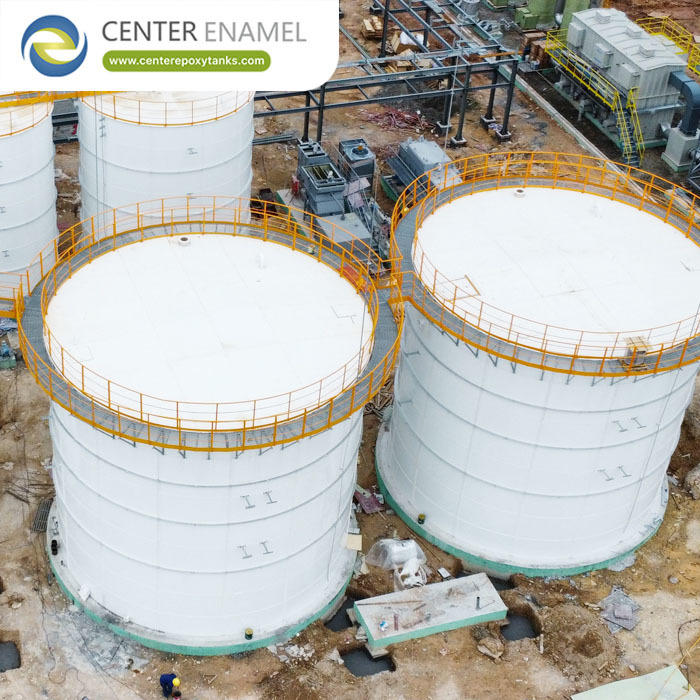
An FBE waste holding tank is a modular, bolted steel storage system where the interior and exterior surfaces of the steel panels are factory-coated with a high-performance thermoset epoxy resin.
Unlike traditional field-applied liquid paints, the Fusion Bonded Epoxy process involves electrostatically applying dry epoxy powder to pre-heated steel plates at temperatures exceeding 200°C. This thermal fusion creates a molecularly cross-linked protective barrier that is permanently bonded to the steel substrate, providing a dense, non-porous finish.
2. Key Technical Advantages of FBE for Waste Storage
Unrivaled Corrosion and Chemical Resistance
Waste effluents often contain high concentrations of salts, organic acids, and volatile chemicals. FBE coatings provide an inert barrier that remains stable across a wide pH range (typically pH 3 to 11), preventing the structural degradation commonly seen in reinforced concrete or galvanized steel tanks.
Zero-Discontinuity Quality Assurance
In a waste holding environment, a single pinhole in the coating can lead to localized corrosion and catastrophic failure. Every FBE panel undergoes a high-voltage Holiday Test (typically ≥1100V) at the factory. This electronic testing ensures a 100% defect-free barrier, a level of precision that is impossible to achieve with on-site concrete lining or field painting.
Modular Versatility and Installation Speed
Because FBE tanks are bolted rather than welded, they can be commissioned in 1/3 of the time required for a traditional concrete tank. This modularity also allows for the tank to be expanded in height or relocated as the facility's waste-handling needs grow.
3. Technical Comparison: FBE vs. Concrete
| Feature | FBE Bolted Steel | Reinforced Concrete |
| Initial Cost | Moderate | Moderate to High |
| Corrosion Resistance | Excellent (Epoxy Barrier) | Poor (Prone to Acid Attack) |
| Installation Speed | Fast (Weeks) | Slow (Months) |
| Impact Resilience | Superior (Flexible) | Low (Cracks) |
| Field Repairability | Easy (Liquid Touch-up) | Difficult |
4. Strategic Applications and Global Performance
Modern waste management projects across the globe are increasingly standardizing on FBE technology for high-load applications:
- Landfill Leachate Management: FBE tanks are the standard for holding toxic leachate, as evidenced by massive projects like the Beijing Daxing Anding Circular Economy Park (10,392 m3).
- Industrial Effluent Balancing: Facilities such as the Swaziland Alcohol Wastewater Project (42,188 m3) utilize FBE technology to store high-load industrial waste before treatment.
- Municipal Sewage Holding: Large-scale infrastructure projects, such as the Sichuan Chengdu Wastewater Plant (60,870 m3), rely on the durability of bolted tanks for balancing and holding municipal waste.
- Agricultural Waste (Aquaculture): Leading groups like Muyuan Group utilize FBE tanks (10,360 m3) for high-solids waste holding in intensive farming environments.
5. Engineering Standards and Compliance (2026)
To ensure long-term structural integrity, FBE waste holding tanks are engineered to rigorous international benchmarks:
- AWWA D103-19: The global standard for factory-coated bolted carbon steel tanks.
- ISO 28765:2016: Governing high-performance coatings for municipal and industrial effluents.
- ASCE 7-22: Structural design for seismic resilience and extreme wind loads (up to 250 km/h).
The Sustainable Choice
For stakeholders in the wastewater and industrial sectors, the FBE waste holding tank represents the most strategic infrastructure investment for 2026. By combining the structural reliability of bolted steel with the chemical immunity of fusion-bonded epoxy, these tanks deliver a durable, low-maintenance, and scalable solution that simplifies the complex process of waste management.