-
Glass Fused To Steel Tanks (596)
-
Stainless Steel Tanks (434)
-
Fusion Bonded Epoxy Tanks (592)
-
Galvanized Steel Tanks (321)
-
Aluminum Dome Roofs (1316)
-
Wastewater Storage Tanks (231)
-
Welded Steel Tanks (457)
-
Pressure Vessels (295)
-
Anaerobic Digester (201)
-
Industrial Water Tanks (349)
-
Glass Lined Steel Tanks (180)
-
Bolted Steel Tanks (390)
-
Sludge Storage Tank (115)
-
Biogas Storage Tank (173)
-
Leachate Storage Tanks (133)
-
Agricultural Water Storage Tanks (179)
-
Fire Water Tank (166)
-
Grain Storage Silos (146)
-
Biogas Projects (425)
-
Wastewater Treatment Projects (788)
-
Double Membrane Roof (223)
|
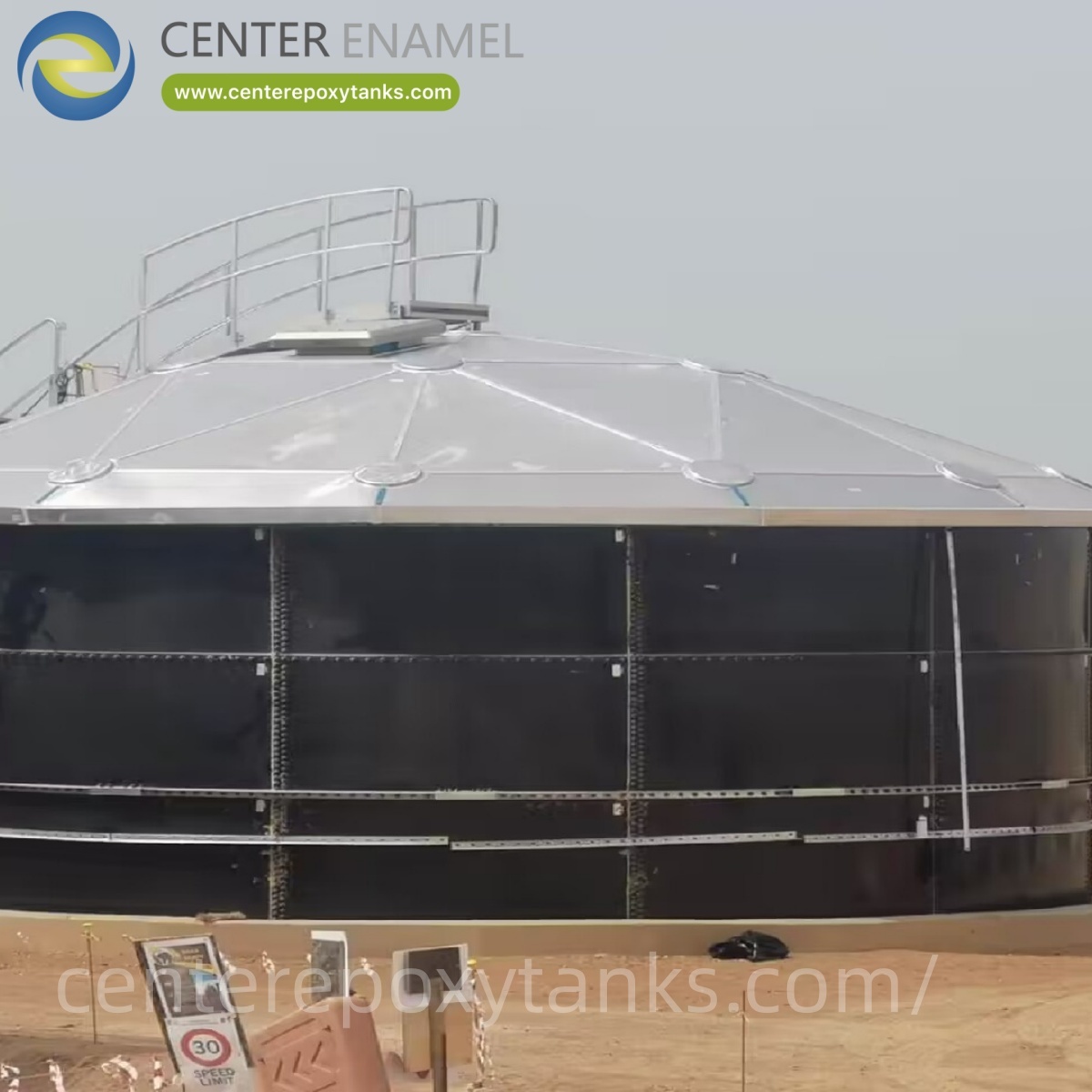
Bolted Steel Tanks as Biogas Storage Tanks: Provides a high-integrity shell for gas collection in renewable energy projects.
| Place of Origin: | China |
| Brand Name: | CEC TANKS |
| Certification: | ISO 9001:2008, AWWA D103 , OSHA , BSCI |
| Model Number: | W |
| Minimum Order Quantity: | 1set |
| Price: | $5000~$20000 one set |
| Packaging Details: | PE poly-foam between each two steel plates ; wooden pallet and wooden |
| Delivery Time: | 10-30 days after deposit received |
| Payment Terms: | L/C, T/T |
| Supply Ability: | 60 sets per month |
|
Detail Information |
|||
Product Description
Bolted Steel Tanks as Biogas Storage Tanks: Provides a high-integrity shell for gas collection in renewable energy projects.
In the rapidly evolving renewable energy sector, the capture and storage of biogas from anaerobic digestion are critical for reducing greenhouse gas emissions and generating sustainable power. Biogas—primarily a mixture of methane and carbon dioxide—is a highly corrosive and volatile substance. The storage environment must not only withstand the structural load of the liquid digestate but also resist the aggressive chemical attack of hydrogen sulfide and moisture. For a biogas plant operator, the storage tank serves as the heart of the energy recovery system, requiring a vessel that is both gas-tight and immune to the corrosive byproducts of biological decomposition.
To address these extreme conditions, Glass-Fused-to-Steel Tanks (GFS Tanks) have become the global standard for biogas applications. These tanks provide a high-performance, economical solution that far outperforms traditional concrete or carbon steel tanks. By fusing the structural strength of steel with the chemical resistance of glass, they offer a corrosion-free containment system designed to support the lifespan of a renewable energy facility.
Product Application: Essential Infrastructure for Green Energy
Our GFS Biogas Storage Tanks are engineered for various stages of the anaerobic digestion process:
Anaerobic Digesters: Serving as the primary vessel where organic waste is broken down to produce biogas.
Digestate Storage: Secure containment for the nutrient-rich liquid byproduct after the gas has been extracted.
Biomass Holding: Buffering tanks for agricultural waste, food scraps, and municipal sludge before processing.
Integrated Gas Holders: Providing the structural base for dual-membrane gas storage systems used in power generation.
Product Advantages: Chemical Resilience and Gas Integrity
The core advantage of selecting Glass-Fused-to-Steel Tanks for biogas projects lies in the superior properties of the enamel-to-steel bond:
Unmatched Corrosion Resistance: The glass coating is chemically inert, providing a permanent barrier against the hydrogen sulfide and organic acids found in biogas, ensuring the tank remains corrosion-free.
Hygienic and Non-Stick Surface: The "glass-like" internal finish prevents the buildup of "scum" or struvite on the tank walls, which is a common maintenance issue in wastewater and biogas applications.
Gas-Tight Performance: Utilizing specialized industrial-grade sealants and precision-bolted panels, our tanks ensure zero gas leakage, maximizing the efficiency of energy recovery.
Thermal Efficiency: The GFS shell can be easily integrated with external insulation and heating systems to maintain the mesophilic or thermophilic temperatures required for optimal gas production.
Customization: Integrated Solutions and Aluminum Dome Roofs
Biogas projects require specialized configurations to manage gas pressure and environmental safety:
Aluminum Dome Roofs
To provide a total weather-tight seal and a platform for gas-handling equipment, we integrate Aluminum Dome Roofs as a strategic standard. These roofs are critical for:
Resistance to H2S Corrosion: Unlike steel roofs that corrode in the presence of biogas moisture, aluminum is naturally resistant to the aggressive atmosphere of a digester headspace.
Support for Gas Membranes: The geodesic design provides the structural strength needed to support internal gas holders or external insulation covers without internal pillars.
Maintenance-Free Protection: Naturally resistant to industrial emissions, providing a maintenance-free cover for the life of the biogas plant.
Process Integration
Our tanks are customized with specialized nozzles, manways, and mixer brackets to accommodate various agitation systems and sensors required for monitoring the biological process.
Performance Parameters and Industry Standards
Our Glass-Fused-to-Steel Tanks are engineered to meet and exceed the world’s most stringent technical benchmarks:
Global Compliance: Meeting AWWA D103, ISO 28765, and OSHA safety guidelines for industrial and biogas storage.
Quality Assurance: Every panel undergoes high-voltage "holiday testing" to ensure zero coating defects, providing a perfect barrier against chemical attack.
Structural Engineering: Precision-calculated for the dynamic loads of liquid digestate and internal gas pressures, ensuring stability in all operating conditions.
Product Installation and Maintenance
Rapid Modular Installation
The prefabricated nature of GFS panels allows for rapid on-site assembly without the need for field welding or painting. Using a "top-down" jacking system, the tank is constructed at ground level and lifted ring-by-ring. This method significantly reduces construction timelines and minimizes site disruption.
Minimal Maintenance and Operational Continuity
The glass-fused surface is permanent and does not require periodic repainting. This results in an economical lifecycle with virtually no operational interruptions. Maintenance is limited to external inspections and seal checks, ensuring that your energy production remains constant.
Project Cases: Proven Performance in Global Infrastructure
The reliability of our technology in managing biological and chemical loads is demonstrated in these non-fictitious projects:
Sichuan Chengdu Wastewater Treatment Plant Project: This project utilized 16 units of tanks to manage massive volumes of materials, proving the structural stability required for large-scale vertical containment.
Saudi Municipal Sewage and Industrial Waste Project: In a region of extreme heat and environmental stress, 5 units of these tanks were installed to provide a durable, corrosion-free solution.
Hebei Municipal Water and Sewage Infrastructure Project: This project utilized 1 unit of a high-integrity bolted tank to support critical regional utility service, showcasing the reliability of the bolted system.
Company Advantages: Our Core Competency
Our company’s core competitiveness lies in our ability to deliver integrated engineering solutions for the renewable energy sector. We combine the chemical durability of Glass-Fused-to-Steel with the structural efficiency of Aluminum Dome Roofs. By managing the entire process from biological load modeling and risk assessment to final installation, we ensure that your biogas facility maximizes energy recovery while maintaining the highest standards of safety and corrosion resistance.