-
Glass Fused To Steel Tanks (596)
-
Stainless Steel Tanks (434)
-
Fusion Bonded Epoxy Tanks (592)
-
Galvanized Steel Tanks (321)
-
Aluminum Dome Roofs (1336)
-
Wastewater Storage Tanks (232)
-
Welded Steel Tanks (457)
-
Pressure Vessels (295)
-
Anaerobic Digester (202)
-
Industrial Water Tanks (349)
-
Glass Lined Steel Tanks (180)
-
Bolted Steel Tanks (389)
-
Sludge Storage Tank (115)
-
Biogas Storage Tank (173)
-
Leachate Storage Tanks (133)
-
Agricultural Water Storage Tanks (179)
-
Fire Water Tank (166)
-
Grain Storage Silos (146)
-
Biogas Projects (424)
-
Wastewater Treatment Projects (1178)
-
Double Membrane Roof (223)

|
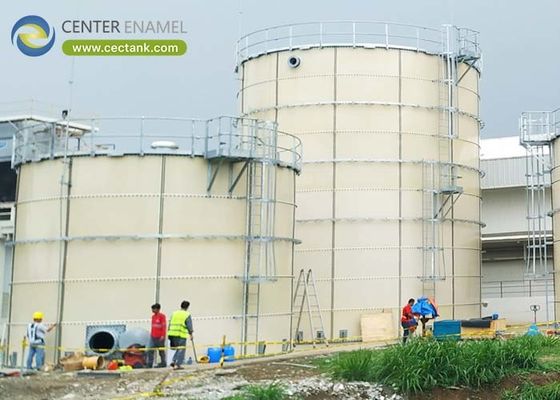
Custom-Designed Epoxy Coated Steel Soft Water Storage Tanks: Superior Containment for Treated Water
| Place of Origin: | China |
| Brand Name: | CEC TANKS |
| Certification: | ISO 9001:2008, AWWA D103 , OSHA , BSCI |
| Model Number: | W20160705006 |
| Minimum Order Quantity: | 1set |
| Price: | $5000~$20000 one set |
| Packaging Details: | PE poly-foam between each two steel plates ; wooden pallet and wooden box |
| Delivery Time: | 0-60 days after deposit received |
| Payment Terms: | L/C,T/T |
| Supply Ability: | 60 sets per month |
|
Detail Information |
|||
Product Description
In industrial boiler feed systems, commercial laundries, power generation plants, and large-scale municipal water treatment facilities, maintaining high-purity soft water is essential to prevent scale formation, reduce equipment wear, and optimize chemical efficiency. Softened water—having undergone ion exchange or reverse osmosis to remove calcium and magnesium hardness—requires storage infrastructure that prevents secondary contamination, eliminates metal leaching, and resists interior corrosion. Traditional concrete reservoirs and unlined carbon steel tanks frequently fail in these applications, suffering from concrete dusting, leaching of alkaline minerals, and rapid oxidation.
To provide flawless containment for treated water, industry leaders rely on Custom-Designed Epoxy Coated Steel Soft Water Storage Tanks. Shijiazhuang Zhengzhong Technology Co., Ltd. (Center Enamel) leverages decades of advanced manufacturing expertise to engineer and supply world-class, modular epoxy-coated steel storage solutions tailored to precise industrial specifications.
Storing treated soft water introduces unique chemical and structural challenges that demand specialized engineering:
- Prevention of Mineral Contamination: Soft water storage walls must be entirely inert to prevent the introduction of impurities, rust particles, or suspended solids that can compromise downstream industrial processes.
- Defense Against Aggressive Treated Water: Low-mineral or demineralized water can exhibit aggressive leaching tendencies if tank interiors are not protected by a dense, high-integrity barrier coating.
- Modular Flexibility and Capacity Scaling: Industrial facilities often require customized tank dimensions and precise nozzle placements to integrate seamlessly with existing water softening skids and pumping stations.
Center Enamel manufactures high-performance epoxy-coated storage tanks by combining the structural strength of heavy-duty steel with advanced, factory-applied protective coating systems:
- Advanced Fusion Bonded Epoxy (FBE) Technology: Specialized epoxy powders or high-performance liquid coatings are applied under strict factory conditions and thermally cured to create an ultra-smooth, continuous protective membrane across every steel panel.
- Superior Adhesion and Flexibility: The coating bonds molecularly to the steel substrate, offering exceptional resistance to impact, abrasion, and thermal expansion while sealing the metal completely from water contact.
- Rapid Modular Bolted Assembly: Prefabricated panels are shipped globally in high-density containers and bolted rapidly on-site, bypassing the lengthy curing delays and micro-cracking vulnerabilities of cast-in-place concrete basins.
| Evaluation Metric | Center Enamel Epoxy Coated Steel Tank | Cast-in-Place Concrete Reservoir | Traditional Coated Welded Steel Tank |
|---|---|---|---|
| Water Purity & Inertness | Superior (Smooth, non-porous epoxy coating prevents mineral leaching and rust) | Moderate (Porous concrete can leach alkaline minerals into soft water) | Low (Dependent on field-applied coatings that degrade and flake over time) |
| Corrosion Defense | High (Advanced factory-applied epoxy barrier completely isolates steel from water) | Moderate (Vulnerable to concrete carbonation and water seepage) | Moderate (Weld seams prone to pinhole corrosion and coating breakdown) |
| Installation Velocity | Fast (Prefabricated modular panels bolted rapidly on-site) | Very Slow (Months of formwork, concrete pouring, and multi-week curing phases) | Moderate (Requires heavy field welding, rolling, and radiograph testing) |
| Lifecycle Maintenance | Minimal (Long-term durability with easy inspection and low upkeep) | High (Requires frequent structural crack sealing and waterproof patching) | High (Continuous maintenance overhead to prevent rust-through) |
guo Engineering Assurance: All epoxy-coated soft water storage tanks engineered by Center Enamel comply strictly with internationally recognized design and quality standards, including AWWA D103-09, ISO 9001, and NSF/ANSI 61 guidelines, ensuring certified safety and reliability worldwide.
A: Epoxy coated steel tanks provide an ultra-smooth, non-porous protective barrier that prevents rust, eliminates mineral leaching, and ensures high water purity, making them ideal for storing treated soft water in industrial and commercial applications.
A: Factory-applied epoxy coatings are applied under strictly controlled environmental conditions and thermally cured to achieve maximum molecular bonding, superior hardness, and uniform thickness, avoiding the pinholes and adhesion failures common in field-applied paints.
A: Yes. Center Enamel utilizes advanced modular engineering and Finite Element Analysis (FEA) to custom-design tank height, diameter, capacity, and nozzle configurations to fit exact spatial and hydraulic requirements.
A: Yes. All storage tanks designed and manufactured by Center Enamel strictly comply with global engineering benchmarks, including AWWA D103-09, ISO 9001, and NSF/ANSI 61 standards.