-
Glass Fused To Steel Tanks (596)
-
Stainless Steel Tanks (434)
-
Fusion Bonded Epoxy Tanks (592)
-
Galvanized Steel Tanks (321)
-
Aluminum Dome Roofs (1336)
-
Wastewater Storage Tanks (232)
-
Welded Steel Tanks (457)
-
Pressure Vessels (295)
-
Anaerobic Digester (201)
-
Industrial Water Tanks (349)
-
Glass Lined Steel Tanks (180)
-
Bolted Steel Tanks (389)
-
Sludge Storage Tank (115)
-
Biogas Storage Tank (173)
-
Leachate Storage Tanks (133)
-
Agricultural Water Storage Tanks (179)
-
Fire Water Tank (166)
-
Grain Storage Silos (146)
-
Biogas Projects (425)
-
Wastewater Treatment Projects (978)
-
Double Membrane Roof (223)

|
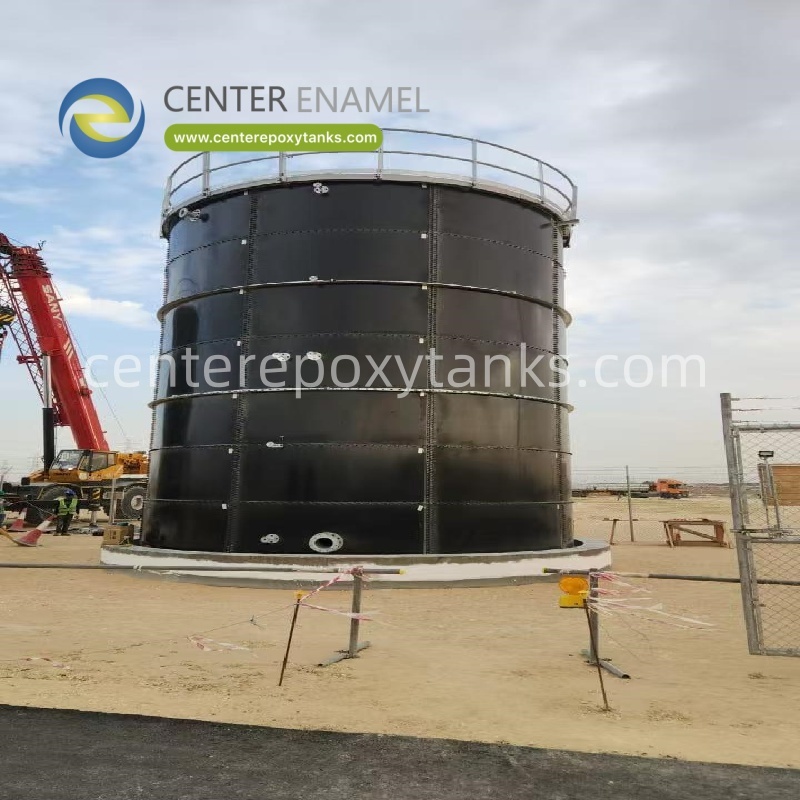
Epoxy-Coated Diesel Fuel Tanks: Essential Solutions for Secure Liquid Storage
| Place of Origin: | China |
| Brand Name: | CEC TANKS |
| Certification: | ISO 9001:2008, AWWA D103 , OSHA , BSCI |
| Model Number: | J2016012311 |
| Minimum Order Quantity: | 1set |
| Price: | $5000~$20000 one set |
| Packaging Details: | PE poly-foam between each two steel plates ; wooden pallet and wooden box |
| Delivery Time: | 0-60 days after deposit received |
| Payment Terms: | L/C,T/T |
| Supply Ability: | 60 sets per month |
|
Detail Information |
|||
| Place of Origin | China | Brand Name | CEC TANKS |
|---|---|---|---|
| Certification | ISO 9001:2008, AWWA D103 , OSHA , BSCI | Model Number | J2016012311 |
| PH Range: | A Grade Sheet PH:3-11, AA Grade Sheet PH : 1-14 | Coating Thickness: | 0.25mm - 0.4mm, Two Coating Internal And External |
| Corrosion Resistance: | Excellent ! Suitable For Waste Water Salt Water, Sea Water, High Sulfur Crude Oil, Salt Fox, Organic And Inorganic Compounds | Adhesion: | 3,450N/cm |
| Permeability: | Gas And Liquid Impermeable | Serive Life: | More Than 30 Years |
| Highlight: | Essential Diesel Fuel Tanks,Secure Diesel Fuel Tanks |
||
Product Description
Epoxy-Coated Diesel Fuel Tanks: Essential Solutions for Secure Liquid Storage
Direct Answer: In critical infrastructure engineering, data centers, and standby power facilities, epoxy-coated diesel fuel tanks are vital assets for secure aboveground fuel storage. The technical necessity of an internal and external epoxy coating arises directly from the chemistry of modern diesel fuels.
Because modern fuels tend to attract water and breed corrosive microbial colonies, standard uncoated carbon steel tanks face rapid pitting and structural degradation. Factory-applied epoxy coatings deliver an impermeable, chemically inert shield that completely neutralizes internal fuel-acid attack and external atmospheric weathering. This ensures emergency generator systems remain online with zero risk of catastrophic fuel leaks or asset contamination.
1. Material Science: Combating ULSD and Microbially Influenced Corrosion (MIC)
The introduction of Ultra-Low Sulfur Diesel (ULSD) significantly reduced atmospheric emissions but fundamentally altered fuel storage logistics. The refined chemical profile of ULSD introduces two major storage risks:
High Hygroscopic Properties
ULSD absorbs significantly more moisture from ambient air condensation than legacy high-sulfur diesel blends. This water continuously drops out of suspension and accumulates as a dense layer at the bottom of the storage tank.
Microbial Growth & Internal Acidification
The interface between the water layer and the fuel layer acts as an ideal breeding ground for anaerobic bacteria, fungi, and molds. As these microbes consume hydrocarbons, they excrete highly corrosive organic acids. This process is known as Microbially Influenced Corrosion (MIC).
Unprotected carbon steel tanks exposed to MIC experience aggressive localized pitting. This can lead to pinhole leaks through heavy steel plates in less than a decade.
An industrial-grade, cross-linked high-build epoxy coating provides complete protection against this threat. The coating exhibits high molecular density and excellent chemical resistance, creating an un-reactive layer that stops water, dissolved salts, and biological organic acids from reaching the underlying structural steel.
2. Technical Comparison: Fuel Containment Coatings
| Performance Characteristic | High-Build Factory Epoxy Tanks | Uncoated Carbon Steel Tanks | Conventional Field-Painted Steel |
| Resistance to MIC & Acids | Superior. Total isolation against biological acid attack. | Poor. Highly vulnerable to rapid localized pinhole pitting. | Moderate. Prone to early failure if field-welding edges thin out. |
| Fuel Purity Maintenance | Excellent. Zero iron leaching; prevents fuel oxidation catalyst. | Poor. Dissolved iron oxides act as catalysts, degrading fuel quality. | Variable. Risks chemical contamination if the paint layers blister. |
| Application Environment | Controlled Factory. Applied under optimal temperature and humidity. | N/A | Field Site. Subject to ambient dust, moisture, and variable weather. |
| Typical Coating Lifespan | 15 to 25+ Years before requiring minor touch-ups. | 0 Years (Requires continuous corrosion allowances). | 5 to 8 Years before mandatory full recoating cycles. |
3. Structural Design Standards & Codes
Engineering a dependable diesel storage system requires strict adherence to international fire safety and environmental protection codes:
-
UL 142 (Standard for Steel Aboveground Tanks for Flammable and Combustible Liquids): This safety standard governs the manufacturing, welding integrity, and structural pressure configurations of aboveground storage tanks (ASTs). It mandates strict structural tests, including internal pressure leaking validations, to guarantee secure fuel containment.
-
NFPA 30 (Flammable and Combustible Liquids Code): This code dictates safety layout rules, including mandatory spill containment dike volumes, emergency venting capacity, and minimum safe distances from property boundaries and occupied spaces.
-
Secondary Containment Requirements: To prevent environmental fuel contamination, modern industrial installations utilize double-wall (interstitial) configurations. The internal tank holds the fuel, while an integrated outer steel shell provides 110% secondary containment, capturing any primary structural leaks automatically.
4. Interactive Generator Fuel Sizing Engine
To design an optimized emergency backup facility, engineers must size the primary diesel tank to match generator fuel burn rates over a target operational runtime window.
Use the sizing engine below to calculate minimum fuel storage volumes and determine the necessary footprint for an epoxy-coated tank assembly.
5. Crucial Engineering Accessories for Safe Operation
An industrial epoxy-coated diesel storage tank operates as an integrated system, combining the protective tank shell with several critical mechanical components:
-
Interstitial Leak Detection Sensors: Installed at the lowest point of a double-walled tank's air space (interstitial zone). If liquid enters this zone, the sensor instantly alerts the facility automation matrix to trigger maintenance protocols before an environmental leak occurs.
-
Automated Fuel Polishing Loops: Because water accumulation is an ongoing threat, automated polishing systems draw fuel from the bottom of the tank, pass it through particulate filters and water-coalescing separators, and return clean, dry fuel to the top of the tank.
-
Emergency Venting & Flame Arrestors: In accordance with NFPA 30, tanks feature dedicated emergency pressure-relief vents that safely release internal vapors during an external thermal event. Integrated inline flame arrestors prevent external sparks from igniting interior fuel vapors.
Technical FAQ
Why is factory-applied epoxy coating superior to field-applied coatings?
Factory application occurs inside highly regulated blast chambers and curing ovens. The raw steel undergoes automated grit-blasting to achieve a precise surface profile (e.g., SSPC-SP10 Near-White Blast), ensuring maximum mechanical coating adhesion. Field application introduces risks from ambient wind, dust contamination, humidity variations, and human error, which can cause premature coating delamination.
Can epoxy coatings withstand biodiesel blends?
Yes. High-quality cross-linked epoxy coatings are highly resilient against biodiesel blends (such as B20 or B100). Biodiesel blends can be chemically aggressive toward standard rubber seals and certain paints, but cured epoxy structures remain inert and un-reactive.
How often should the internal epoxy liner be inspected?
In accordance with STI SP001 (Standard for the Inspection of Aboveground Storage Tanks), formal visual inspections should occur annually. Comprehensive internal inspection intervals can often be extended to every 10 years when combined with continuous electronic interstitial monitoring and active fuel-polishing infrastructure.