-
Glass Fused To Steel Tanks (596)
-
Stainless Steel Tanks (434)
-
Fusion Bonded Epoxy Tanks (592)
-
Galvanized Steel Tanks (321)
-
Aluminum Dome Roofs (1336)
-
Wastewater Storage Tanks (232)
-
Welded Steel Tanks (457)
-
Pressure Vessels (295)
-
Anaerobic Digester (201)
-
Industrial Water Tanks (349)
-
Glass Lined Steel Tanks (180)
-
Bolted Steel Tanks (389)
-
Sludge Storage Tank (115)
-
Biogas Storage Tank (173)
-
Leachate Storage Tanks (133)
-
Agricultural Water Storage Tanks (179)
-
Fire Water Tank (166)
-
Grain Storage Silos (146)
-
Biogas Projects (425)
-
Wastewater Treatment Projects (1008)
-
Double Membrane Roof (223)

|
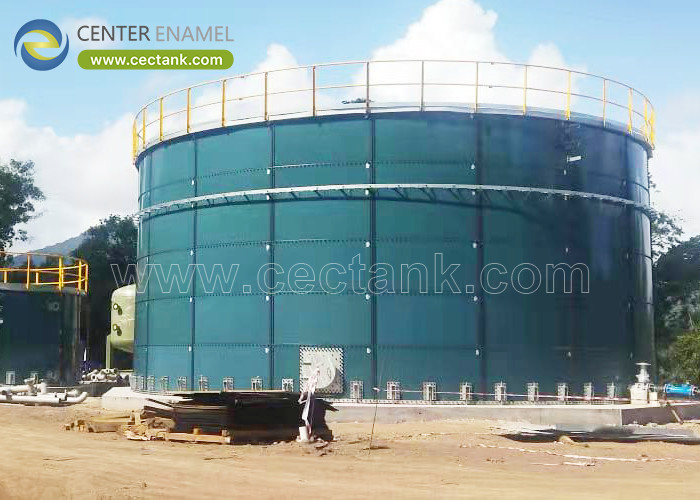
Center Enamel: China's Premier Epoxy Coated Steel Leachate Storage Tanks Manufacturer
| Place of Origin: | China |
| Brand Name: | CEC TANKS |
| Certification: | ISO 9001:2008, AWWA D103 , OSHA , BSCI |
| Model Number: | W |
| Minimum Order Quantity: | 1set |
| Price: | $5000~$20000 one set |
| Packaging Details: | PE poly-foam between each two steel plates ; wooden pallet and wooden |
| Delivery Time: | 10-30 days after deposit received |
| Payment Terms: | L/C,T/T |
| Supply Ability: | 60 sets per month |
|
Detail Information |
|||
| Place of Origin | China | Brand Name | CEC TANKS |
|---|---|---|---|
| Certification | ISO 9001:2008, AWWA D103 , OSHA , BSCI | Model Number | W |
| Corrosion Resistance: | Suitable For Waste Water Salt Water, Sea Water, High Sulfur Crude Oil, Salt Fox, Organic And Inorganic Compounds | Elastic: | Same As Steel Sheet |
| Tank Body Color: | Customized Design | Coating Thickness: | No |
| Foundation: | Concrete | Steel Grade: | Steel |
| Highlight: | Epoxy Coated Steel Leachate Storage Tanks,Customized Leachate Storage Tanks |
||
Product Description
Center Enamel has established itself as the leading global manufacturer of epoxy coated steel leachate storage tanks by solving the fundamental issue in waste-containment engineering: unpredictable chemical corrosion. Landfill leachate—the highly toxic fluid that drains from accumulated waste—contains an aggressive mixture of organic acids, heavy metals, ammonia nitrogen, and inorganic salts.
Traditional storage systems like field-welded carbon steel or concrete face rapid structural breakdown when exposed to this chemical mix. Center Enamel addresses this vulnerability through factory-engineered Fusion Bonded Epoxy (FBE) bolted tanks. By electrostatically applying premium thermosetting epoxy powder to CNC-machined steel panels and thermally curing them above 180°C, Center Enamel creates an impermeable barrier that keeps aggressive wastewater securely contained for an operational lifespan exceeding 30 years.
Managing landfill leachate requires a deep understanding of how its chemical composition changes over time. During the early acidogenic phase of landfill decomposition, the fluid is rich in volatile fatty acids (VFAs), causing pH levels to drop as low as 4.5. This low pH accelerates the oxidation of standard metals.
To determine how long a polymer barrier can protect the steel core from these corrosive agents, engineers look at the breakthrough time , which marks when a chemical agent fully penetrates the coating matrix:
Center Enamel's automated dual-sided powder application ensures a thick, uniform coating layer ($delta ge 200,mutext{m}$) across every part of the panel, including structural edges. This design significantly slows down chemical diffusion ($D$), preventing early blistering, under-film corrosion, and structural leaks.
To simplify the early stages of infrastructure design, this processing module helps civil engineering teams estimate daily leachate generation rates and calculate the necessary storage volume for a project.
Selecting a container material for high-strength industrial wastewater requires balancing long-term structural integrity against initial infrastructure investments.
| Engineering Attribute | Center Enamel Bolted FBE Tanks | Field-Welded Carbon Steel Tanks | Reinforced Industrial Concrete |
|---|---|---|---|
| Corrosion Resistance | Excellent. FBE barrier withstands complex high-COD and variable pH streams. | Poor. Internal weld lines are highly vulnerable to localized corrosion. | Moderate. Susceptible to micro-cracking and acid etching over time. |
| Installation Velocity | Rapid. Bolted assembly requires no heavy on-site welding machinery. | Slow. Requires extensive field welding, sandblasting, and curing. | Very Slow. Dependent on concrete pour schedules and weather curing. |
| Structural Flexibility | High. Modular panels can be dismantled, expanded, or relocated. | Low. Fixed structure requires destructive cutting to modify. | Immobile. Structural changes require complete demolition. |
| Thermal Adaptation | Coated panels adapt smoothly to temperature changes without cracking. | Vulnerable to thermal stress cracking along rigid weld seams. | High thermal mass, but prone to structural micro-cracking during freeze-thaw cycles. |
| Total Lifecycle Cost | Highly Efficient. Low maintenance costs offset the initial investment. | High. Requires regular recoating cycles every 5 to 7 years. | High. Demands ongoing surface sealers to prevent structural leaks. |
Center Enamel's modular design moves the risky steps of coating application out of the field and into a controlled factory environment. On-site installation follows a efficient, mechanical process.
-
Civil Base Anchor Setup:Foundation Preparation.
A reinforced concrete ring wall or slab is poured with embedded anchor bolts. A specialized EPDM or polyurethane starter gasket is positioned along the footprint to form a reliable bottom seal.
-
Upper Tier Assembly:Top Ring Erection.
The top row of epoxy coated sheets is bolted together at ground level using high-tensile structural bolts wrapped in corrosion-resistant caps. The roof structure is installed directly onto this top tier.
-
Progressive Mechanical Jacking:Synchronized Lifting.
Specialized heavy-duty lifting jacks are attached to the assembled top ring. The entire upper section is raised vertically just enough to clear the height of the next panel tier.
-
Lower Tier Interlocking:Bottom-Up Expansion.
The next row of steel sheets is bolted into place beneath the raised section, with high-performance mastic sealant applied along all overlapping joints. This process repeats until the tank reaches its design height.
While Glass-Fused-to-Steel (GFS) provides excellent chemical resistance, Center Enamel's modern FBE tanks offer a more cost-effective solution for a wide range of municipal leachate projects. FBE provides excellent impact protection, resisting chips and cracks during transport and installation, while delivering the reliable chemical resistance needed for standard municipal landfill runoffs.
The structural connection points are sealed using an industrial-grade polyurethane or engineered mastic compound that remains flexible over time. This sealing layer absorbs the physical stresses of tank filling and emptying, maintaining a tight seal even when exposed to the complex chemical compounds found in active landfill leachate.
Every tank is calculated and manufactured to comply with the latest revisions of AWWA D103, ANSI/AWWA D103-19, and European structural safety codes. Wind load calculations, seismic activity factors, and localized snow loads are integrated directly into the engineering software before the steel sheets are manufactured.