-
Glass Fused To Steel Tanks (596)
-
Stainless Steel Tanks (434)
-
Fusion Bonded Epoxy Tanks (592)
-
Galvanized Steel Tanks (321)
-
Aluminum Dome Roofs (1316)
-
Wastewater Storage Tanks (231)
-
Welded Steel Tanks (457)
-
Pressure Vessels (295)
-
Anaerobic Digester (201)
-
Industrial Water Tanks (349)
-
Glass Lined Steel Tanks (180)
-
Bolted Steel Tanks (390)
-
Sludge Storage Tank (115)
-
Biogas Storage Tank (173)
-
Leachate Storage Tanks (133)
-
Agricultural Water Storage Tanks (179)
-
Fire Water Tank (166)
-
Grain Storage Silos (146)
-
Biogas Projects (425)
-
Wastewater Treatment Projects (788)
-
Double Membrane Roof (223)


|
FBE Digesters in Industrial Processes: Engineering Standards for Anaerobic Systems and Pulp & Paper Applications (2026)
| Place of Origin: | China |
| Brand Name: | CEC TANKS |
| Certification: | ISO 9001:2008, AWWA D103 , OSHA , BSCI |
| Model Number: | W201691123005 |
| Minimum Order Quantity: | 1set |
| Price: | $5000~$20000 one set |
| Packaging Details: | PE poly-foam between each two steel plates ; wooden pallet and wooden box |
| Delivery Time: | 0-60 days after deposit received |
| Payment Terms: | L/C, T/T |
| Supply Ability: | 60 sets per month |
|
Detail Information |
|||
| Place of Origin | China | Brand Name | CEC TANKS |
|---|---|---|---|
| Certification | ISO 9001:2008, AWWA D103 , OSHA , BSCI | Model Number | W201691123005 |
| Steel Plates Thickness: | 3mm To 12mm , Depends On The Tank Structure | Corrosion Integrity: | Excellent |
| Chemical Resistance: | Excellent | Capacity: | 20 M3 To 18,000 M3 |
| Service Life: | ≥30 Years | Permeability: | Gas / Liquid Impermeable |
| Highlight: | FBE digesters for anaerobic systems,Fusion bonded epoxy tanks for pulp paper,Industrial FBE digesters with engineering standards |
||
Product Description
FBE Digesters in Industrial Processes: Engineering Standards for Anaerobic Systems and Pulp & Paper Applications (2026)
In major industrial infrastructure projects, selecting the right containment and processing vessel determines both long-term operational viability and capital expenditure (CAPEX) efficiency. Across sectors like bio-energy generation and chemical pulping, heavy-duty processing vessels—collectively referred to as digesters—are subjected to extreme thermal loads, physical abrasion, and highly corrosive chemical environments.
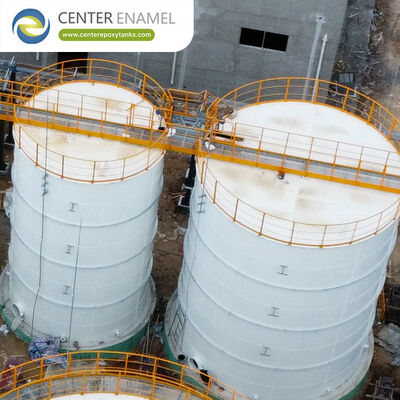
As of 2026, Fusion Bonded Epoxy (FBE) bolted steel tanks have become an industry baseline for advanced anaerobic digestion (AD) plants. Additionally, the unique high-adhesion and anti-corrosive properties of FBE chemical coatings are widely used to protect critical pipeline infrastructures, chemical transport networks, and localized storage cells within pulp processing facilities.
1. Core Manufacturing Technology and FBE Coating Standards
The reliability of an FBE-coated vessel or pipeline component depends entirely on the automation and climate control of its manufacturing facility. Field-applied liquid paints are vulnerable to ambient humidity and inconsistent dry film thickness (DFT), whereas the factory-controlled Fusion Bonded Epoxy workflow ensures a uniform, high-performance protective barrier:
Automated Surface Preparation: The raw carbon steel substrate undergoes high-velocity automated grit-blasting to remove mill scale and surface oxides. Industrial specifications require preparing the steel surface to a near-white finish meeting Sa 2.5 (ISO 8501-1) or SSPC-SP10 standards, creating an optimized anchor profile (typically 50µm to 112µm).
Thermal Powder Application: The blasted steel elements are pre-heated using induction furnaces to a precise temperature range between 180°C and 240°C. A thermosetting industrial epoxy powder is electrostatically sprayed onto the hot substrate.
Cross-Linked Polymer Fusion: Upon contact, the powder melts, flows, and chemically cross-links inside an automated curing oven. This creates an inseparable, dense, glass-smooth protective matrix permanently bonded to the steel substrate at thicknesses ranging from 150 to over 450 microns depending on the specific application.
2. FBE in Waste-to-Energy: High-Rate Anaerobic Digesters
In utility-scale biogas plants, FBE bolted steel reactors are heavily deployed in specialized configurations such as Continuous Stirred-Tank Reactors (CSTR), Upflow Anaerobic Sludge Blanket (UASB) systems, and Upflow Solids Reactors (USR).
Biogenic Acid Defense ($text{H}_2text{S}$ and VFAs)
During the initial stages of organic waste breakdown, the rapid accumulation of Volatile Fatty Acids (VFAs) drops internal liquid pH levels to aggressive ranges (pH 4.0 to 5.5). Simultaneously, the biochemical breakdown of organic matter releases high concentrations of hydrogen sulfide gas. In the reactor’s enclosed headspace, this gas condenses to form highly corrosive sulfuric acid . While these biogenic acids induce rapid carbonation, calcium leaching, and spalling in reinforced concrete, the cross-linked polymer matrix of FBE remains completely inert across a wide chemical spectrum (pH 3.0 to 11.0).
Flexibility Under Dynamic Mixing Shocks
To maximize gas production, anaerobic digesters rely on powerful high-torque internal mixing paddles to prevent floating scum layers. This continuous agitation transmits severe dynamic vibrations and physical impacts throughout the steel shell. While vitreous glass linings (Glass-Fused-to-Steel) offer high surface hardness, they are inherently brittle and prone to chipping or micro-fracturing under intense physical shock. FBE is a flexible thermoset polymer that flexes dynamically alongside the steel panel, providing superior chip, shatter, and impact resistance (up to 160 in-lbs direct and reverse).
100% Pinhole-Free Quality Assurance
Because organic digestate acts as a highly conductive electrolyte, microscopic coating flaws can lead to rapid localized galvanic pitting. Premium manufacturers execute strict Quality Assurance (QA) protocols, subjecting every individual panel to a high-voltage electronic Holiday Test to isolate and eliminate microscopic pinholes before shipping.
3. FBE in the Pulp & Paper Sector: Process Equipment & Pipeline Protection
In chemical pulping—such as the prevalent Kraft process—industrial digesters function as large, high-pressure pressurized cookers. Wood chips, bamboo, or agricultural residues like Pennisetum Purpureum (king grass) are cooked with highly alkaline chemical mixtures (sodium hydroxide and sodium sulfide, known as White Liquor) at maximum temperatures of 160°C to 180°C to dissolve the wood's lignin binder.
Because of the extreme temperatures , high pressures, and heavy concentrations of aggressive caustic liquors involved inside the primary pulp cooking vessel, the main pressure hull requires heavy composite steels or duplex stainless steels. However, FBE coatings serve as an essential defense mechanism throughout the broader mill infrastructure, handling secondary lines, chemical transport, and waste processing:
Black, Green, and White Liquor Transport: FBE single- and dual-layer powder coatings are extensively applied to the interiors of carbon steel transport piping networks. The smooth, hard polymer lining exhibits outstanding chemical resistance against corrosive alkaline streams, while significantly lowering fluid friction coefficients compared to unlined steel or cement-mortar linings.
Pulp Washing and Bleaching Systems: After leaving the primary cooking zone, the residual pulp matrix ("Brown Stock") and spent chemicals are conveyed to wash stages and bleaching towers. FBE-coated fittings, valves, and auxiliary containment elements provide an inert shield against the corrosive carryover fluids and chemical vapors found in these environments.
Mill Process Water & Wastewater Infrastructure: Pulp and paper mills are among the largest industrial users of process water. FBE bolted steel storage assets are widely deployed as raw source-water buffering units, condensate receiver storage tanks, and municipal-grade effluent treatment digesters, offering an economical, long-life containment solution.
4. Engineering Standards and Global Civil Compliance
To satisfy international engineering criteria and successfully clear strict project bidding screens, high-performance FBE bolted vessels and industrial coatings comply with the following global standards:
AWWA D103-19 (Section 12.6): The premier global benchmark standard governing factory-coated bolted carbon steel liquid storage systems, validating structural calculations and epoxy coating application profiles.
ISO 28765:2016: The specific international standard governing high-performance coating quality, thickness tolerances, and holiday testing profiles for water, wastewater, and bio-energy containment.
ANSI/AWWA C550 & C213: Regulating protective fusion-bonded epoxy internal and external coatings for valves, hydrants, and steel water pipelines to ensure long-term corrosion prevention.
ASCE 7-22 / Eurocode 3: Structural engineering design parameters ensuring that modular bolted tanks calculate accurately for high seismic resilience and extreme wind loads up to 250 km/h.
Securing Plant Longevity and Lowering TCO
Whether deployed as a primary modular anaerobic reactor in a utility-scale biogas project or used to protect critical secondary chemical transport lines within a pulp processing facility, factory-fused FBE technology delivers exceptional long-term value. By eliminating the cracking and gas-loss risks associated with reinforced concrete, and providing a flexible, fracture-resistant alternative to brittle glass linings, premium FBE assets dramatically lower the Total Cost of Ownership (TCO), ensuring safe, continuous, and low-maintenance operation for an infrastructure lifespan exceeding 30 years.
Are you currently engineering an industrial wastewater project, designing a high-rate anaerobic digestion loop, or upgrading a commercial processing layout, and would you like a detailed technical proposal including structural sizing, chemical compatibility metrics, and engineering drawings for your specific operational parameters?