-
Glass Fused To Steel Tanks (596)
-
Stainless Steel Tanks (434)
-
Fusion Bonded Epoxy Tanks (592)
-
Galvanized Steel Tanks (321)
-
Aluminum Dome Roofs (1336)
-
Wastewater Storage Tanks (232)
-
Welded Steel Tanks (457)
-
Pressure Vessels (295)
-
Anaerobic Digester (201)
-
Industrial Water Tanks (349)
-
Glass Lined Steel Tanks (180)
-
Bolted Steel Tanks (389)
-
Sludge Storage Tank (115)
-
Biogas Storage Tank (173)
-
Leachate Storage Tanks (133)
-
Agricultural Water Storage Tanks (179)
-
Fire Water Tank (166)
-
Grain Storage Silos (146)
-
Biogas Projects (425)
-
Wastewater Treatment Projects (1008)
-
Double Membrane Roof (223)
|
NFPA 22 Standard Glass Coated Fire Protection Water Tanks — Center Enamel
| Place of Origin: | China |
| Brand Name: | CEC TANKS |
| Certification: | ISO 9001:2008, AWWA D103 , OSHA , BSCI |
| Model Number: | W |
| Minimum Order Quantity: | 1set |
| Price: | $5000~$20000 one set |
| Packaging Details: | PE poly-foam between each two steel plates ; wooden pallet and wooden |
| Delivery Time: | 10-30 days after deposit received |
| Payment Terms: | L/C,T/T |
| Supply Ability: | 60 sets per month |
|
Detail Information |
|||
Product Description
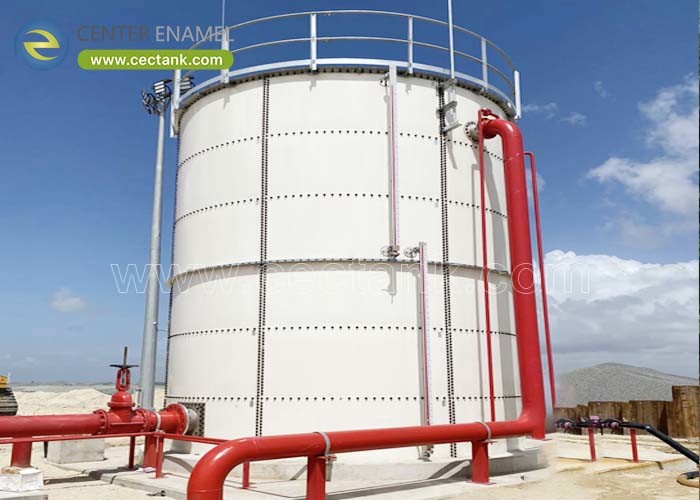
In commercial and industrial fire safety design, an NFPA 22 Standard Glass-Coated Fire Protection Water Tank serves as a certified, highly dependable water reservoir dedicated to supplying automatic sprinkler systems, standpipes, and private hydrants. These systems act as a critical backup when municipal water grids cannot deliver the volume or flow pressure required to suppress an active blaze.
Center Enamel manufactures these specialized containment systems by molecularly fusing borosilicate glass onto carbon steel panels at high temperatures (between 800°C and 900°C). This process creates a smooth, non-porous glass barrier that prevents internal oxidation, pitting, and scaling. This guarantees that the stored water remains clear of structural debris and is ready for immediate delivery when every second counts.
To secure approval from an Authority Having Jurisdiction (AHJ), a fire protection water tank must be structurally designed to withstand high operational weights and local environmental forces.
The baseline fluid capacity is determined by multiplying the system's total flow demand by the required supply duration under building hazard codes:
Center Enamel engineers each modular tank shell using specialized design tools to balance these primary forces:
- Dead & Live Load Constraints: The structure must support its own weight alongside the weight of a full water volume. This exerts a continuous outward radial pressure that is highest at the bottom ring of staves.
- Wind Load Resistance: NFPA 22 requires the structure to withstand a minimum wind pressure of 30 lb/ft² on vertical surfaces, though this value can be increased to match stricter regional building codes.
- Seismic Design: Tank configurations include specialized anchor bolt networks and thickened bottom sheets to absorb seismic forces without risking joint separation or leakage.
Choosing the right structural material for a fire protection reservoir is essential for preventing long-term operational failure.
| Engineering Property | Center Enamel Glass-Fused-to-Steel | Epoxy-Coated Carbon Steel | Field-Poured Concrete |
|---|---|---|---|
| Nozzle Clogging Risk | Zero. The smooth glass barrier will not scale, blister, or peel. | Low to Moderate. Microscopic pinholes can allow rust to develop behind the coating. | High. Concrete surfaces can shed fine grit or scale over time. |
| Minimum Testing Baseline | High-voltage holiday testing up to 1500V ensures a continuous barrier. | Magnetic gauge testing checks for paint thickness and uniformity. | Simple visual inspection for structural cracks and honeycombing. |
| Interior Inspection Cycle | Every 5 years under standard NFPA 25 protocols. | Typically requires 3-to-5 year cycles depending on water chemistry. | Requires 3-year cycles to check for structural cracking. |
| Thermal Expansion Management | Excellent. Glass expands and contracts at the same rate as the underlying steel. | Fair. Temperature fluctuations can cause the paint to detach from the steel substrate. | Poor. Thermal shifts can cause micro-cracks that lead to persistent leaks. |
An NFPA 22 compliant tank requires specialized components to ensure it operates correctly alongside high-capacity fire pumps:
- Anti-Vortex Plates: Installed directly over the suction outlet pipe, these flat metal plates break up swirling vortexes during high-velocity pumping, preventing air bubbles from entering and damaging the fire pump system.
- Airtight Shell Ventilation: Heavy-duty, corrosion-resistant air vents are positioned above the maximum overflow line. These allow air to enter the tank quickly during rapid emergency drawdowns, preventing a structural vacuum from collapsing the shell.
- Thermal Freeze Protection: For installations in colder climates, tanks are configured with immersion heaters and high-performance insulation panels to keep the inner water temperature from dropping below 4.4°C (40°F), eliminating the risk of ice blockages.
This interactive design tool helps engineers estimate the required water storage capacity and structural footings for dedicated fire protection installations.
Center Enamel moves the critical steps of tank production out of the field and into an automated factory environment:
- Precision Manufacturing: Automated laser cutting and hole punching equipment maintain tight tolerances across all components, ensuring that every panel aligns perfectly during field setup.
- Engineered Bolted Assembly: The pre-fabricated tank panels are joined on-site using high-tensile structural bolts and heavy-duty EPDM gaskets. This assembly method eliminates the need for field welding, sandblasting, or painting, which drastically shortens installation schedules.
- Future Capacity Scaling: If a facility expands its square footage and requires a larger fire water reserve, the modular panel design allows crews to unbolt the structure, lift the upper rings with synchronized jacks, and add new panel rows at the base, minimizing site disruption.
Over years of storage, standard painted or concrete tanks can develop internal rust flakes, mineral scale, or biological films. If a fire triggers a high-velocity pump drawdown, these loose particles are swept into the suction lines, where they can damage pump impellers or clog the small nozzle orifices of downstream automatic sprinklers, potentially disabling the fire suppression system.
Yes. The modular nature of bolted panels allows the tank's aspect ratio to be customized for specific site footprints. For tight urban environments, engineers can design a tall, narrow tank structure, while open rural spaces might use a lower, wider configuration to achieve the same target storage volume.
While deep cobalt blue (RAL 5013) is standard for many industrial systems, fire protection infrastructure often requires specific aesthetics. Center Enamel supplies panels finished in Traffic Red (RAL 3020) for clear safety identification, as well as muted grays, greens, and tans to help the structure blend into commercial developments or surrounding landscapes.