-
Glass Fused To Steel Tanks (596)
-
Stainless Steel Tanks (434)
-
Fusion Bonded Epoxy Tanks (592)
-
Galvanized Steel Tanks (321)
-
Aluminum Dome Roofs (1336)
-
Wastewater Storage Tanks (232)
-
Welded Steel Tanks (457)
-
Pressure Vessels (295)
-
Anaerobic Digester (201)
-
Industrial Water Tanks (349)
-
Glass Lined Steel Tanks (180)
-
Bolted Steel Tanks (389)
-
Sludge Storage Tank (115)
-
Biogas Storage Tank (173)
-
Leachate Storage Tanks (133)
-
Agricultural Water Storage Tanks (179)
-
Fire Water Tank (166)
-
Grain Storage Silos (146)
-
Biogas Projects (425)
-
Wastewater Treatment Projects (1028)
-
Double Membrane Roof (223)
|
Fire Protection Water Tank Systems: Comprehensive Guide for Commercial,
| Place of Origin: | China |
| Brand Name: | CEC TANKS |
| Certification: | ISO 9001:2008, AWWA D103 , OSHA , BSCI |
| Model Number: | W20171219003 |
| Minimum Order Quantity: | 1set |
| Price: | $5000~$20000 one set |
| Packaging Details: | PE poly-foam between each two steel plates ; wooden pallet and wooden box |
| Delivery Time: | 10-30 days after deposit received |
| Supply Ability: | 60 sets per month |
|
Detail Information |
|||
Product Description
-
Critical Infrastructure: A dedicated fire protection water tank system is a standalone reservoir engineered to provide a constant, reliable water supply for fire sprinkler and hydrant systems, independent of municipal water fluctuations.
-
Regulatory Foundation: Systems must be designed, installed, and maintained in strict compliance with NFPA 22 (Standard for Water Tanks for Private Fire Protection) and AWWA D103.
-
System Components: Beyond the tank shell, a complete system requires an anti-vortex plate, internal/external heaters (for climate control), level indicators, and certified pump suction piping.
-
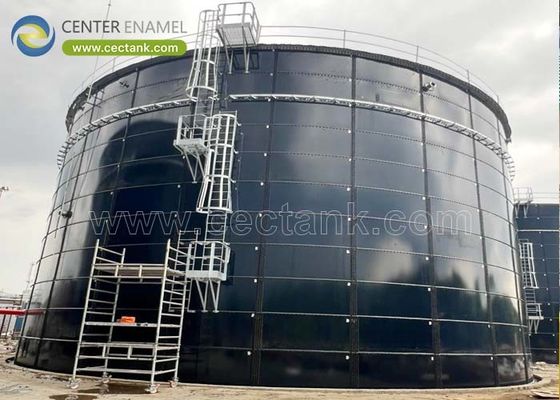
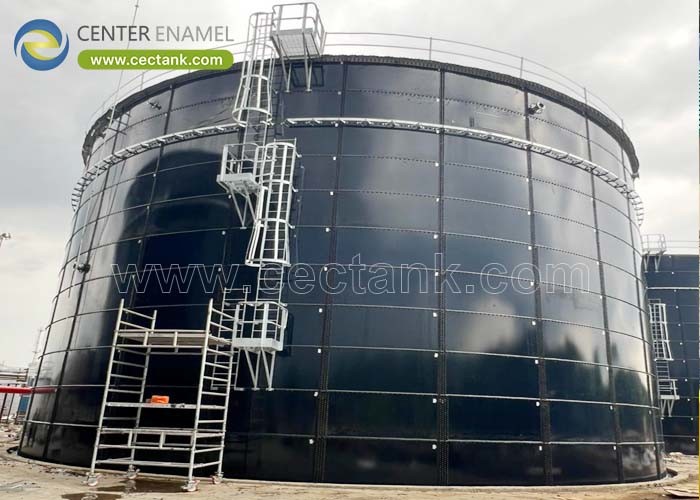
Material Preference: Factory-coated bolted steel tanks are the industry standard for fire protection, offering a 30+ year service life and rapid assembly compared to site-poured concrete.
An NFPA 22-compliant system is not merely a storage container; it is an engineered hydraulic reservoir designed to guarantee that the required volume and pressure of water are available during the initial, critical minutes of a fire event.
For commercial and municipal facilities, these tanks ensure fire suppression capabilities remain active even if the main municipal utility pressure drops or if the main supply lines are damaged during an emergency. The system functions by decoupling the fire suppression water supply from the facility's domestic or process water, eliminating concerns about contaminants or supply competition.
Direct Answer: Bolted steel tanks are preferred for fire protection due to their predictable, factory-controlled manufacturing quality. Unlike concrete, which is subject to field-curing variations and long-term cracking, or field-welded steel, which requires extensive on-site hot work and painting, bolted steel tanks are prefabricated and assembled with high-performance, long-lasting coatings.
| Feature | Bolted Steel (GFS/Epoxy) | Reinforced Concrete | Welded Steel |
|---|---|---|---|
| Construction Time | 1–3 Weeks | 2–4 Months | 4–8 Weeks |
| Coating Integrity | Factory-Applied (Controlled) | Porous (Requires lining) | Field-Applied (Variable) |
| Maintenance | Minimal (Annual Inspect) | High (Crack repair) | Moderate (Repainting) |
| Seismic Performance | High (Flexibility) | Low (Rigid/Brittle) | Moderate |
| Cost Efficiency | High | Low | Moderate |
Direct Answer: A complete fire protection water tank system consists of more than just the shell; it must include specific engineered components to ensure the water is available and ready for pump uptake:
-
Anti-Vortex Plate: Located at the suction outlet, this plate prevents the formation of air-entraining vortices that could air-bind the fire pump, which would otherwise lead to pump failure.
-
Pump Suction Pipe: Must be sized according to hydraulic calculations to ensure the fire pump receives adequate flow without cavitation.
-
Heating Systems: In cold climates, internal or external heaters are mandatory to prevent the water from freezing, ensuring the system remains operational 365 days a year.
-
Level Indicators & Pressure Gauges: Provide real-time data to facility managers to ensure the tank remains filled to its required NFPA 22 capacity.
-
Fill/Overflow Piping: Designed to maintain the required water level and safely divert excess water during filling operations.
Direct Answer: Legal compliance is non-negotiable for fire protection systems. Insurance providers and local authorities having jurisdiction (AHJ) demand rigorous adherence to international standards:
-
NFPA 22: The primary standard governing the design, construction, and installation of water tanks for private fire protection.
-
AWWA D103-09: The benchmark for bolted carbon steel water tanks, detailing sheet thickness, bolt torque, and sealant specifications.
-
FM Global / UL Listed: Components—including the tank structure, valves, and fire pumps—are often required to be FM or UL listed to guarantee their performance under fire conditions.
The required volume is determined by the facility's hazard classification (as defined by NFPA 13) and the fire duration requirement. For example, a high-hazard industrial warehouse will require a significantly larger volume and higher flow rate than a standard office building. A professional fire protection engineer must perform these hydraulic calculations based on your specific site hazard.
In some specific engineered cases, a portion of the tank's water can be used for domestic or process water, provided the tank is designed with a "fire protection reserve." This means the outlet for the domestic water is placed at a higher elevation, ensuring that the volume of water required for fire suppression is always physically present in the tank, even if the domestic portion is drained.
NFPA 25 requires regular inspections. This typically includes a visual inspection of the exterior annually, and a comprehensive internal inspection (either via drain-down or ROV submersible drone) every 3 to 5 years, depending on the tank type and local regulations.
Yes. All fire protection tanks require a roof to prevent evaporation, inhibit algae growth, keep out debris (which could clog sprinkler heads), and prevent unauthorized access or contamination of the water supply. Aluminum geodesic dome roofs are currently the industry favorite for large tanks because they are maintenance-free and provide clear-span coverage.
Freeboard is the vertical distance between the maximum water level (overflow level) and the top of the tank shell. NFPA 22 requires specific freeboard allowances to prevent water from splashing out of the tank or affecting the roof structure during seismic events or high wind loads.