-
Glass Fused To Steel Tanks (596)
-
Stainless Steel Tanks (434)
-
Fusion Bonded Epoxy Tanks (592)
-
Galvanized Steel Tanks (321)
-
Aluminum Dome Roofs (1336)
-
Wastewater Storage Tanks (232)
-
Welded Steel Tanks (457)
-
Pressure Vessels (295)
-
Anaerobic Digester (201)
-
Industrial Water Tanks (349)
-
Glass Lined Steel Tanks (180)
-
Bolted Steel Tanks (389)
-
Sludge Storage Tank (115)
-
Biogas Storage Tank (173)
-
Leachate Storage Tanks (133)
-
Agricultural Water Storage Tanks (179)
-
Fire Water Tank (166)
-
Grain Storage Silos (146)
-
Biogas Projects (425)
-
Wastewater Treatment Projects (1008)
-
Double Membrane Roof (223)
|
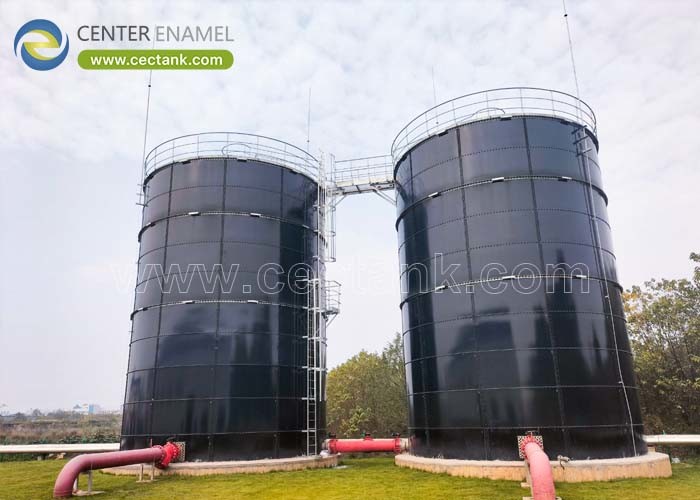
Glass Fused to Steel Upflow Anaerobic Sludge Blanket (UASB) Reactor for Wastewater Plants
| Place of Origin: | China |
| Brand Name: | CEC TANKS |
| Certification: | ISO 9001:2008, AWWA D103 , OSHA , BSCI |
| Model Number: | W20160901012 |
| Minimum Order Quantity: | 1set |
| Price: | $5000~$20000 one set |
| Packaging Details: | PE poly-foam between each two steel plates ; wooden pallet and wooden box |
| Delivery Time: | 0-60 days after deposit received |
| Payment Terms: | L/C,T/T |
| Supply Ability: | 60 sets per month |
|
Detail Information |
|||
Product Description
Direct Answer: In industrial and municipal wastewater engineering, a Glass-Fused-to-Steel (GFS) UASB reactor serves as an advanced anaerobic biological treatment system designed to rapidly lower Chemical Oxygen Demand (COD) and Biochemical Oxygen Demand (BOD) while capturing renewable biogas. Wastewater enters from the bottom of the reactor and flows upward through a dense, suspended blanket of anaerobic granular sludge.
Center Enamel addresses the intense corrosion challenges of this process by utilizing modular GFS panels. This factory-applied coating molecularly fuses borosilicate glass to high-strength carbon steel, preventing structural degradation from acidic environments and volatile gases while maintaining complete tank integrity over a 30+ year lifespan.
The efficiency of a UASB reactor depends on maintaining a balanced Organic Loading Rate (OLR) and controlling the Upflow Velocity of the incoming wastewater. If the fluid moves upward too quickly, it can wash out the active granular sludge bed; if it moves too slowly, it can cause channeled flows and reduce treatment efficiency.
To ensure the granular sludge blanket remains properly suspended without lifting out of the reactor, the upflow velocity must be carefully regulated:
Where A represents the horizontal cross-sectional surface area of the GFS tank shell . For high-strength industrial applications (e.g., breweries, paper mills, and food processing facilities), design parameters generally maintain a continuous between 0.5 and 1.5 meters per hour.
The chemical environment inside an anaerobic reactor is highly aggressive. The breakdown of organic compounds produces volatile fatty acids (VFAs) in the lower section, while the upper section collects moist methane and hydrogen sulfide ($text{H}_2text{S}$) gases.
| Performance & Engineering Index | Center Enamel Bolted GFS Tanks | Reinforced Poured Concrete | Welded Stainless Steel (304 / 316L) |
|---|---|---|---|
| Chemical Acid Resistance (pH) | Excellent (Continuous pH 3 - 11, special enamel down to pH 1). | Poor. Unprotected concrete suffers biogenic sulfuric acid attack. | Variable. Vulnerable to localized pitting corrosion from chloride ions. |
| Gas Tightness & Permeability | Absolute. Liquid-tight EPDM/silicone gaskets prevent gas leaks. | Poor. Micro-cracks can lead to fugitive methane emissions. | High. Requires flawless field weld inspections to ensure tight seals. |
| Sludge Adhesion Risk | Extremely Low. Glass-smooth interior resists biofilm accumulation. | High. Rough surface can cause sludge scaling on walls. | Low. Smooth finish, but significantly higher material cost. |
| Capital Construction Timeline | Minimal. Pre-fabricated panels are assembled quickly with jacking tools. | Extended. Requires long curing periods and complex formwork. | Moderate. Requires skilled on-site welding teams and favorable weather. |
The core component of any high-performance UASB reactor is the Three-Phase Separator, which is positioned in the upper section of Center Enamel’s GFS tank configurations.
   [ Biogas Outflow Zone ]  ───► Gas Deflector Baffles
  ─────────────────────────
   [ Settling Zone (Liquid) ] ───► Sludge Settles Back Down
  ─────────────────────────
   [ Granular Sludge Bed ]  ───► Wastewater Flows Upward
The separator uses a system of gas deflector baffles and sedimentation settlers to manage three distinct phases simultaneously:
-
The Gas Phase: Rising biogas bubbles strike the submerged sloped baffles, which divert the gas into collection domes at the top of the tank, preventing it from entering the settling zone.
-
The Solid Phase: Granular sludge particles released from the gas bubbles enter the quiet settling zone, slide down the inclined walls of the separator structure, and return to the active sludge bed below.
-
The Liquid Phase: Clarified effluent continues upward past the separator baffles and flows out over perimeter V-notch launders for final discharge or secondary treatment.
This interactive engineering tool allows process designers to estimate the required reactor volume and expected methane production based on influent organic wastewater profiles.
Center Enamel’s modular Glass-Fused-to-Steel technology moves critical construction steps out of the field and into a controlled factory environment:
-
Advanced Coating Uniformity: The enamel slurry is applied using automated equipment to ensure consistent thickness across all plate edges and bolt holes, eliminating weak points where corrosion could start.
-
Rigorous Testing Standards: Every GFS panel undergoes a high-voltage holiday test at 1500V to 2500V to confirm that the glass layer is continuous and completely free of microscopic flaws before shipping.
-
Modular Adaptability: The bolted assembly system allows wastewater plants to expand their capacity later if needed. The tank can be unbolted, jacked up, and fitted with additional panel rings at the base, minimizing down-time and protecting the initial infrastructure investment.
Anaerobic digestion produces hydrogen sulfide gas ($text{H}_2text{S}$), which combines with moisture to form highly corrosive sulfuric acid. Standard epoxy coatings can form microscopic pores over time, allowing acid to reach and corrode the underlying steel. Center Enamel's glass lining provides a completely non-porous chemical barrier that does not degrade in the presence of acidic gases.
Because the glass-fused surface is ultra-smooth and non-porous, it naturally resists scale buildup and biomass adhesion. Under normal operating conditions, the interior surfaces require zero routine mechanical scraping or chemical cleaning, significantly lowering maintenance costs compared to concrete alternatives.
The tank panels are sealed using specialized high-grade EPDM or silicone gaskets that resist chemical wear and thermal movement. The joints are secured with high-tensile structural bolts covered by protective plastic caps, creating a long-lasting, gas-tight seal that prevents methane leaks.