-
Glass Fused To Steel Tanks (596)
-
Stainless Steel Tanks (434)
-
Fusion Bonded Epoxy Tanks (592)
-
Galvanized Steel Tanks (321)
-
Aluminum Dome Roofs (1336)
-
Wastewater Storage Tanks (232)
-
Welded Steel Tanks (457)
-
Pressure Vessels (295)
-
Anaerobic Digester (202)
-
Industrial Water Tanks (349)
-
Glass Lined Steel Tanks (180)
-
Bolted Steel Tanks (389)
-
Sludge Storage Tank (115)
-
Biogas Storage Tank (173)
-
Leachate Storage Tanks (133)
-
Agricultural Water Storage Tanks (179)
-
Fire Water Tank (166)
-
Grain Storage Silos (146)
-
Biogas Projects (424)
-
Wastewater Treatment Projects (1248)
-
Double Membrane Roof (223)


|
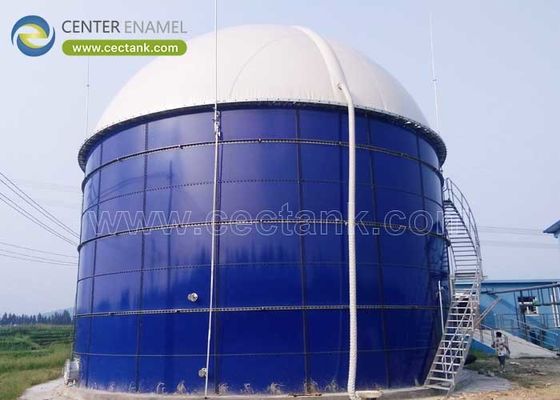
Unyielding Protection: Center Enamel’s High-Corrosion Resistance GFS Anaerobic Digester Tanks
| Place of Origin: | China |
| Brand Name: | CEC TANKS |
| Certification: | ISO 9001:2008, AWWA D103 , OSHA , BSCI |
| Model Number: | J2016012645 |
| Minimum Order Quantity: | 1set |
| Price: | $5000~$20000 one set |
| Packaging Details: | PE poly-foam between each two steel plates ; wooden pallet and wooden box |
| Delivery Time: | 0-60 days after deposit received |
| Payment Terms: | L/C,T/T |
| Supply Ability: | 60 sets per month |
|
Detail Information |
|||
| Place of Origin | China | Brand Name | CEC TANKS |
|---|---|---|---|
| Certification | ISO 9001:2008, AWWA D103 , OSHA , BSCI | Model Number | J2016012645 |
| Tank Color: | Dark Green, Dark Blue, Light Blue And Customized | Tank Material: | Glass Coated Steel Sheets |
| Capacity Range: | 20 M3 To 18,000 M3 | Service Life: | More Than 30 Years |
| Coating Thickness: | 0.35mm | Coating Color: | Customized |
| Roof Options: | Glass Fused Steel Roof , Membrane Roof, Aluminum Deck Roof, GRP Roof | Highlight: | anaerobic sludge digester,anaerobic manure digester,enamel bolted anaerobic digester tank |
Product Description
In the rapidly evolving biogas and renewable energy sector, the infrastructure holding your process is as critical as the biological reaction itself. Anaerobic digestion is an inherently aggressive process; the byproduct of breaking down organic waste is often highly acidic and rich in Hydrogen Sulfide (H2S), a substance known to rapidly degrade traditional concrete and carbon steel tanks.
For operators of municipal wastewater treatment plants, industrial food processing facilities, and agricultural farms, Center Enamel’s Glass-Fused-to-Steel (GFS) tanks provide an unyielding, high-corrosion-resistant solution engineered to thrive in the harsh conditions of sustained biogas production.
Anaerobic digesters operate in environments that would destroy standard storage infrastructure within years. The primary threats include:
Chemical Attack: The production of sulfuric acid through H2S oxidation targets the internal lining of tanks.
Microbial-Induced Corrosion (MIC): Biological activity can create micro-environments that accelerate the oxidation of steel and the weathering of concrete.
Gas Permeability: Biogas storage requires absolute gas-tight integrity. Cracks in concrete or corrosion in welded seams result in methane leakage—a loss of revenue and an environmental hazard.
Center Enamel’s GFS technology creates a molecular, inorganic bond between the glass frit and the titanium-alloy steel. This result is a non-porous, chemically inert barrier that prevents the corrosive media from ever contacting the steel substrate.
Our proprietary enamel formulations are designed to handle extreme pH ranges (typically pH 1 to 14). This makes our tanks the ideal choice for storing feedstock, liquid manure, industrial wastewater, and sewage sludge, even when H2S concentrations are high.
Unlike traditional cast-in-place concrete tanks that require months to pour and cure, Center Enamel’s modular GFS panels are prefabricated in our ISO-certified factory. Using our specialized "top-down" hydraulic jacking method, we can assemble a large-scale digester in a fraction of the time, significantly reducing your project’s construction timeline.
Methane is the product—and the profit. Our GFS tanks utilize high-grade, chemical-resistant gaskets and sealant systems specifically engineered to maintain a gas-tight seal, ensuring that your biogas output is maximized and secure.
When analyzing the Total Cost of Ownership (TCO) for biogas projects, GFS technology provides a distinct advantage over legacy materials.
| Feature | Center Enamel GFS Tanks | Poured Concrete | Welded Carbon Steel |
|---|---|---|---|
| Corrosion Resistance | Superior (Inert Glass) | Low (Requires Lining) | Low (Needs Painting) |
| Installation Speed | Fast (Modular) | Slow (Weeks/Months) | Moderate |
| Surface Porosity | Zero (Anti-Adhesion) | High | Moderate |
| Gas Tightness | Excellent | Moderate (Micro-cracking) | Moderate (Weld Defects) |
| Lifespan | 30+ Years | 20–30 Years | 20–30 Years |
A: Concrete is naturally porous and prone to micro-cracking caused by temperature fluctuations and settlement. In a biogas environment, these cracks allow acidic compounds to reach the reinforcing steel, leading to "concrete cancer." GFS is non-porous and flexible, providing a lifetime of chemical resistance.
A: Yes. Every tank is engineered following international structural standards (e.g., AWWA D103-19, ISO 28765) to withstand the specific hydrostatic, internal pressure, and site-specific seismic/wind loads required for your facility.
A: Absolutely. Our glass-fused-to-steel coating is thermally stable and resistant to the temperature ranges required for both mesophilic and thermophilic processes, ensuring the coating does not delaminate or degrade under sustained thermal stress.
A: We provide comprehensive engineering support, including structural analysis, foundation design, and layout optimization to ensure the tank perfectly integrates with your mixing, heating, and gas-capture equipment.
In the renewable energy industry, the reliability of your infrastructure directly correlates to your uptime and ROI. Center Enamel provides the engineering excellence, modular flexibility, and corrosion resistance necessary to ensure your biogas production runs efficiently for decades.
Ready to start your anaerobic digester project? Our engineering team is ready to conduct a site-specific assessment for your facility.
Global Leading Storage Tanks Manufacturer | Center Enamel
This video highlights Center Enamel’s global manufacturing capacity and the engineering rigor behind our GFS storage solutions for industrial and renewable energy applications.