-
Glass Fused To Steel Tanks (596)
-
Stainless Steel Tanks (434)
-
Fusion Bonded Epoxy Tanks (592)
-
Galvanized Steel Tanks (321)
-
Aluminum Dome Roofs (1336)
-
Wastewater Storage Tanks (232)
-
Welded Steel Tanks (457)
-
Pressure Vessels (295)
-
Anaerobic Digester (201)
-
Industrial Water Tanks (349)
-
Glass Lined Steel Tanks (180)
-
Bolted Steel Tanks (389)
-
Sludge Storage Tank (115)
-
Biogas Storage Tank (173)
-
Leachate Storage Tanks (133)
-
Agricultural Water Storage Tanks (179)
-
Fire Water Tank (166)
-
Grain Storage Silos (146)
-
Biogas Projects (425)
-
Wastewater Treatment Projects (978)
-
Double Membrane Roof (223)

|
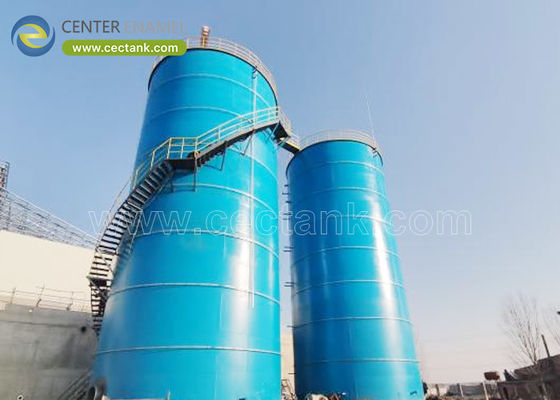
Glass-Fused-to-Steel (GFS) UASB Reactors: The High-Performance Engine for Biogas Projects
| Place of Origin: | China |
| Brand Name: | CEC TANKS |
| Certification: | ISO 9001:2008, AWWA D103 , OSHA , BSCI |
| Model Number: | W |
| Minimum Order Quantity: | 1set |
| Price: | $5000~$20000 one set |
| Packaging Details: | PE poly-foam between each two steel plates ; wooden pallet and wooden |
| Delivery Time: | 10-30 days after deposit received |
| Payment Terms: | L/C,T/T |
| Supply Ability: | 60 sets per month |
|
Detail Information |
|||
Product Description
In the transition toward a circular economy, industrial facilities are increasingly challenged to do more with less: treat wastewater efficiently while simultaneously generating renewable energy. The Upflow Anaerobic Sludge Blanket (UASB) reactor has emerged as the technology of choice for this dual objective.
However, the efficiency of a UASB reactor is only as strong as its containment structure. For decades, engineers relied on concrete or welded steel, but today, Glass-Fused-to-Steel (GFS) technology has become the industry benchmark for UASB infrastructure. It combines the structural strength of steel with the chemical inertness of glass, creating an anaerobic reactor built to last.
The UASB reactor is a highly efficient anaerobic treatment process where wastewater flows upward through a dense "blanket" of granular sludge. Inside this blanket, anaerobic bacteria break down organic matter into biogas (methane and CO2) and treated water.
A GFS UASB reactor utilizes factory-manufactured steel panels that are fused with silicate glass at 820°C–930°C. This creates a molecular bond that prevents the structural degradation typically caused by the corrosive, acidic conditions found inside an anaerobic digester.
The environment inside a UASB reactor is aggressive. It involves high levels of hydrogen sulfide (H2S), volatile fatty acids, and temperature fluctuations. GFS technology offers specific advantages that concrete and carbon steel cannot match:
Anaerobic digestion produces acidic byproducts that can rapidly degrade the cement matrix of concrete or the surface of standard carbon steel. The glass-fused surface of GFS tanks is chemically inert, preventing acid attack and ensuring the tank shell maintains its structural thickness for 30+ years.
The ultra-smooth, pore-free surface of the glass lining prevents the accumulation of biofilms and sludge "clinging." This ensures consistent internal flow and efficient hydraulic distribution, which are critical for maintaining the granular sludge blanket's performance.
UASB reactors are complex engineering structures. GFS panels are prefabricated in a controlled factory environment, reducing on-site construction time by up to 50% compared to cast-in-place concrete. This allows projects to be commissioned faster, accelerating the Return on Investment (ROI) through earlier biogas production.
| Feature | Glass-Fused-to-Steel (GFS) | Poured Concrete | Welded Carbon Steel |
|---|---|---|---|
| Corrosion Resistance | Superior (Inert) | Low (Requires Lining) | Low (Needs Coating) |
| Construction Speed | Fast (Modular) | Slow (Weeks/Months) | Moderate |
| Lifecycle | 30+ Years | 20–30 Years | 15–20 Years |
| Surface Smoothness | Excellent (Non-stick) | Low (Porous) | Moderate |
| Scalability | Easy (Expandable) | None | Difficult |
A: Industrial wastewater often contains chemicals that eat away at concrete. Over time, concrete micro-cracks, leading to leaks and structural failure. GFS panels are flexible enough to handle environmental stresses and chemically immune to the effluent’s acidity.
A: Yes. In addition to the GFS shell, a high-performance UASB requires a precision-engineered Three-Phase Separator (gas-liquid-solid) at the top. We integrate these components seamlessly into our GFS tank designs to ensure optimal gas capture.
A: Absolutely. GFS reactors are highly robust. With proper equalization and monitoring, the granular sludge blanket is naturally resilient to shock loads, and the structure itself is designed to withstand the varying hydrostatic pressures of industrial processing.
At Center Enamel, we don't just supply tanks; we provide fully integrated storage and process solutions. With over 30 years of experience in global industrial water treatment, we offer the technical expertise, structural design, and field-proven GFS technology to make your biogas project a success.
Ready to maximize your biogas output? Contact our engineering team today to discuss your site-specific effluent profile and receive a technical feasibility study.