-
Glass Fused To Steel Tanks (596)
-
Stainless Steel Tanks (434)
-
Fusion Bonded Epoxy Tanks (592)
-
Galvanized Steel Tanks (321)
-
Aluminum Dome Roofs (1336)
-
Wastewater Storage Tanks (232)
-
Welded Steel Tanks (457)
-
Pressure Vessels (295)
-
Anaerobic Digester (201)
-
Industrial Water Tanks (349)
-
Glass Lined Steel Tanks (180)
-
Bolted Steel Tanks (389)
-
Sludge Storage Tank (115)
-
Biogas Storage Tank (173)
-
Leachate Storage Tanks (133)
-
Agricultural Water Storage Tanks (179)
-
Fire Water Tank (166)
-
Grain Storage Silos (146)
-
Biogas Projects (425)
-
Wastewater Treatment Projects (908)
-
Double Membrane Roof (223)

|
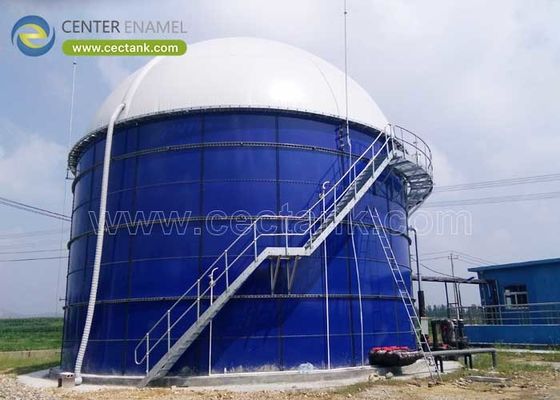
Bolted Steel CSTR Reactors for Biogas Plants: A Reliable Solution for Efficient Biogas Production
| Place of Origin: | China |
| Brand Name: | CEC TANKS |
| Certification: | ISO 9001:2008, AWWA D103 , OSHA , BSCI |
| Model Number: | W201609013 |
| Minimum Order Quantity: | 1set |
| Price: | $5000~$20000 one set |
| Packaging Details: | PE poly-foam between each two steel plates ; wooden pallet and wooden box |
| Delivery Time: | 0-60 days after deposit received |
| Payment Terms: | L/C,T/T |
| Supply Ability: | 60 sets per month |
|
Detail Information |
|||
Product Description
In the rapidly expanding renewable energy sector, the efficiency of anaerobic digestion (AD) is defined by the stability and reliability of the reactor. The Continuous Stirred-Tank Reactor (CSTR) is the industry standard for high-performance biogas plants, providing a continuous, homogeneous environment for organic feedstock breakdown.
As project developers and facility operators transition away from labor-intensive concrete basins and unpredictable field-welded steel tanks, bolted steel CSTR reactors—particularly those utilizing Glass-Fused-to-Steel (GFS) technology—have emerged as the premier infrastructure solution.
A CSTR reactor is a biological powerhouse designed to maintain a consistent environment where anaerobic bacteria convert organic matter into methane-rich biogas. Unlike batch systems, a CSTR reactor operates on a continuous feed-and-discharge process.
When constructed using modular bolted steel panels rather than monolithic concrete or welded steel, the reactor becomes a high-precision, factory-engineered asset. These tanks are designed to be airtight, chemically inert, and thermally efficient, ensuring maximal volatile solids reduction and gas yield.
Biogas production is an inherently aggressive process. The breakdown of organic material releases volatile fatty acids (VFAs), hydrogen sulfide (H_2S), and ammonia—all of which rapidly corrode standard carbon steel and degrade the porous surface of concrete.
The gold standard for CSTR reactors is Glass-Fused-to-Steel (GFS). Silica-based enamel frit is fused to steel at temperatures reaching 820°C to 930°C, creating a molecular, inorganic bond.
Vapor Zone Protection: The headspace of a digester is the most corrosive area due to H_2S and condensation. GFS coatings are completely impervious to this gas-phase corrosion.
Non-Stick Surface: The smooth glass surface prevents sludge adhesion, eliminating "dead zones" within the reactor and ensuring consistent mixing.
Traditional concrete tanks require weeks of curing and are highly susceptible to weather-related delays. Bolted steel panels are factory-prefabricated and shipped in compact containers.
Top-Down Jacking Method: Assembly occurs at ground level, allowing for safer, faster construction. This modular approach is largely independent of adverse weather conditions, cutting project timelines by up to 60%.
Zero-Defect Guarantee: Every panel undergoes 1500V electrical holiday testing before leaving the factory to ensure zero coating defects, guaranteeing a gas-tight vessel from day one.
As feedstock volumes increase or energy demands evolve, bolted reactors offer unmatched flexibility. Unlike concrete tanks, which are static, bolted tanks can be vertically expanded by adding additional ring panels, providing a sustainable pathway for business growth.
When evaluating the Total Cost of Ownership (TCO), bolted steel technology is consistently identified as the most efficient investment for modern biogas facilities.
| Feature | Bolted Steel CSTR (GFS) | Field-Welded Steel | Poured Concrete |
|---|---|---|---|
| Corrosion Resistance | Excellent (Inert Glass) | Low (Requires Anodes) | Very Low (Spalling) |
| Construction Time | Fast (Weeks) | Slow (Months) | Very Slow (Months) |
| Gas-Tight Integrity | Superior (Factory Tested) | Moderate | Low (Micro-cracks) |
| Maintenance | Near-Zero | High (Repainting) | High (Sealing) |
| Scalability | High (Modular) | None | None |
Process Stability: The robust mixing capabilities of a CSTR, combined with external insulation blankets (integrated with the bolted steel shell), ensure stable thermophilic or mesophilic temperatures, which are critical for gas yield.
Extended Asset Lifespan: Engineered to adhere to AWWA D103 and ISO 28765 standards, these reactors offer a verified service life of 30+ years, providing a clear Return on Investment (ROI).
Integration: Automation systems—including pH sensors, temperature probes, and biogas monitoring—are easily integrated into the bolted panel design, allowing operators to monitor the reactor in real-time.
While epoxy is a viable option, it is a polymer coating that can degrade under intense UV exposure and specific chemical conditions. GFS is an inorganic, glass-fused barrier that does not age, peel, or require re-coating, making it the superior choice for long-term digester reliability.
Yes. The bolted steel structure is compatible with external heating systems (coils or jackets) and high-density insulation, allowing for stable thermophilic temperatures which significantly accelerate biogas production.
The design uses specialized, high-grade elastomeric sealants and self-locking, high-tensile bolts tested specifically for aggressive biogas environments, ensuring a permanent, gas-tight seal that accommodates structural movement.
Center Enamel is a global leader in modular bolted storage and reactor systems, with thousands of successful installations worldwide. By combining advanced GFS technology with expert engineering support, we help biogas plants achieve higher energy yields with lower operational overhead.
Ready to optimize your biogas production? Contact our engineering team today to discuss your site-specific requirements, gas yields, and project timelines.