-
Glass Fused To Steel Tanks (596)
-
Stainless Steel Tanks (434)
-
Fusion Bonded Epoxy Tanks (592)
-
Galvanized Steel Tanks (321)
-
Aluminum Dome Roofs (1336)
-
Wastewater Storage Tanks (232)
-
Welded Steel Tanks (457)
-
Pressure Vessels (295)
-
Anaerobic Digester (201)
-
Industrial Water Tanks (349)
-
Glass Lined Steel Tanks (180)
-
Bolted Steel Tanks (389)
-
Sludge Storage Tank (115)
-
Biogas Storage Tank (173)
-
Leachate Storage Tanks (133)
-
Agricultural Water Storage Tanks (179)
-
Fire Water Tank (166)
-
Grain Storage Silos (146)
-
Biogas Projects (425)
-
Wastewater Treatment Projects (1008)
-
Double Membrane Roof (223)


|
GFS Drinking Water Storage Tanks: Pioneering Excellence in Acid & Alkali Resistance — Center Enamel
| Place of Origin: | China |
| Brand Name: | CEC TANKS |
| Certification: | ISO 9001:2008, NSF - 61 , AWWA D103 , OSHA , BSCI |
| Model Number: | W20160831001 |
| Minimum Order Quantity: | 1set |
| Price: | $5000~$20000 one set |
| Packaging Details: | PE poly-foam between each two steel plates ; wooden pallet and wooden box |
| Delivery Time: | 30 days after deposit received |
| Supply Ability: | 60 sets per month |
|
Detail Information |
|||
| Place of Origin | China | Brand Name | CEC TANKS |
|---|---|---|---|
| Certification | ISO 9001:2008, NSF - 61 , AWWA D103 , OSHA , BSCI | Model Number | W20160831001 |
| Foundation: | Concrete Or Glass Fused Steel | Tank Body: | Glass Fused To Steel |
| Service Life: | ≥30 Years | Capacity: | 20 M³ To 20,000 M³ |
| Tank Material: | Glass Fused To Steel | Highlight: | fixed roof storage tank,municipal water storage tanks |
Product Description
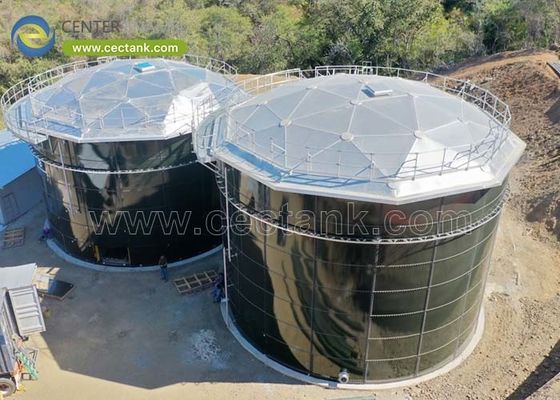
In municipal infrastructure and industrial drinking water networks, Glass-Fused-to-Steel (GFS) storage tanks serve as the premier choice for protecting public health and ensuring long-term structural reliability. Stored water is rarely static or chemically neutral. Fluctuations in ambient source water chemistry, combined with active treatments like pH balancing and disinfection dosing, can create highly corrosive internal environments.
Center Enamel solves this challenge by fusing a specialized silica-glass enamel coating onto high-strength carbon steel sheets. This physical bond provides excellent protection against both acidic and alkaline environments. The resulting inert coating stops heavy metal leaching, prevents microbial colonization, and preserves water quality to meet strict international public health standards.
Potable water processing relies on precise chemical adjustments to keep the water safe and clear. When raw water is too acidic or too basic, treatment plants add chemicals to balance it, which can challenge the storage tank's structural materials.
The internal surface of a drinking water tank must handle localized chemical concentrations near dosing lines. For example, during coagulation or pH adjustment, the tank lining interacts directly with acidic compounds like alum or basic compounds like sodium hydroxide
Standard concrete and carbon steel tanks are vulnerable to these chemical reactions. Acidic environments break down the calcium silicate hydrate binder in concrete, while alkaline solutions can degrade basic epoxy coatings.
Center Enamel’s GFS lining features a highly cross-linked silica glass matrix. This chemical structure provides an exceptional barrier that keeps both ions from attacking the underlying steel core, preventing corrosion across a wide operational PH spectrum.
Choosing the right storage tank material requires balancing long-term chemical durability against total installation time and maintenance costs.
| Engineering & Material Metric | Center Enamel Bolted GFS Tanks | Traditional Concrete Reservoirs | Field-Welded Stainless Steel |
|---|---|---|---|
| Acid Resistance (pH3-6) | Excellent. Impermeable vitreous enamel prevents acid damage. | Poor. Acidic water dissolves the cement paste over time. | High, though susceptible to localized pitting in high-chloride water. |
| Alkali Resistance (pH 9-11) | Excellent. Formulated to prevent alkaline surface dissolution. | Moderate. High alkalinity can still cause surface scaling. | High. Resists basic solutions effectively under normal temperatures. |
| Leaching & Contamination Risk | Zero. The inert glass face will not leach compounds into water. | High. Calcium and mineral salts can dissolve into soft water. | Low, but chromium or nickel can leach if weld seams fail. |
| Microbial Growth Resistance | Superior. Smooth, non-porous finish prevents biofilm attachment. | Poor. Porous surfaces give bacteria a place to take root. | Good, but rough weld lines can harbor microbial colonies. |
| Turnkey Installation Speed | Fast. Pre-fabricated panels bolt together quickly on-site. | Slow. Requires extensive formwork, pouring, and curing time. | Slow. Depends heavily on weather and on-site welding field checks. |
Building a safe drinking water storage tank requires precision at every stage of production and assembly. The modular design of Center Enamel GFS tanks eliminates many common installation errors found with on-site construction.
Steel panels are grit-blasted, sprayed with liquid slurry enamel, and fired above 800°C. Every finished panel undergoes a high-voltage spark test to verify that the glass coating is completely continuous and free of flaws.
A concrete foundation is poured with a specialized starter ring or anchor channel. This step creates a solid base that helps evenly distribute structural loads across the tank footprint.
The top ring of GFS panels and the roof structure are assembled at ground level. This technique minimizes high-altitude work, improving safety and construction efficiency.
Specialized NSF-certified EPDM sealants are applied along the panel overlaps. The panels are bolted together with high-torque fasteners, and the entire assembly is jacked upward to allow installation of the next lower ring of panels.
Center Enamel GFS drinking water tanks are designed to comply with global sanitary and structural regulations, ensuring safe performance across diverse regulatory regions:
- NSF/ANSI 61 Compliance: The glass coating formulation and internal sealants are certified under NSF/ANSI 61, confirming that no toxic chemicals, heavy metals, or impurities leach into the drinking water supply.
- AWWA D103-09 Standard: All structural calculations, panel thicknesses, bolt spacings, and wind-load calculations are engineered to match American Water Works Association (AWWA) specifications for bolted steel containment units.
- ISO 28765 Verification: The manufacturing plant adheres to ISO 28765 protocols, which specify the exact testing procedures required to evaluate the mechanical and chemical integrity of vitreous enamel coatings.
Industrial glass formulations usually excel at resisting either acids or alkalis, but rarely both. Center Enamel solves this by using a proprietary blend of chemical elements within the raw frit mixture. Firing this specialized formulation at high temperatures produces an adjusted molecular structure that reliably handles both low and high $text{pH}$ conditions.
No. Chlorine is a powerful oxidizing agent widely used for disinfection. While chlorine dosing can degrade standard epoxy-lined tanks over time, it does not react with the inert, inorganic glass surface of a GFS tank. The lining remains stable even near high-concentration chemical injection points.
Thanks to its durable glass coating and corrosion-resistant design, a Center Enamel GFS tank offers an operational life span that easily exceeds 30 years. The exterior requires minimal upkeep, eliminating the regular sandblasting and repainting cycles common with traditional steel tanks.