-
Glass Fused To Steel Tanks (596)
-
Stainless Steel Tanks (434)
-
Fusion Bonded Epoxy Tanks (592)
-
Galvanized Steel Tanks (321)
-
Aluminum Dome Roofs (1336)
-
Wastewater Storage Tanks (232)
-
Welded Steel Tanks (457)
-
Pressure Vessels (295)
-
Anaerobic Digester (201)
-
Industrial Water Tanks (349)
-
Glass Lined Steel Tanks (180)
-
Bolted Steel Tanks (389)
-
Sludge Storage Tank (115)
-
Biogas Storage Tank (173)
-
Leachate Storage Tanks (133)
-
Agricultural Water Storage Tanks (179)
-
Fire Water Tank (166)
-
Grain Storage Silos (146)
-
Biogas Projects (425)
-
Wastewater Treatment Projects (938)
-
Double Membrane Roof (223)

|
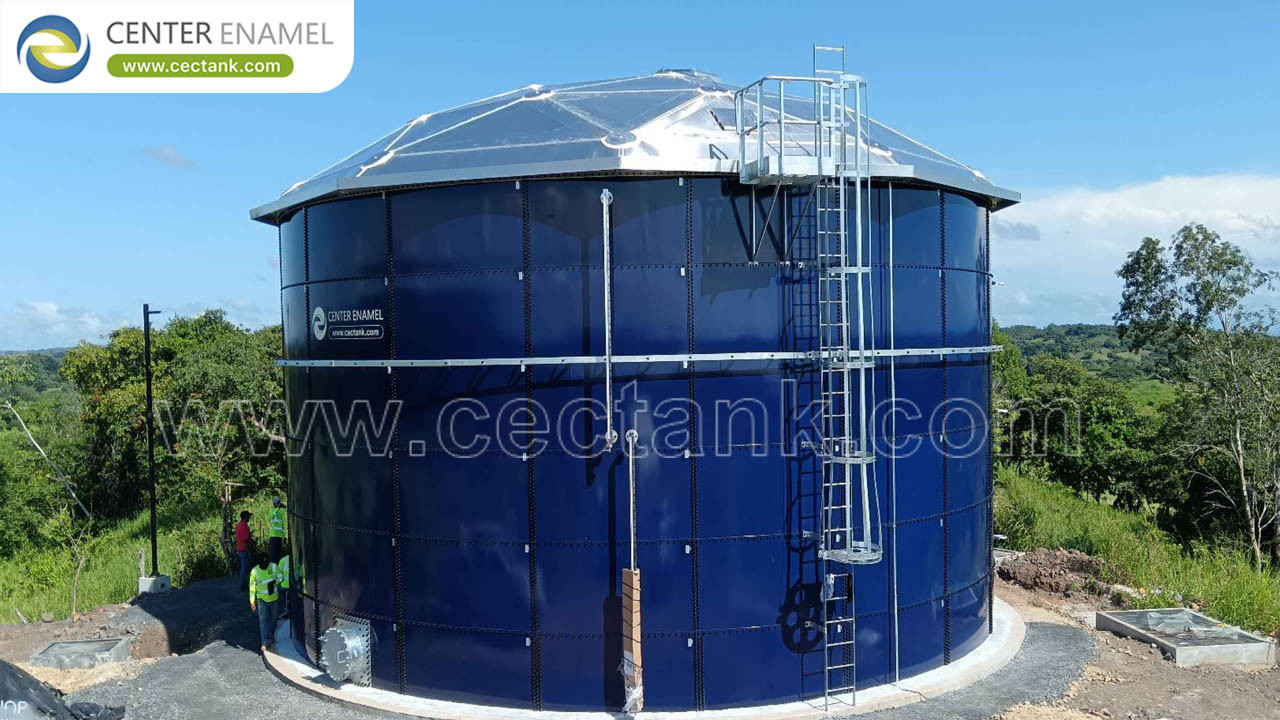
Municipal Water Storage Tanks: Reliable, Sustainable Solutions for Resilient Cities
| Place of Origin: | China |
| Brand Name: | CEC TANKS |
| Certification: | ISO 9001:2008, AWWA D103 , OSHA , BSCI |
| Model Number: | J2016012651 |
| Minimum Order Quantity: | 1set |
| Price: | $5000~$20000 one set |
| Packaging Details: | PE poly-foam between each two steel plates ; wooden pallet and wooden box |
| Delivery Time: | 0-60 days after deposit received |
| Payment Terms: | L/C,T/T |
| Supply Ability: | 60 sets per month |
|
Detail Information |
|||
| Place of Origin | China | Brand Name | CEC TANKS |
|---|---|---|---|
| Certification | ISO 9001:2008, AWWA D103 , OSHA , BSCI | Model Number | J2016012651 |
| Coating Color: | Can Be Customized | Coating Thickness: | 0.25mm~0.40mm & Double Coating |
| Adhesion: | 3,450N/cm | Elastic: | Same As Steel Sheet ,around 500KN /mm |
| Acid And Alkalinity Proof: | Standard Sheet PH:3~11 Special Sheet PH: 1~14 | Service Life: | ≥30 Years |
| Permeability: | Gas And Liquid Impermeable | Material: | Glass And Steel |
| Highlight: | fixed roof storage tank,municipal water storage tanks |
||
Product Description
Municipal Water Storage Tanks: Reliable, Sustainable Solutions for Resilient Cities
In 2026, the municipal water landscape is undergoing a critical transformation. As cities navigate the convergence of aging infrastructure, climate volatility, and rapid population growth, the demand for water storage systems has shifted from mere "containment" to long-term infrastructure resilience. Modern municipal water storage must be more than just a vessel; it must be a sustainable, high-performance asset that guarantees water security while minimizing lifecycle costs.
For urban planners and municipal engineers, the choice of storage technology is a defining decision for a community's future.
The 2026 Mandate: Reliability, Sustainability, and Resilience
Today’s municipal water systems are moving toward decentralization and modularity. Relying solely on massive, centralized treatment and storage facilities is increasingly viewed as a single-point-of-failure risk. Instead, municipalities are adopting modular, distributed storage networks that can be scaled to demand and isolated during maintenance or emergencies.
To meet these modern requirements, water storage infrastructure must excel in three areas:
-
Water Quality Integrity: Compliance with the strictest health standards (e.g., NSF/ANSI 61) is non-negotiable.
-
Corrosion Resilience: Infrastructure must resist chemical and environmental degradation to ensure a 50+ year service life.
-
Operational Efficiency: Systems should require minimal human intervention, utilizing smart monitoring and low-maintenance materials to reduce OpEx.
Glass-Fused-to-Steel (GFS): The New Gold Standard
When evaluating materials for municipal water storage, Glass-Fused-to-Steel (GFS) technology has emerged as the premier solution, outperforming legacy materials like poured concrete and welded carbon steel in both resilience and environmental sustainability.
By fusing silicate glass to high-strength steel at temperatures exceeding 820°C, GFS tanks create a molecular, inert barrier. This process provides an ideal environment for municipal water because it is impervious to bacterial growth, requires zero periodic painting or chemical lining, and stands up to the harshest environmental extremes.
Why GFS Tanks Lead Municipal Infrastructure
-
Hygienic & Food-Grade Safe: The non-porous glass surface prevents biofilm and algae, keeping water as pure as the day it was treated.
-
Rapid Deployment: Modular, bolted design allows for assembly in a fraction of the time required for concrete reservoirs, getting water to the community faster.
-
Future-Proofing: Modular design means tanks can be expanded or repurposed as your city’s growth trajectory changes.
Comparative Analysis: Municipal Water Storage Technologies
For decision-makers, evaluating the Total Cost of Ownership (TCO) is essential. The following table contrasts standard storage solutions currently in use by municipal water authorities.
| Feature | Glass-Fused-to-Steel (GFS) | Poured Concrete | Welded Carbon Steel |
| Water Quality | Excellent (Inert/Hygienic) | Moderate (Porous) | Low (Rust-prone) |
| Maintenance | Minimal (No Painting) | High (Crack Repair) | High (Recoating) |
| Installation Speed | Fast (Modular) | Very Slow (Curing) | Moderate |
| Seismic Resilience | High (Engineered) | Variable | Moderate |
| Asset Lifecycle | 30–50+ Years | 20–30 Years | 20–30 Years |
Sustainable Infrastructure Planning: A Strategic Approach
Building a sustainable municipal water system is not just about the tank; it is about the integration of the tank into the municipal grid.
-
Asset Management: Implement inventory tracking to understand the condition of current assets and prioritize critical repairs.
-
Water Efficiency: High-quality, leak-proof storage (like GFS) eliminates the "hidden losses" often found in aging distribution systems.
-
Source Water Protection: Modernizing storage is a key pillar of source water protection, ensuring that treated, high-quality water is kept secure from the moment it leaves the treatment plant to the moment it reaches the tap.
Partnering for Long-Term Success
Municipalities are not just purchasing a tank; they are partnering with manufacturers who can deliver site-specific engineering, international compliance certification (such as AWWA D103 and NSF/ANSI 61), and robust after-sales support.
Center Enamel provides the engineering rigor and manufacturing scale required to support modern municipal water infrastructure. From high-capacity reservoirs to distributed, modular tanks, our GFS systems are engineered to protect your community's water supply for decades to come.