-
Glass Fused To Steel Tanks (596)
-
Stainless Steel Tanks (434)
-
Fusion Bonded Epoxy Tanks (592)
-
Galvanized Steel Tanks (321)
-
Aluminum Dome Roofs (1336)
-
Wastewater Storage Tanks (232)
-
Welded Steel Tanks (457)
-
Pressure Vessels (295)
-
Anaerobic Digester (201)
-
Industrial Water Tanks (349)
-
Glass Lined Steel Tanks (180)
-
Bolted Steel Tanks (389)
-
Sludge Storage Tank (115)
-
Biogas Storage Tank (173)
-
Leachate Storage Tanks (133)
-
Agricultural Water Storage Tanks (179)
-
Fire Water Tank (166)
-
Grain Storage Silos (146)
-
Biogas Projects (425)
-
Wastewater Treatment Projects (978)
-
Double Membrane Roof (223)
|
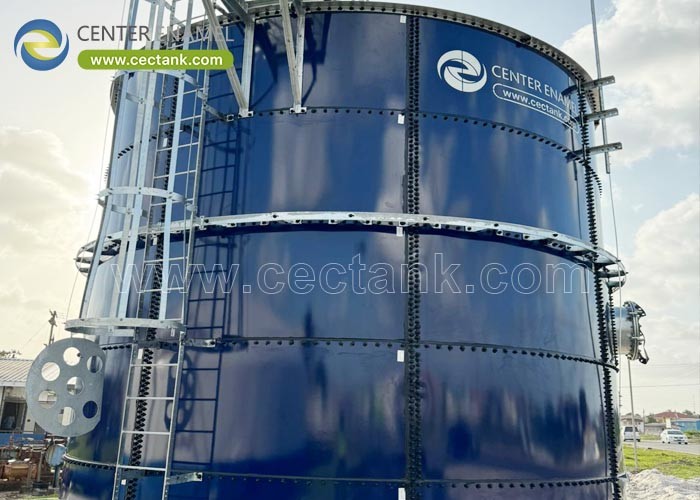
1000m³ Industrial Water Tanks: Achieving 30-Year Service Life with AWWA & OSHA Compliance
| Place of Origin: | China |
| Brand Name: | CEC TANKS |
| Certification: | ISO 9001:2008, AWWA D103 , OSHA , BSCI |
| Model Number: | W20161227007 |
| Minimum Order Quantity: | 1set |
| Price: | $5000~$20000 one set |
| Packaging Details: | PE poly-foam between each two steel plates ; wooden pallet and wooden box |
| Delivery Time: | 0-60 days after deposit received |
| Payment Terms: | L/C,T/T |
| Supply Ability: | 60 sets per month |
|
Detail Information |
|||
Product Description
For industrial facilities, a 1000m³ water storage tank is a mission-critical asset. Whether it is used for process water, fire suppression, or potable storage, the investment must be balanced against the Total Cost of Ownership (TCO) and the stringent regulatory environment of 2026.
Facility managers and engineers today are moving away from traditional carbon steel—which requires constant repainting—and fragile concrete, opting instead for Glass-Fused-to-Steel (GFS) bolted tanks. When engineered correctly, these systems provide a 30-year service life while meeting the rigorous requirements of AWWA D103 and OSHA.
To achieve a 30-year service life, the tank material must resist corrosion without the need for constant maintenance. GFS technology achieves this by fusing silicate glass to high-strength steel at temperatures over 820°C.
This creates a molecular bond that is:
Impervious to Corrosion: Unlike standard epoxy-coated steel, the glass-fused surface does not delaminate or rust, even when exposed to harsh industrial chemicals or high-salinity water.
Hygienic and Inert: The smooth, non-porous surface prevents biofilm and algae growth, making it ideal for high-purity process water.
Modular and Scalable: The bolted panel design allows for rapid assembly and, critically, future capacity expansion if your facility needs grow beyond the initial 1000m³ footprint.
When procuring a 1000m³ tank, compliance is not just about paperwork; it is about operational safety and system reliability.
The AWWA D103 standard is the definitive benchmark for bolted steel tanks in North American and international industrial markets. Compliance ensures:
Structural Integrity: Rigorous calculations for wind, seismic, and hydrostatic loads.
Quality Control: Standardization of the steel plate thickness, bolting materials (high-tensile), and the sealing system between panels.
Longevity: A documented design life that matches the project requirement, ensuring that the tank will not fail prematurely due to improper structural design.
While the tank itself is a vessel, the entire system must comply with OSHA (Occupational Safety and Health Administration) regulations to ensure the safety of your maintenance and operations personnel. Key safety integration points include:
Fall Protection: Installation of OSHA-compliant ladders with safety cages or fall-arrest systems for roof access.
Confined Space Protocols: Designing access manways (typically 24” minimum) with appropriate labeling and entry-point safety guards.
Perimeter Railings: Where roof access is required, full perimeter guardrails and toeboards must be integrated to prevent accidental falls.
Selecting the right technology for a 1000m³ project requires looking at long-term performance, not just upfront capital costs.
| Feature | Glass-Fused-to-Steel (GFS) | Welded Carbon Steel | Poured Concrete |
|---|---|---|---|
| Service Life | 30–50+ Years | 15–25 Years | 20–30 Years |
| Maintenance | Minimal | Frequent (Painting) | High (Crack Repair) |
| Construction | Fast (Bolted) | Slow (Welding) | Very Slow (Curing) |
| Compliance | AWWA / OSHA Ready | Requires External Certification | Varies |
| Expansion | Easy | Impossible | Impossible |
A: Longevity is achieved through the inert, glass-fused coating that prevents the steel from ever coming into contact with the stored liquid. By eliminating corrosion at the source and utilizing high-tensile hardware, the structural integrity of the tank is maintained for decades.
A: Yes. One of the primary benefits of bolted GFS tanks is modularity. If your facility expands, you can often add additional rings to the existing tank to increase its height and capacity, protecting your initial investment.
A: Yes. The surface is chemically inert and non-stick, which makes cleaning and maintenance much easier and safer for personnel. We ensure that all ladder systems, platforms, and roof hatches are engineered to exceed OSHA safety standards.
A: Welded tanks require onsite sandblasting and liquid coating application, which are weather-dependent and highly susceptible to human error. GFS panels are factory-coated and cured, ensuring a 100% consistent finish that is impossible to replicate with field-applied coatings.
At Center Enamel, we specialize in large-scale industrial storage solutions. Our 1000m³ GFS tanks are engineered specifically to exceed AWWA D103 standards and are configured with full OSHA-compliant safety accessories to protect your team.
Ready to start your project? Contact our engineering team for a site-specific assessment, including seismic analysis, wind load calculations, and a detailed project timeline.