-
Glass Fused To Steel Tanks (596)
-
Stainless Steel Tanks (434)
-
Fusion Bonded Epoxy Tanks (592)
-
Galvanized Steel Tanks (321)
-
Aluminum Dome Roofs (1336)
-
Wastewater Storage Tanks (232)
-
Welded Steel Tanks (457)
-
Pressure Vessels (295)
-
Anaerobic Digester (201)
-
Industrial Water Tanks (349)
-
Glass Lined Steel Tanks (180)
-
Bolted Steel Tanks (389)
-
Sludge Storage Tank (115)
-
Biogas Storage Tank (173)
-
Leachate Storage Tanks (133)
-
Agricultural Water Storage Tanks (179)
-
Fire Water Tank (166)
-
Grain Storage Silos (146)
-
Biogas Projects (425)
-
Wastewater Treatment Projects (908)
-
Double Membrane Roof (223)

|
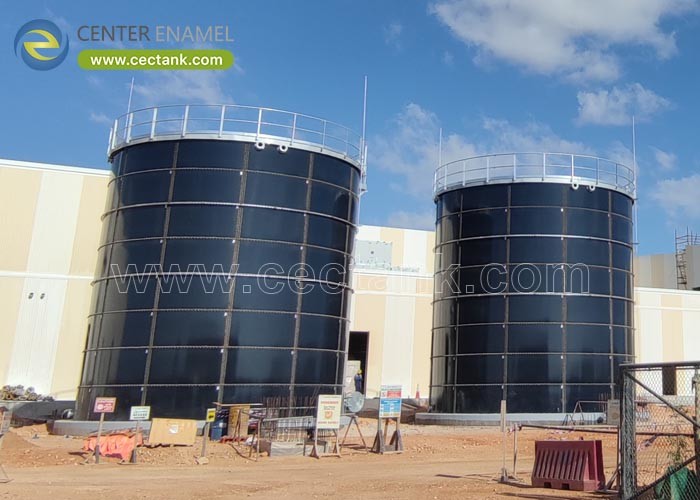
Customizable Industrial Water Tanks: Engineered Solutions for Complex Storage
| Place of Origin: | China |
| Brand Name: | CEC TANKS |
| Certification: | ISO 9001:2008, AWWA D103 , OSHA , BSCI |
| Model Number: | J2016012321 |
| Minimum Order Quantity: | 1set |
| Price: | $5000~$20000 one set |
| Packaging Details: | PE poly-foam between each two steel plates ; wooden pallet and wooden box |
| Delivery Time: | 0-60 days after deposit received |
| Payment Terms: | L/C,T/T |
| Supply Ability: | 60 sets per month |
|
Detail Information |
|||
| Place of Origin | China | Brand Name | CEC TANKS |
|---|---|---|---|
| Certification | ISO 9001:2008, AWWA D103 , OSHA , BSCI | Model Number | J2016012321 |
| Elastic: | Same As Steel Sheet , Around 500KN/mm | Coating Thickness: | 4.0.25mm - 0.4mm, Two Coating Internal And External |
| Permeability: | Gas / Liquid Impermeable | Steel Plates Thickness: | 3mm - 12mm , Depends On The Diameter & Height |
| Hardness: | 6.0 ( Mohs ) | Adhesion: | 3,450 N/cm |
| Highlight: | fixed roof storage tank,municipal water storage tanks,customizable industrial water tanks |
||
Product Description
For industrial facilities, municipal utilities, and large-scale agricultural operations, "off-the-shelf" storage is rarely the optimal solution. Every site presents unique variables: limited footprint, aggressive chemical environments, specific seismic codes, and future capacity demands.
Customizable industrial water tanks—specifically modular bolted steel systems—have become the industry standard for addressing these complex requirements. By transitioning from rigid, poured-in-place concrete or fixed-size welded tanks to engineered, customizable modular systems, facility managers can achieve superior structural longevity, predictable deployment timelines, and precise integration with existing process infrastructure.
Industrial water storage is not a one-size-fits-all discipline. Customization allows engineers to tailor the tank’s physical and chemical properties to the specific process requirements, effectively reducing the Total Cost of Ownership (TCO).
Industrial footprints are often congested. Unlike circular concrete basins that require massive diameters, modular bolted tanks can be engineered in various configurations—including varying heights and diameters—to maximize the available land.
The stored medium determines the tank's inner "skin." Whether storing aggressive reverse osmosis (RO) permeate, corrosive wastewater, or potable water, customization allows for the selection of specific enamel coatings, epoxy linings, or heavy-duty geomembrane liners that ensure 20+ years of service life without degradation.
Operational demands change. A key advantage of modular design is the ability to expand capacity by adding additional panel rings or reconfiguring existing layouts, a feat nearly impossible with traditional concrete or welded steel structures.
When configuring a customizable water tank, engineering teams focus on three primary layers of integration:
| Component | Customization Options |
| Material Shell | Glass-Fused-to-Steel (GFS), Fusion-Bonded Epoxy (FBE), Stainless Steel (304/316L). |
| Lining Systems | Polyethylene, Polypropylene, XR-5 Geomembranes, or direct-bonded enamels. |
| Access & Utility | Custom nozzle placements, manways, agitator bridges, level sensors, ladders, and safety cages. |
| Structural Load | Site-specific seismic, wind-load, and snow-load engineering (AWWA D103/NFPA 22). |
The primary driver behind the popularity of customizable bolted tanks is the modular assembly protocol. By fabricating steel panels in a factory setting, manufacturers eliminate the quality variables associated with field welding.
Factory-Controlled Precision: Grit-blasting, coating, and quality-assurance testing (such as high-voltage holiday detection) occur in a climate-controlled environment, not on a rainy or humid construction site.
Rapid Deployment: Panels are "flat-packed," reducing shipping costs and logistical hurdles. Assembly happens on-site using a top-down hydraulic jacking method, allowing for construction in as little as a few weeks, even in remote or restricted-access locations.
| Feature | Customizable Bolted Steel | Field-Welded Steel | Poured Concrete |
| Customization | High (Configurable) | Low | Low |
| Installation Speed | Fast (Weeks) | Slow (Months) | Very Slow (Months) |
| Maintenance | Low (Modular repair) | High (Repainting) | High (Crack sealing) |
| Expandability | Yes (Add rings) | No | No |
| Seismic Performance | Excellent (Flexible) | Moderate | Low (Brittleness) |
Q: Can I integrate my existing monitoring systems into a custom tank?
A: Yes. Custom industrial tanks are frequently engineered with pre-fabricated nozzle placements to accommodate ultrasonic level sensors, flow meters, pressure transducers, and PLC integration cables.
Q: Are these tanks suitable for harsh chemical environments?
A: Absolutely. By selecting high-grade chemically resistant linings (like polypropylene) or GFS enamel coatings, these tanks can be engineered to withstand pH ranges from 1 to 14, making them ideal for equalization and industrial wastewater treatment.
Q: How do you ensure leak-free performance at the panel joints?
A: The "custom" aspect of these tanks extends to the sealing system. Depending on the fluid, we use specific food-grade or chemically inert elastomeric sealants that maintain their elasticity and bond over decades, even under varying hydrostatic pressures.
Customization is the key to ensuring your storage infrastructure remains an asset rather than a liability. By evaluating your specific storage volume, fluid chemistry, and site constraints, you can design a tank that provides reliable, long-term performance.
Are you evaluating a new storage project? Consider the footprint constraints, chemical profile of your stored liquid, and future expansion plans when speaking with your engineering partner to ensure the final tank specification is truly optimized for your facility.