-
Glass Fused To Steel Tanks (596)
-
Stainless Steel Tanks (434)
-
Fusion Bonded Epoxy Tanks (592)
-
Galvanized Steel Tanks (321)
-
Aluminum Dome Roofs (1336)
-
Wastewater Storage Tanks (232)
-
Welded Steel Tanks (457)
-
Pressure Vessels (295)
-
Anaerobic Digester (201)
-
Industrial Water Tanks (349)
-
Glass Lined Steel Tanks (180)
-
Bolted Steel Tanks (389)
-
Sludge Storage Tank (115)
-
Biogas Storage Tank (173)
-
Leachate Storage Tanks (133)
-
Agricultural Water Storage Tanks (179)
-
Fire Water Tank (166)
-
Grain Storage Silos (146)
-
Biogas Projects (425)
-
Wastewater Treatment Projects (1008)
-
Double Membrane Roof (223)

|
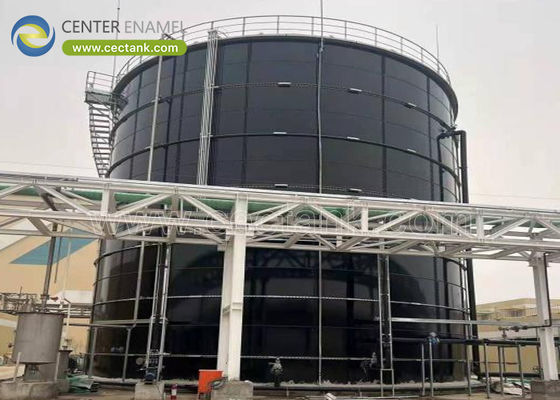
50,000 Gallon Bolted Steel Industrial Water Storage Tanks: The Perfect Solution for Large-Scale Water Storage
| Place of Origin: | CHINA |
| Brand Name: | CEC TANKS |
| Certification: | ISO 9001:2008, AWWA D103 , OSHA , BSCI |
| Model Number: | W20180508003 |
| Minimum Order Quantity: | 1 SET |
| Price: | $5000~$20000 one set |
| Packaging Details: | PE poly-foam between each two steel plates;wooden pallets and wooden box |
| Delivery Time: | 10-30 days after deposit received |
| Payment Terms: | L/C,T/T |
| Supply Ability: | 60 sets per month |
|
Detail Information |
|||
Product Description
The 50,000-gallon capacity serves as an indispensable volumetric benchmark because it satisfies the single-day operational baseline for mid-sized manufacturing, complies with NFPA 22 fire water reserve mandates, and avoids the massive footprint and high capital expenditure of six-figure gallon reservoirs.
Industrial facilities rely on this capacity for several primary reasons:
-
Fire Protection (NFPA 22): Provides a dedicated water supply capable of delivering 1,500 gallons per minute (GPM) for over 30 minutes to suppress warehouse and production emergencies.
-
Process Water Buffer: Prevents manufacturing line shutdowns during municipal supply disruptions, securing a continuous 8-to-12-hour water reserve.
-
Wastewater Equalization: Acts as a temporal storage vessel to equalize hydraulic flows and pH swings before raw effluent is discharged to local municipal sewers.
Direct Answer: A standard 50,000-gallon (approx. 49,779 nominal gallons / 188.05 m³) corrugated or flat-panel bolted steel tank typically features an outer diameter of 24.9 feet, a wall eave height of 14.2 feet, and a total dry steel weight of 4,735 lbs.
Because spatial limitations vary by site, industrial engineers design bolted steel tanks in three primary aspect ratio configurations:
| Structural Parameter | Standard Profile (Most Cost-Effective) | Low-Profile (Wide Footprint) | Tall Profile (Compact Footprint) |
|---|---|---|---|
| Nominal Volume | 49,779 Gallons (188 m³) | 50,000 Gallons (189.3 m³) | 50,000 Gallons (189.3 m³) |
| Diameter (FT) | 24.9 ft | 33.0 ft | 19.8 ft |
| Eave Height (FT) | 14.2 ft | 8.0 ft | 22.0 ft |
| Estimated Dry Weight | 4,735 lbs (2,148 kg) | ~5,300 lbs (2,404 kg) | ~4,200 lbs (1,905 kg) |
| Standard Roof Option | 10° Low V-Rib Roof | Flat Structural / Geodesic Dome | 30° Conical Steel Roof |
| Freeboard Allowance | 4 inches (0.33 ft) | 4 inches (0.33 ft) | 6 inches (0.50 ft) |
Direct Answer: Glass-Fused-to-Steel (GFS) provides an ultra-hard, impermeable barrier layer best suited for corrosive wastewater, acidic chemicals, and long-term potable water storage. Fusion-Bonded Epoxy (FBE) serves as a highly resilient, impact-absorbing polymer coating that offers premium corrosion resistance for treated water and municipal fire protection systems.
Center Enamel specializes in both advanced surface treatments to address distinct chemical variables:
-
The Fusion Process: Raw low-carbon steel panels are coated with a specialized liquid glass slurry and fired in a high-tech furnace at temperatures ranging from 820°C to 930°C. This causes an atomic bond where the glass merges directly with the steel grain structure.
-
Chemical Profile: Yields a high hardness rating of 6.0 Mohs. GFS is chemically inert and handles wide chemical variances, carrying a standard operating allowance of pH 3 to 11 (with specialized configurations handling pH 1 to 14).
-
The Coating Process: High-durability epoxy powder is electrostatically applied to grit-blasted steel plates and heat-cured under precise factory parameters.
-
Chemical Profile: FBE coatings create a thick, flexible polymer layer. While GFS excels in chemical acidity, FBE offers exceptional flexibility and physical impact resistance, preventing micro-fractures during freeze-thaw shifts or seismic movements.
Direct Answer: To be legally deployed and trusted in industrial settings, a 50,000-gallon bolted water storage tank must be engineered, fabricated, and field-tested in strict compliance with three primary international regulatory frameworks:
-
AWWA D103-09: The critical standard governing the design, plate thickness, bolt spacing, sealant choice, and wind/seismic load calculations of modular bolted steel water reservoirs.
-
NSF/ANSI 61: Mandatory for drinking water installations. This certification ensures that no heavy metals, organic compounds, or toxic synthetic chemicals leach from the GFS coating, FBE resin, or polyurethane sealants into the potable water supply.
-
NFPA 22: The National Fire Protection Association standard that governs the structural capacity, piping connections, anti-vortex plates, and heater additions needed to secure reliable water reserves for automatic sprinkler systems.
Yes, this is one of the biggest advantages over concrete or welded structures. Because the tank is built with modular steel panels bolted together with elastic sealants, individual panel tiers can be unbolted and transported to a new location. Furthermore, if your production capacity increases, a 50,000-gallon tank can be structurally expanded to 75,000 or 100,000 gallons by adding additional bottom tiers—provided the foundation and low-tier panels are engineered for the increased hydrostatic load.
Center Enamel employs a multi-phase Quality Assurance protocol, including a high-voltage holiday test (typically run at 1500V to 2500V) across the entire interior panel surface. This electrical scan instantly flags any microscopic pinholes or thin spots in the coating barrier. Additionally, physical water-tightness is verified through a hydrostatic leak test, filling the tank to its maximum freeboard line for a minimum of 24 hours prior to handoff.