-
Glass Fused To Steel Tanks (896)
-
Stainless Steel Tanks (434)
-
Fusion Bonded Epoxy Tanks (660)
-
Galvanized Steel Tanks (321)
-
Aluminum Dome Roofs (1336)
-
Wastewater Storage Tanks (280)
-
Welded Steel Tanks (457)
-
Pressure Vessels (514)
-
Anaerobic Digester (217)
-
Industrial Water Tanks (414)
-
Glass Lined Steel Tanks (180)
-
Bolted Steel Tanks (389)
-
Sludge Storage Tank (115)
-
Biogas Storage Tank (173)
-
Leachate Storage Tanks (133)
-
Agricultural Water Storage Tanks (179)
-
Fire Water Tank (166)
-
Grain Storage Silos (146)
-
Biogas Projects (424)
-
Wastewater Treatment Projects (1862)
-
Double Membrane Roof (223)
|
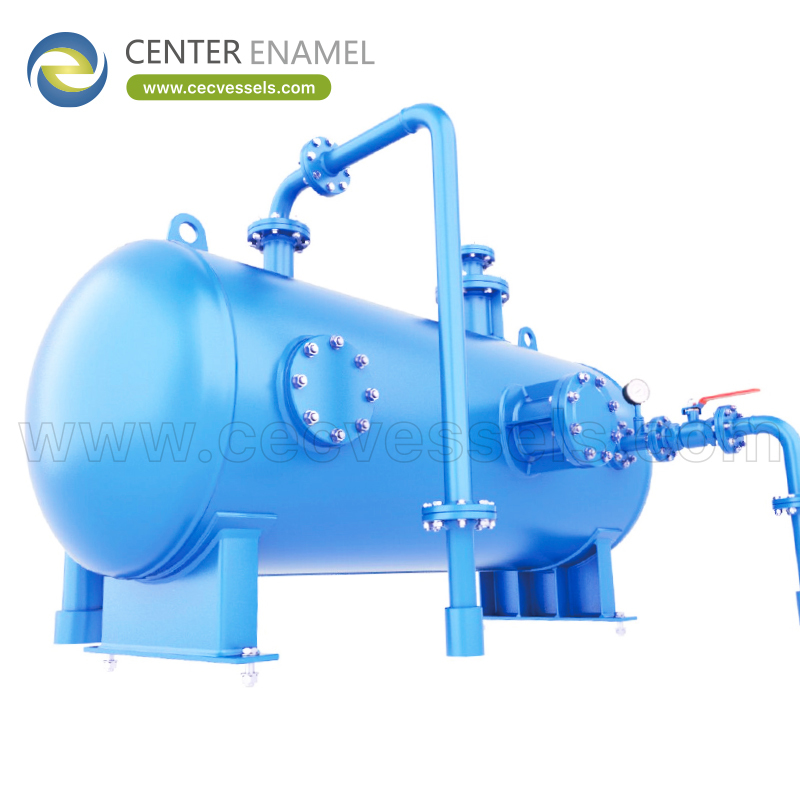
Pressure Vessel Heat Exchanger Shell And Tube Code Scope
| Place of Origin: | China |
| Brand Name: | Center Enamel |
| Certification: | ISO 9001,CE, NSF/ANSI 61, WRAS, ISO 28765, LFGB, BSCI, ISO 45001 |
| Minimum Order Quantity: | 1 Sets |
| Price: | 2000 |
| Delivery Time: | 2 months |
| Payment Terms: | L/C,T/T |
| Supply Ability: | 200 sets / days |
|
Detail Information |
|||
Product Description
A pressure vessel heat exchanger is a shell-and-tube unit whose shell side and channel side are both pressure boundaries, so it must satisfy the pressure vessel code as well as the exchanger-specific construction standard.
This guide explains where the pressure code and TEMA each apply, which parts of the exchanger are designed as vessels, and why the tubesheet is the component that needs the most careful scope definition.
Two Pressure Boundaries In One UnitA shell-and-tube exchanger contains two separate fluids at potentially different pressures. The shell side is enclosed by the shell, its heads and the tubesheet; the channel side is enclosed by the channel, its cover and the same tubesheet.
Both are pressure boundaries. A buyer who sizes only the shell and treats the channel as a simple cover misses half the code obligation, because the channel can carry the higher-pressure fluid.
Where ASME VIII AppliesThe pressure-retaining parts - shell, channel, heads, flanges and tubesheet - are designed and built to the vessel code. Thickness, openings, reinforcement, welds and pressure testing follow the same rules as any other pressure vessel.
The code governs strength and integrity; it does not optimize heat transfer or set thermal performance. Those belong to the process duty and the exchanger construction standard.
Where TEMA AppliesTEMA publishes mechanical standards for shell-and-tube exchangers covering nomenclature, construction classes, tube layout, baffles and the dimensional details that the vessel code does not address.
The two documents complement each other: TEMA defines the exchanger arrangement and mechanical detail, while the pressure code validates the boundaries. A specification should name both rather than assume one displaces the other.
The Tubesheet QuestionThe tubesheet separates the two fluids and is loaded by the differential pressure between them, by tube-to-tubesheet joint loads and by thermal gradient. It is simultaneously a pressure boundary and an exchanger component.
Its design is the most specialized part of the unit. The calculation must address the pressure loading on the sheet and the integrity of the tube joints, and the applicable rules depend on the construction standard and code edition named in the specification.
Channel, Cover And Flange DesignThe channel and its cover form the second pressure boundary and are built to vessel rules, including the flange and bolting that must remain sealed under pressure and temperature.
Where the channel side carries the more aggressive or higher-pressure fluid, it often drives the material selection and the flange class, even though the shell is the larger and heavier part.
Thermal And Mechanical Must Both Be StatedAn exchanger purchase order must state both duties: the thermal requirement (flow, inlet and outlet temperatures, fouling allowance) and the mechanical requirement (design pressure and temperature of each side, code, corrosion allowance).
Supplying only the thermal duty leaves the pressure boundary undefined; supplying only the pressure data leaves performance undefined. A sound enquiry carries both sets.
Testing And DocumentationThe completed exchanger is pressure tested on each side to the code requirement, and the tube joints are verified by leak testing. The data book combines the vessel code report with the exchanger construction records.
A buyer should confirm that both chambers are covered by the test and documentation, because a report that addresses only the shell leaves the channel side unverified.
Common Specification MistakesThe frequent errors are naming a duty pressure instead of a design pressure, omitting the design temperature of one side, and failing to state which fluid is on the tube side.
Each of these changes the material, thickness or flange class. Resolving them at enquiry stage is cheap; resolving them after fabrication starts is not.
Scope Split: Code Versus Exchanger StandardItem |
Pressure code |
TEMA / exchanger standard |
Shell / channel thickness |
Governs |
Class and detail |
Tubesheet |
Pressure loading |
Layout and joints |
Baffles / tube layout |
Not addressed |
Governs |
Flanges / bolting |
Governs |
Selection support |
Thermal performance |
Not addressed |
Process design |
Input |
Why it matters |
Shell-side design P / T |
Sets shell boundary |
Channel-side design P / T |
Sets channel boundary |
Fluid per side |
Material and corrosion |
Construction class |
Sets TEMA detail |
Tubesheet basis |
Governs the split boundary |
Code and edition |
Defines compliance |
Test requirement |
Each side + tube joints |
A pressure vessel heat exchanger carries two pressure boundaries in one unit. ASME VIII validates the shell, channel and tubesheet as pressure parts, while TEMA governs the exchanger-specific mechanical arrangement.
State the design pressure and temperature of both sides, the fluid assignment and both standards in the enquiry, and confirm the test and data book cover each chamber.
About Center EnamelCenter Enamel is a pressure vessel and process equipment manufacturer based in China, producing stainless steel and carbon steel pressure vessels, separators, reactors, heat exchangers and storage tanks for chemical, oil and gas, power, food, pharmaceutical and water-treatment applications.
The company works under ASME VIII Div.1, GB/T 150 and ISO 9001, and can supply CE/PED marking for the EU market with material traceability, documented welding procedures, NDT and hydrostatic testing in the delivered data book.
- Certifications: ASME, ISO 9001, CE/PED, NSF/ANSI 61, WRAS, ISO 28765, LFGB, BSCI, ISO 45001.
- Standards: ASME VIII Div.1, GB/T 150, EN 13445 where required by the destination market.
- Commercial terms: Minimum order quantity 1 unit, typical lead time about 2 months, L/C or T/T.
Is a shell-and-tube heat exchanger a pressure vessel?
Its shell and channel sides are pressure boundaries, so the pressure-retaining parts are designed and built to the pressure vessel code.
What does ASME VIII cover on an exchanger?
Shell, channel, heads, flanges and tubesheet thickness, openings, reinforcement, welds and pressure testing.
What does TEMA cover?
Exchanger nomenclature, construction classes, tube layout, baffles and mechanical details the pressure code does not address.
Which side usually drives material choice?
Whichever side carries the higher pressure or more corrosive fluid; that may be the channel rather than the shell.
Why is the tubesheet critical?
It separates the fluids and carries differential pressure, tube-joint loads and thermal gradient, so its design needs careful scope definition.
Does the pressure code set thermal performance?
No. Thermal duty is a process design matter; the code governs strength and integrity only.
What design data must the enquiry include?
Design pressure and temperature for each side, fluid assignment, corrosion allowance, code and construction class.
Are both sides pressure tested?
Yes. Each chamber is pressure tested to the code requirement and the tube joints are verified for leakage.
What is a construction class?
A TEMA classification that fixes certain mechanical and dimensional requirements for the exchanger.
Can a channel be treated as a plain cover?
No, if it is pressure-retaining it is a pressure boundary with its own thickness, flange and examination requirements.
Does an exchanger need its own data report?
The code data book should cover the pressure parts together with the exchanger construction records.
What happens if one side's temperature is omitted?
Material and thickness for that boundary cannot be finalized, so the specification is incomplete.
Are fixed tubesheet and U-tube designs scoped differently?
Yes, the pressure loading and construction detail of the tubesheet differ, so the applicable rules must be confirmed for the chosen type.
What should a buyer verify in the documents?
That both chambers and the tube joints appear in the test records and that the code report names the correct design conditions.
How long does fabrication take?
About two months from a China manufacturer for an engineered exchanger, subject to code, size and inspection scope.
Suggested CTA: Request a technical quotation with your duty, pressure, temperature and fluid data, or discuss the applicable code and marking route with a Center Enamel engineer.