-
Glass Fused To Steel Tanks (896)
-
Stainless Steel Tanks (434)
-
Fusion Bonded Epoxy Tanks (639)
-
Galvanized Steel Tanks (321)
-
Aluminum Dome Roofs (1336)
-
Wastewater Storage Tanks (280)
-
Welded Steel Tanks (457)
-
Pressure Vessels (310)
-
Anaerobic Digester (202)
-
Industrial Water Tanks (349)
-
Glass Lined Steel Tanks (180)
-
Bolted Steel Tanks (389)
-
Sludge Storage Tank (115)
-
Biogas Storage Tank (173)
-
Leachate Storage Tanks (133)
-
Agricultural Water Storage Tanks (179)
-
Fire Water Tank (166)
-
Grain Storage Silos (146)
-
Biogas Projects (424)
-
Wastewater Treatment Projects (1670)
-
Double Membrane Roof (223)

|
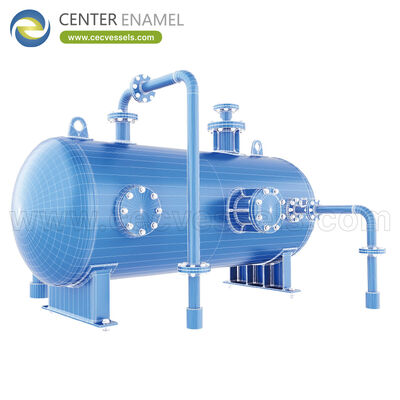
China Petrochemical Vapor Condenser Manufacturer Delivering Advanced Vapor Condensation And Structural Reliability For Global Petrochemical Operations
| Place of Origin: | China |
| Brand Name: | Center Enamel |
| Certification: | ISO 9001,CE, NSF/ANSI 61, WRAS, ISO 28765, LFGB, BSCI, ISO 45001 |
| Minimum Order Quantity: | 1 Sets |
| Price: | 2000 |
| Delivery Time: | 2 months |
| Payment Terms: | L/C,T/T |
| Supply Ability: | 200 sets / days |
|
Detail Information |
|||
Product Description
A petrochemical vapor condenser recovers valuable hydrocarbon vapors and condenses overhead streams in refining and petrochemical trains, often under vacuum and in flammable service. For global operations, the design must satisfy multiple codes, climates and inspection regimes.
A China petrochemical vapor condenser manufacturer must therefore balance advanced vapor-condensation performance with structural reliability that survives transport, erection and years of thermal and mechanical cycling.
This article explains the equipment, its working principle, the design factors that matter in petrochemical service, where it is applied, and how buyers should select and accept it.
What A Petrochemical Vapor Condenser IsIt is typically a shell-and-tube condenser receiving hydrocarbon vapor (often with non-condensables) and rejecting heat to cooling water, air or a process stream. In vacuum columns it also helps maintain low column overhead pressure.
Because the service is flammable and frequently corrosive, the condenser is treated as a pressure vessel first and a heat exchanger second - both disciplines must meet code.
How Vapor Condensation Is ManagedHydrocarbon vapor enters the shell or tube side and gives up latent heat; the condensate is drawn off while non-condensables are vented or sent to recovery. Desuperheating, subcooling and knockout of liquids are handled by the process design.
Reliability depends on controlling fouling, managing two-phase flow and keeping air (or inert gas) out of the system. Leak-tight fabrication is critical because any tube leak can mix hydrocarbon and cooling water with serious consequences.
- Side selection: placing the hydrocarbon on the tube side or shell side is a deliberate choice based on fouling, pressure and maintenance access.
- Non-condensable removal: preserves heat transfer and column vacuum.
Petrochemical streams can be sour, acidic or prone to chloride stress; material selection ranges from carbon steel through stainless and duplex to higher alloys. The choice is driven by the stream analysis, not by habit.
Structural reliability covers shell thickness, nozzle reinforcement, support and thermal expansion. For export projects, transport and lift analyses are part of the design, not an afterthought.
- Code basis: ASME Section VIII with U-stamp where required, or EN 13445 / GB per destination.
- Leak testing: helium or halide leak tests may be specified for flammable service.
Overhead condensers on crude and vacuum columns, condenser-reboiler loops, gas-recovery condensers and vent-gas recovery are common. The objective is to recover product and protect downstream equipment.
Global petrochemical operations add variation in ambient design temperature, seismic zone, wind and local inspection expectations that the manufacturer must absorb into the design package.
- Refinery overheads: condense column tops and recover light ends.
- Gas plants: recover hydrocarbon from vent and purge streams.
Provide the stream composition, operating and design pressures and temperatures, cooling medium and any sour-service requirement. These define material and configuration.
Evaluate the manufacturer on thermal design rigor, material traceability, code stamps and a referenced inspection and test plan that includes leak testing appropriate to flammable service.
Operational, Lifecycle And Maintenance ConsiderationsThermal equipment lives or dies on the details that are invisible at commissioning. For condensers and pressure vessels, the highest-impact lifecycle decisions are material selection at the interface, access for tube or bundle inspection, and a corrosion-allowance philosophy matched to the duty.
A practical preventive program pairs a documented baseline hydraulic and thermal test at acceptance with periodic non-destructive examination of nozzles, shell seams and support saddles. Where the medium is corrosive or the environment is coastal, the external coating system and cathodic-protection details should be specified up front rather than retrofitted.
- Access for inspection: provide sufficient manways, channel covers or bundle pull clearance so internal surfaces can be examined without destructive disassembly.
- Spares strategy: agree on critical spares (gaskets, nozzles, instrument stubs) at the contract stage to avoid long unplanned outages.
- Coating continuity: verify coating specification (for example C5M for semi-marine duty) covers internals, externals and touch-up after hydrotest.
A pressure vessel or condenser is a engineered-to-order product, so the commercial discussion should be followed quickly by a technical data sheet, a confirmed code (ASME, EN 13445, GB or client specification) and an inspection and test plan. Early agreement on these inputs protects both schedule and price.
Typical lead time from approved drawing to ex-works shipment is around two months for standard configurations, with MOQ of one unit; complex alloy or large-diameter items are scheduled case by case. Payment is conventionally structured on L/C or T/T terms agreed at contract.
- Documentation pack: includes design calculation, material certificates (EN 10204 3.1 where required), welding procedure qualification, NDE reports, hydrotest record and painting inspection report.
- Third-party inspection: client or nominated inspector attendance at key hold points is arranged in advance to avoid rework loops.
- Logistics: export packing, lift plans and port coordination are confirmed against vessel dimensions and weight before shipment.
Service |
Typical challenge |
Material direction |
Sour overhead |
H2S / corrosion |
Controlled alloy selection |
Light-ends recovery |
Two-phase flow |
Validated thermal design |
Vent-gas recovery |
Low concentration |
Leak-tight fabrication |
Parameter |
Why it matters |
Buyer action |
Stream composition |
Drives material choice |
Supply full analysis |
Design pressure / temp |
Sets rating |
Confirm with column envelope |
Cooling medium |
Defines side and fouling |
State water / air / process |
Leak-test requirement |
Flammable-service safety |
Specify method at inquiry |
A petrochemical vapor condenser is a pressure vessel and a heat exchanger in one hazardous-duty package. Its value is measured by recovered product and by the confidence that it will not leak in flammable service.
Select a China petrochemical vapor condenser manufacturer on stream-specific material selection, code fabrication and leak-test discipline - the structural reliability that global operations demand.
About The ManufacturerCenter Enamel (Shijiazhuang Zhengzhong Technology Co., Ltd.) designs and fabricates pressure vessels, condensers, heat exchangers and separation equipment for chemical, petrochemical, food, beverage, brewing, metallurgy, oil refining and pharmaceutical service. The manufacturing system operates under ASME, ISO 9001, CE, NSF/ANSI 61, WRAS, ISO 28765, LFGB, BSCI and ISO 45001 certifications.
Documented capabilities cover design pressures from 0.1 to 10 MPa, stainless-steel and carbon-steel construction, and MOQ of one unit with typical lead times around two months under L/C and T/T terms. Every order is released against an approved design drawing, material certificate and inspection plan before fabrication begins.
Frequently Asked Questions (FAQ) What is the difference between a vapor condenser and a heat exchanger?A condenser is a heat exchanger dedicated to changing vapor to liquid by removing latent heat; it is usually also a code pressure vessel when the vapor is under pressure.
How is material chosen for sour service?From the full stream analysis including H2S, CO2, chlorides and water; the manufacturer selects alloys and welding procedures validated for that environment.
Why is leak testing important?In flammable hydrocarbon service a tube leak can mix product with cooling water; specified leak tests (helium, halide or pressure-decay) verify integrity.
Which side should the hydrocarbon be on?A deliberate choice based on pressure, fouling and maintenance; tube side eases cleaning and sometimes contains the hazardous fluid.
What codes apply for export?ASME (U-stamp where required), EN 13445 or GB, selected to match destination and client specification.
What is a typical lead time?Around two months from approved drawing for standard items; alloy or large units are scheduled after the data sheet and code are confirmed.
How are non-condensables handled?They are vented or sent to recovery to preserve heat transfer and column vacuum.
What documentation is provided?Design calculation, material certificates, welding qualification, NDE and leak-test reports, hydrotest record and coating inspection.
Can the same condenser serve multiple streams?Only if thermal and material compatibility are validated; mixing services without review risks corrosion or contamination.
Suggested CTA: Send us your stream data sheet and duty, and we will return a code-compliant petrochemical vapor condenser specification with material and inspection plan.