-
Glass Fused To Steel Tanks (867)
-
Stainless Steel Tanks (434)
-
Fusion Bonded Epoxy Tanks (622)
-
Galvanized Steel Tanks (321)
-
Aluminum Dome Roofs (1336)
-
Wastewater Storage Tanks (280)
-
Welded Steel Tanks (457)
-
Pressure Vessels (295)
-
Anaerobic Digester (202)
-
Industrial Water Tanks (349)
-
Glass Lined Steel Tanks (180)
-
Bolted Steel Tanks (389)
-
Sludge Storage Tank (115)
-
Biogas Storage Tank (173)
-
Leachate Storage Tanks (133)
-
Agricultural Water Storage Tanks (179)
-
Fire Water Tank (166)
-
Grain Storage Silos (146)
-
Biogas Projects (424)
-
Wastewater Treatment Projects (1640)
-
Double Membrane Roof (223)

|
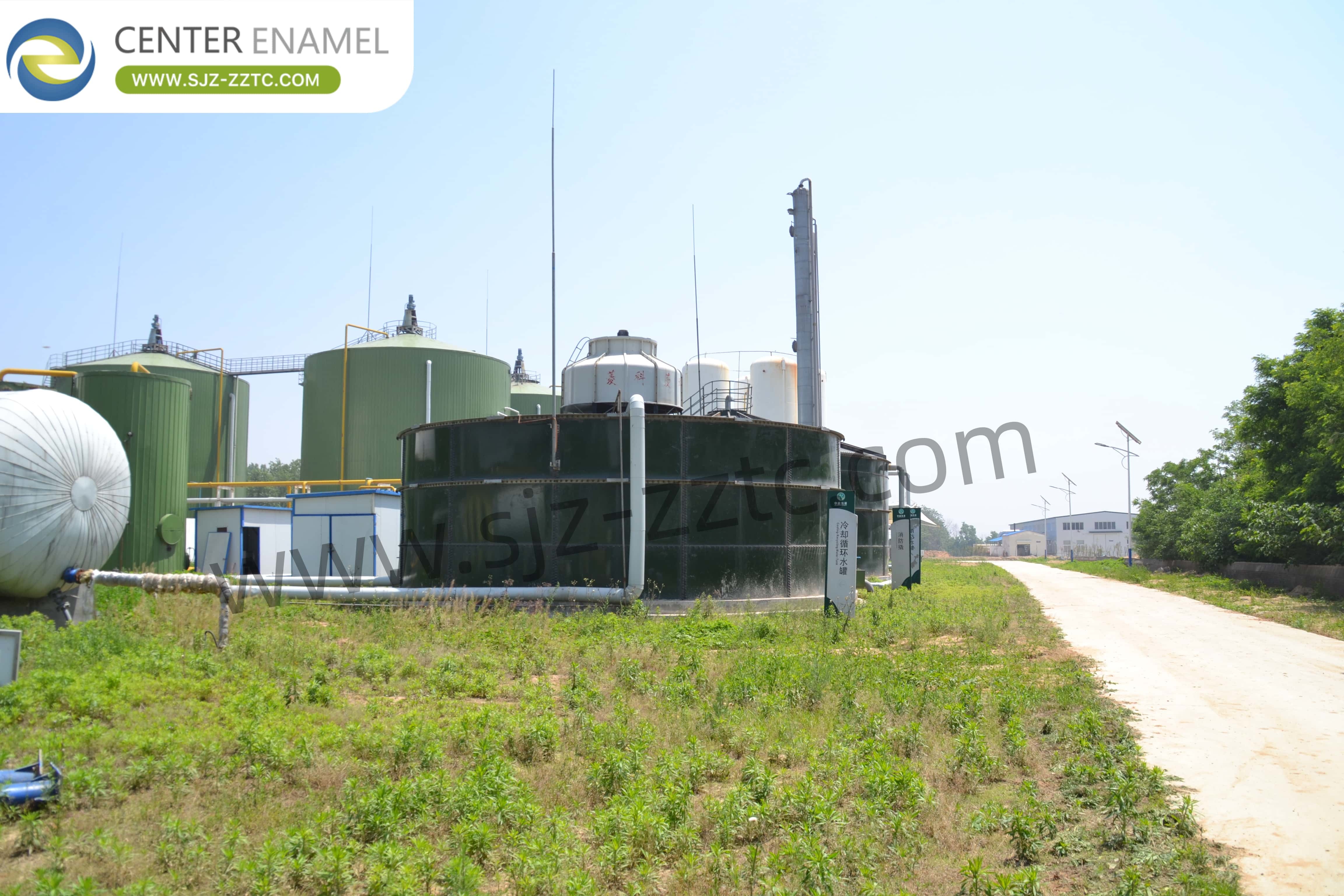
GFS Tanks with EPC Contractor for Nepal Municipal Sewage Treatment
| Place of Origin: | China |
| Brand Name: | CEC TANKS |
| Certification: | ISO 9001:2008, AWWA D103 , OSHA , BSCI |
| Model Number: | W |
| Minimum Order Quantity: | 1set |
| Price: | $5000~$20000 one set |
| Packaging Details: | PE poly-foam between each two steel plates ; wooden pallet and wooden |
| Delivery Time: | 10-30 days after deposit received |
| Payment Terms: | L/C,T/T |
| Supply Ability: | 60 sets per month |
|
Detail Information |
|||
| Place of Origin | China | Brand Name | CEC TANKS |
|---|---|---|---|
| Certification | ISO 9001:2008, AWWA D103 , OSHA , BSCI | Model Number | W |
| Tank Body Color: | Dark Green / Can Be Customized | Corrosion Integrity: | Excellent |
| Steel Plates Thickness: | 3mm To 12mm , Depends On The Tank Structure | Chemical Resistance: | Excellent |
| Size Of Panel: | 2.4M * 1.2M | Easy To Clean: | Smooth, Glossy, Inert, Anti-adhesion |
| Highlight: | GFS Tanks EPC Contractor,Municipal Sewage Treatment Tanks,Wastewater Treatment Project Tanks |
||
Product Description
This article outlines how an experienced EPC Contractor delivers Municipal Sewage Treatment projects in Nepal, using GFS Tanks as robust, modular containment vessels. It covers Nepal's sewage generation and treatment challenges in Kathmandu, Pokhara, and other urban hubs, the A2O biological treatment flow, the advantages of glass-fused-to-steel tanks, available covers and materials, supporting equipment, and why single-source turnkey delivery matters for mountain cities.
Nepal's urban population, concentrated in the Kathmandu Valley and growing hubs such as Pokhara, Bharatpur, and Butwal, continues to rise. Households, hotels, hospitals, markets, schools, commercial centers, and public facilities generate increasing volumes of municipal sewage containing organic matter, nitrogen, phosphorus, pathogens, suspended solids, and household or small industrial chemicals. Many settlements rely on onsite septic tanks with limited desludging, while centralized sewer networks and treatment works are partial and often overloaded. In the Kathmandu Valley, untreated effluent drains into the Bagmati, Bishnumati, and other rivers, degrading water quality, harming religious and ecological value, and contaminating downstream source water. Seasonal variation is extreme: dry-season flows are concentrated and strong, while monsoon rains introduce stormwater infiltration that surges hydraulic load. Mountain logistics, limited local heavy fabrication capacity, and altitude variation complicate construction and supply. These pressures make an experienced EPC Contractor for Municipal Sewage Treatment, working with modular GFS Tanks, an essential partner for Nepal's municipalities.
A modern Nepali municipal treatment plant follows a clear biological sequence. Influent first enters a collecting tank that equalizes flow and quality, smoothing dry-day peaks and monsoon surges. The wastewater then flows into an anaerobic tank, where anaerobic microorganisms decompose complex organic compounds into simpler molecules. Next, it passes into an anoxic tank, where denitrifying bacteria use influent carbon to reduce nitrate from the return mixed liquor to nitrogen gas. The mixed liquor then moves to an aerobic tank, where aerobic bacteria further oxidize residual organics and carry out nitrification, converting ammonia nitrogen into nitrate. In many plants, a membrane bioreactor (MBR) tank follows, replacing the secondary clarifier and retaining a dense microbial biomass for high-efficiency treatment. Final effluent is polished by ultraviolet (UV) disinfection before discharge or reuse for irrigation or urban cleaning. Residual sludge is directed to a sludge thickener, dewatered, and then transported off-site for safe disposal or further processing.
The A2O Process-anaerobic, anoxic, aerobic-is a compact biological configuration chosen widely for municipal sewage because it removes carbon, nitrogen, and phosphorus in a single integrated train. In the anaerobic reactor, phosphate-accumulating organisms take up readily biodegradable organics while releasing stored phosphorus, preparing the biomass for phosphorus removal downstream. In the anoxic reactor, nitrate returned from the aerobic zone is denitrified into nitrogen gas, cutting total nitrogen load and protecting rivers such as the Bagmati from eutrophication. In the aerobic reactor, microorganisms complete carbon oxidation, nitrify ammonia to nitrate, and uptake phosphorus that is ultimately removed with waste sludge. Internal mixed-liquor and sludge recirculation streams connect the three zones into a closed loop, maintaining stable microbial populations despite dry-season concentration and monsoon dilution. For Nepali municipal plants, the A2O Process is attractive because it meets discharge norms with moderate energy use, good sludge settleability, and effluent that can be reused for irrigation after disinfection.
GFS Tanks are well suited to Nepal's mountain climate and logistical conditions. Formed by firing molten glass onto steel plates at high temperature, GFS creates an inert, inorganic bond that combines steel's strength and flexibility with glass's outstanding corrosion resistance. The double-coating (2C2F) build resists hydrogen sulfide attack, odor corrosion, and the alternating wet–dry and temperature fluctuations found in biological treatment units across Himalayan valleys. Because panels are factory-coated and bolted on site, components can be shipped in knockdown form along mountain roads, and erection is fast without large welded-field operations. The smooth glass liner resists fouling and simplifies inspection and cleaning, while modular panel construction allows capacity expansion by adding extra courses as city flows grow. Certified to international drinking-water and environmental standards, GFS Tanks offer long service life, low maintenance, and strong lifecycle economics for Nepal's Municipal Sewage Treatment projects.
Center Enamel offers a broad portfolio of covers and tank materials beyond standard GFS vessels, allowing engineers to match each unit to its exact service condition:
- Aluminum Geodesic Dome Roof-advanced corrosion resistance, long clear-span capability, efficient construction, and minimal maintenance, ideal for exposed outdoor and odor-sensitive tanks.
- Glass-Fused-to-Steel Roof-airtight cone roof with internal or external beams, suitable for odor control and pressurized or demanding wastewater applications.
- Single and Double Membrane Roof-superior choice for anaerobic digestion and biogas recovery, providing integrated gas collection and odor containment.
- Aluminum Alloy Trough Deck Roof-economical cover for potable water, wastewater, and firewater storage, shedding rain and wind without requiring airtightness.
- Stainless Steel Roof-excellent anti-corrosion performance and long service life in harsh, humid mountain environments.
- FRP Roof-suitable for non-airtight duties such as drinking water, agriculture, fire water, and wastewater storage, available in dome or flat shapes.
Complementing these covers, the tank range includes Galvanized Steel Tanks with a durable hot-dip galvanized coating, Fusion Bonded Epoxy (FBE) Tanks developed with AkzoNobel coating technology, and AISI 304/316 Stainless Steel Tanks for high-purity or highly corrosive liquids.
Reliable auxiliary equipment keeps the biological core stable across Nepal's dry and monsoon seasonal swings. Center Enamel supplies a coordinated equipment package for municipal plants:
- Screw Stack Sludge Dewatering Machine-continuously thickens and dewater waste sludge into a dry cake, lowering transport and disposal costs in valley logistics.
- Sludge Transfer Pump-reliably conveys thickened sludge between the thickener, dewatering unit, and loading points even at high solids concentration.
- Submersible Mixer-prevents sedimentation in anaerobic and anoxic tanks and ensures uniform contact between microorganisms and substrate.
- Lifting Pump-transfers influent or intermediate streams between hydraulic stages where elevation differences exist, with compact footprint and easy service.
- UV Sterilizer-delivers final disinfection of MBR or secondary effluent, inactivating bacteria and viruses to meet Nepali discharge standards.
- Sludge Return Pump-recycles settled sludge back to the head of the biological train, preserving the biomass concentration needed for steady A2O performance.
These components work together so that the A2O tanks receive consistent influent, mixing, recirculation, and sludge management through both dry-season concentration and monsoon-driven flow surges.
Center Enamel is a comprehensive high-tech enterprise focused on wastewater treatment engineering, process-section contracting, and equipment manufacturing. For Nepali Municipal Sewage Treatment project delivery, this means a single accountable EPC Contractor:
- Full in-house engineering-a dedicated team handles environmental design, construction, commissioning, and R&D, removing the friction of coordinating multiple vendors across valley sites.
- Strong manufacturing capacity-a 150,000 m² R&D and manufacturing center producing 300,000 panels per year ensures on-time delivery of GFS Tanks, covers, and auxiliary equipment.
- Turnkey delivery-services cover engineering design, equipment fabrication, and on-site construction, supported by a skilled installation workforce.
- Global project experience-Center Enamel has implemented wastewater projects across multiple countries in municipal sewage, biogas, livestock, and industrial segments.
- Tailored process design-the A2O biological core can be paired with MBR, UV disinfection, and advanced sludge handling to meet local discharge or reuse standards.
- Long-term operational support-commissioning, operator training, and spare-parts supply help local teams sustain design performance over the plant's life.
Nepal's Himalayan cities need compact, corrosion-resistant, and fast-to-deploy wastewater infrastructure to protect sacred rivers, source water, and public health. The A2O Process, housed in modular GFS Tanks and topped with purpose-built covers, delivers stable carbon, nitrogen, and phosphorus removal while allowing staged expansion. Engaging an experienced EPC Contractor streamlines delivery across mountain logistics, protects lifecycle cost, and produces effluent that can be safely discharged or reused. Center Enamel's integrated design, manufacturing, and installation capability is positioned to meet this demand.
Many Nepali rivers, especially in the Kathmandu Valley, receive untreated sewage that harms aquatic life, downstream drinking-water intakes, and the cultural and religious value of these water bodies. Treatment with nutrient removal directly improves river health.
Yes. Because GFS tanks are bolted and modular, additional panel courses can be added as city flows grow, allowing staged investment without replacing existing vessels.
UV radiation inactivates bacteria, viruses, and other microorganisms without adding residual chemicals. It provides a compact final barrier that helps effluent meet discharge or irrigation-reuse requirements.