-
Glass Fused To Steel Tanks (867)
-
Stainless Steel Tanks (434)
-
Fusion Bonded Epoxy Tanks (622)
-
Galvanized Steel Tanks (321)
-
Aluminum Dome Roofs (1336)
-
Wastewater Storage Tanks (280)
-
Welded Steel Tanks (457)
-
Pressure Vessels (295)
-
Anaerobic Digester (202)
-
Industrial Water Tanks (349)
-
Glass Lined Steel Tanks (180)
-
Bolted Steel Tanks (389)
-
Sludge Storage Tank (115)
-
Biogas Storage Tank (173)
-
Leachate Storage Tanks (133)
-
Agricultural Water Storage Tanks (179)
-
Fire Water Tank (166)
-
Grain Storage Silos (146)
-
Biogas Projects (424)
-
Wastewater Treatment Projects (1630)
-
Double Membrane Roof (223)

|
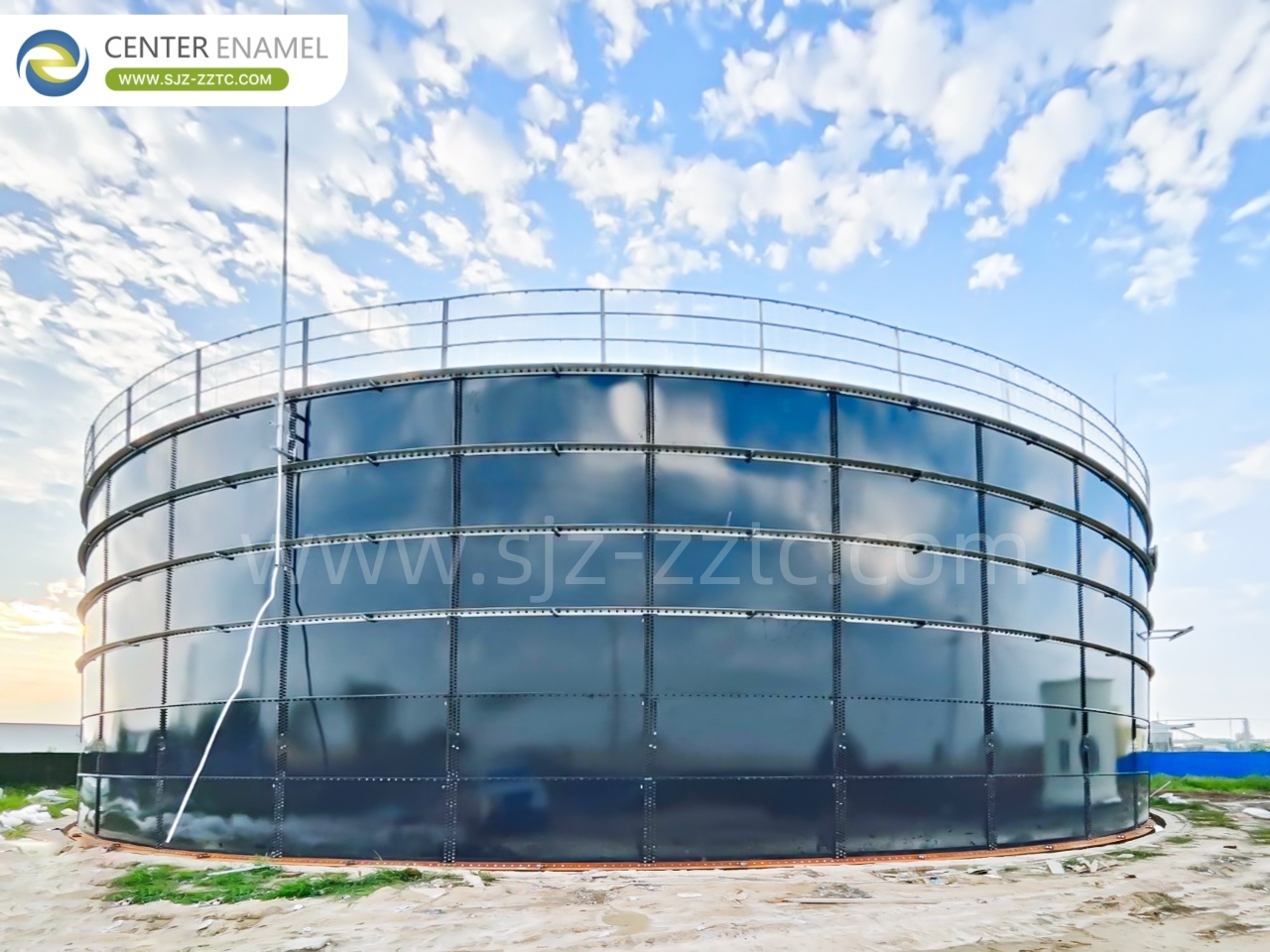
How Biogas Solution Provider and A2O Process Advance Ghana's Municipal Sewage Treatment
| Place of Origin: | China |
| Brand Name: | CEC TANKS |
| Certification: | ISO 9001:2008, AWWA D103 , OSHA , BSCI |
| Model Number: | W |
| Minimum Order Quantity: | 1set |
| Price: | $5000~$20000 one set |
| Packaging Details: | PE poly-foam between each two steel plates ; wooden pallet and wooden |
| Delivery Time: | 10-30 days after deposit received |
| Payment Terms: | L/C,T/T |
| Supply Ability: | 60 sets per month |
|
Detail Information |
|||
| Place of Origin | China | Brand Name | CEC TANKS |
|---|---|---|---|
| Certification | ISO 9001:2008, AWWA D103 , OSHA , BSCI | Model Number | W |
| Tank Body Color: | Dark Green / Can Be Customized | Corrosion Integrity: | Excellent |
| Steel Plates Thickness: | 3mm To 12mm , Depends On The Tank Structure | Chemical Resistance: | Excellent |
| Size Of Panel: | 2.4M * 1.2M | Easy To Clean: | Smooth, Glossy, Inert, Anti-adhesion |
| Highlight: | Biogas Solution Provider Ghana,A2O Process Sewage Treatment,Municipal Wastewater Treatment Projects |
||
Product Description
How Biogas Solution Provider and A2O Process Advance Ghana's Municipal Sewage Treatment
Ghana, with its rapidly growing urban centers and expanding population, generates substantial volumes of municipal sewage daily. The primary challenge stems from inadequate sanitation infrastructure, particularly in rapidly expanding cities like Accra and Kumasi. Many communities lack access to centralized sewage collection systems, resulting in the discharge of untreated wastewater into drains, rivers, and coastal waters. This poses severe public health risks, including waterborne diseases, and causes environmental degradation. Additionally, the high organic load and varying composition of domestic and industrial effluents demand robust, flexible, and cost-effective treatment solutions capable of handling significant flow variations while operating within financial and technical constraints.
The Municipal Sewage Treatment Process
The treatment of municipal sewage in Ghana follows a systematic, multi-stage process designed to effectively remove contaminants. Initially, wastewater enters a collection tank where flow and quality are equalized to ensure stable downstream operations. It then flows into an anaerobic tank where microorganisms decompose large organic molecules through anaerobic digestion. Following this, the sewage moves to an anoxic tank for denitrification, where bacteria convert nitrates into nitrogen gas. The flow then proceeds to an aerobic tank, where further decomposition and nitrification occur. Finally, the effluent undergoes Membrane Bioreactor treatment and Ultraviolet disinfection to eliminate pathogens, ensuring the treated water meets standards for safe discharge or reuse. The residual sludge is thickened and dewatered for final disposal or resource recovery.
Understanding the A2O Process in Sewage Treatment
The A2O Process—Anaerobic-Anoxic-Oxic—is a cornerstone of modern municipal sewage treatment, particularly effective in removing nitrogen and phosphorus to prevent eutrophication in receiving water bodies. In the anaerobic phase, phosphorus-accumulating organisms release phosphorus. In the anoxic phase, denitrifying bacteria convert nitrate to nitrogen gas using organic matter as a carbon source. Finally, in the aerobic phase, nitrifying bacteria convert ammonia to nitrate, and phosphorus is absorbed by the biomass. This biological nutrient removal process is highly efficient, ensuring that the treated water is safe for environmental discharge and compliant with strict regulatory standards.
The Application Advantages of GFS Tanks
For municipal sewage treatment, GFS Tanks offer unparalleled advantages over traditional concrete or welded steel structures. The Glass-Fused-to-Steel technology combines the strength and flexibility of steel with the superior corrosion resistance of glass. This fusion creates an inert, inorganic barrier that withstands the aggressive chemical and biological environment of sewage. GFS Tanks are quick to install, require minimal maintenance, and offer a significantly longer service life. Their modular design allows for easy expansion, making them an ideal choice for the dynamic needs of urban wastewater treatment plants, particularly in remote or rapidly developing areas.
Diverse Roof and Tank Solutions by Center Enamel
Center Enamel provides a versatile range of storage solutions tailored to specific project requirements. For tank covers, we offer Aluminum Geodesic Dome Roofs, which are corrosion-resistant and cost-effective for large spans. Our Glass-Fused-to-Steel Roofs provide air-tightness for odor control, while Single and Double Membrane Roofs are excellent for biogas collection. Additionally, we supply Aluminum Alloy Trough Deck Roofs for economical potable water storage, Stainless Steel Roofs for harsh environments, and FRP Roofs for drinking water and agricultural applications. Our tank options include Galvanized Steel, Fusion Bonded Epoxy, and Stainless Steel Tanks.
Essential Equipment for Municipal Sewage Treatment
A successful treatment plant relies on robust auxiliary equipment. Center Enamel provides a comprehensive range of machinery to support the treatment process. This includes the Screw Stack Sludge Dewatering Machine for efficient sludge volume reduction, Sludge Transfer Pumps for moving viscous materials, and Submersible Mixers for maintaining homogeneity in tanks. We also supply Lifting Pumps for fluid transport, UV Sterilizers for final disinfection, and Sludge Return Pumps to maintain the biological balance in the aeration tanks. These components ensure the entire system operates seamlessly and reliably.
Center Enamel: Your One-Stop Biogas Solution Provider
Center Enamel stands as a premier Biogas Solution Provider, offering a comprehensive suite of services for municipal sewage treatment projects. Our advantages include:
Integrated Engineering Design: We provide tailored process design and structural engineering.
Advanced Manufacturing: We produce high-quality GFS Tanks and equipment in our 150,000㎡ facility.
Turnkey Construction: Our skilled teams handle installation, commissioning, and project management.
Global Experience: With over 35 years of history and projects in multiple countries, we deliver reliable, sustainable solutions.
Research & Development: We continuously innovate to provide cutting-edge wastewater treatment technologies.
Conclusion
Ghana’s pursuit of improved sanitation requires innovative and durable infrastructure. By leveraging the efficiency of the A2O Process and the reliability of GFS Tanks, the nation can effectively address its water challenges. Center Enamel, as a dedicated Biogas Solution Provider, empowers such projects with comprehensive engineering, manufacturing, and construction expertise, ensuring clean water for future generations.
Frequently Asked Questions (FAQ)
1. What is the primary purpose of the A2O Process in sewage treatment?
The A2O Process is designed to remove biological nutrients, specifically nitrogen and phosphorus, from wastewater to prevent water pollution and eutrophication in receiving water bodies.
2. Why are GFS Tanks preferred for municipal sewage projects?
GFS Tanks are preferred because their glass coating provides exceptional corrosion resistance against sewage's harsh chemicals, ensuring a long lifespan and low maintenance costs compared to other materials.
3. How does UV disinfection work in wastewater treatment?
UV disinfection uses ultraviolet light to penetrate the cell walls of bacteria, viruses, and other microorganisms, disrupting their DNA and rendering them unable to reproduce, thus effectively disinfecting the water.