-
Glass Fused To Steel Tanks (822)
-
Stainless Steel Tanks (434)
-
Fusion Bonded Epoxy Tanks (622)
-
Galvanized Steel Tanks (321)
-
Aluminum Dome Roofs (1336)
-
Wastewater Storage Tanks (280)
-
Welded Steel Tanks (457)
-
Pressure Vessels (295)
-
Anaerobic Digester (202)
-
Industrial Water Tanks (349)
-
Glass Lined Steel Tanks (180)
-
Bolted Steel Tanks (389)
-
Sludge Storage Tank (115)
-
Biogas Storage Tank (173)
-
Leachate Storage Tanks (133)
-
Agricultural Water Storage Tanks (179)
-
Fire Water Tank (166)
-
Grain Storage Silos (146)
-
Biogas Projects (424)
-
Wastewater Treatment Projects (1590)
-
Double Membrane Roof (223)

|
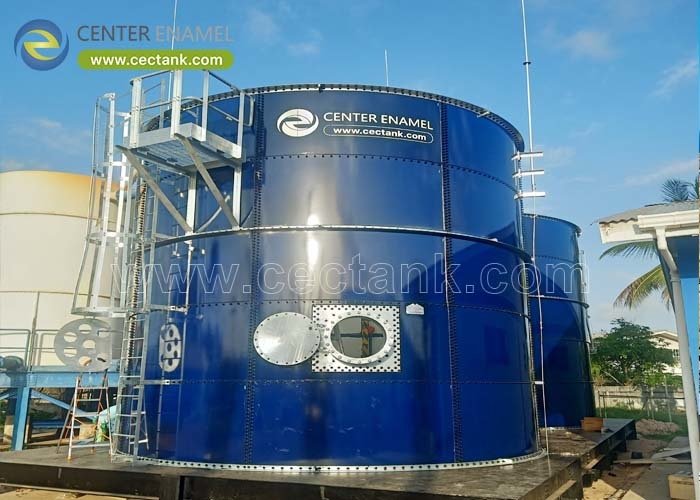
Process and Cooling Make-up Water Tanks for Data Centers
| Place of Origin: | China |
| Brand Name: | CEC TANKS |
| Certification: | ISO 9001:2008, AWWA D103 , OSHA , BSCI |
| Model Number: | W |
| Minimum Order Quantity: | 1set |
| Price: | $5000~$20000 one set |
| Packaging Details: | PE poly-foam between each two steel plates ; wooden pallet and wooden |
| Delivery Time: | 10-30 days after deposit received |
| Payment Terms: | L/C,T/T |
| Supply Ability: | 60 sets per month |
|
Detail Information |
|||
| Place of Origin | China | Brand Name | CEC TANKS |
|---|---|---|---|
| Certification | ISO 9001:2008, AWWA D103 , OSHA , BSCI | Model Number | W |
| Tank Material: | Glass Fused To Steel | Foundation: | Concrete Or Glass Fused Steel |
| Steel Plates Thickness: | 3mm To 12mm , Depends On The Tank Structure | Size Of Panel: | 2.4M * 1.2M |
| Easy To Clean: | Smooth, Glossy, Inert, Anti-adhesion | Permeability: | Gas / Liquid Impermeable |
| Highlight: | Glass fused to steel water tanks,Data center cooling water tanks,Process water storage tanks |
||
Product Description
Process and Cooling Make-up Water Tanks for Data Centers
Not all data center water is fire water. Chillers, cooling towers and humidification loops lose water to evaporation and drift and must be topped up, while some processes need a dedicated treated-water hold. This duty is different from fire reserve: it turns over, it must stay clean, and it is often chemically treated. The tank choice follows those facts.
Cooling make-up and process water tanks for data centers handle ongoing top-up and treated-water hold rather than standby reserve. A Glass-Fused-to-Steel (GFS) tank suits this duty because its inert glass face resists the treated water and stays hygienic, scales to very large single shells, and avoids the recoat treadmill of painted steel. Size it to the make-up demand and the treated-water hold, separate it from the fire reserve, and keep the water quality controls in the loop, not the tank.
Make-up Versus Reserve
Fire water is stored and rarely used; cooling make-up is drawn continuously to replace evaporation and drift losses. The two should remain separate assets - the fire reserve must never be quietly consumed by cooling - with the make-up tank sized to the loss rate and any treatment hold.
| Duty | Turnover | Key control |
|---|---|---|
| Fire reserve | Standby | Code volume, intact. |
| Cooling make-up | Continuous | Loss rate + quality. |
| Process hold | Batch/continuous | Treated water spec. |
Water Quality in the Loop
Cooling loops are chemically treated and can concentrate solids, so the tank must not shed material into the water. The inert GFS face does not corrode or leach, keeping the loop cleaner than a rusting steel tank would. The tank itself is not the water-treatment system - that stays in the loop.
- Inert face: no rust into loop.
- Treatment remains in the loop.
- Tank is clean storage, not a filter.
A Large Process-Water Proof Point
The Italy Sardinia water project (2025) included a chilled process-water tank of 30,549 m3 (phi48.13 x 16.8 m) with an enamel roof - the largest GFS tank built by an Asian supplier. A vessel of that scale and duty is direct evidence that GFS serves large process-water service, exactly the kind of hold a big campus needs.
- Italy Sardinia 2025: 30,549 m3 process-water tank.
- Enamel roof, single large shell.
- Largest GFS by an Asian supplier.
Separating Duties on Campus
Keep the cooling make-up tank distinct from the fire reserve so a cooling draw never depletes the fire volume, and from potable where codes require it. Using one GFS family across these duties keeps spares and inspection uniform.
- Distinct shells per duty.
- One GFS family, one spare set.
- Uniform inspection playbook.
Company Expertise
Center Enamel supplies GFS process and potable tanks up to 30,000 m3-plus single shells, with inert linings suited to treated and make-up water, demonstrated by the Italy Sardinia large process-water installation.
Frequently Asked Questions
Is a cooling make-up tank the same as a fire tank?
No - fire water is standby reserve; make-up is drawn continuously. Keep them as separate shells so cooling never depletes the fire volume.
Why GFS for treated water?
The inert glass face does not corrode or shed material into the loop, keeping the treated water cleaner.
How big can a process-water tank be?
Over 30,000 m3 in one shell, as shown by the 30,549 m3 Italy Sardinia process-water tank (2025).
Does the tank do the water treatment?
No - treatment stays in the loop; the tank is clean, inert storage.
Should potable and process be separate?
Where codes require it, yes; using one GFS family keeps spares and inspection simple.
What should I size the tank to?
The make-up loss rate and any treated-water hold, not a fire duration.
Conclusion
Cooling make-up and process water are a different duty from fire reserve: continuous, treated and quality-sensitive. A GFS tank serves it with an inert face, large single-shell capacity and no recoat cycle, provided you keep it separate from the fire volume and let the loop - not the tank - own the water treatment.
Suggested CTA: Tell us your cooling loss rate and treatment hold and we will size a GFS process/make-up tank and show how to keep it separate from the fire reserve.