-
Glass Fused To Steel Tanks (822)
-
Stainless Steel Tanks (434)
-
Fusion Bonded Epoxy Tanks (622)
-
Galvanized Steel Tanks (321)
-
Aluminum Dome Roofs (1336)
-
Wastewater Storage Tanks (280)
-
Welded Steel Tanks (457)
-
Pressure Vessels (295)
-
Anaerobic Digester (202)
-
Industrial Water Tanks (349)
-
Glass Lined Steel Tanks (180)
-
Bolted Steel Tanks (389)
-
Sludge Storage Tank (115)
-
Biogas Storage Tank (173)
-
Leachate Storage Tanks (133)
-
Agricultural Water Storage Tanks (179)
-
Fire Water Tank (166)
-
Grain Storage Silos (146)
-
Biogas Projects (424)
-
Wastewater Treatment Projects (1590)
-
Double Membrane Roof (223)


|
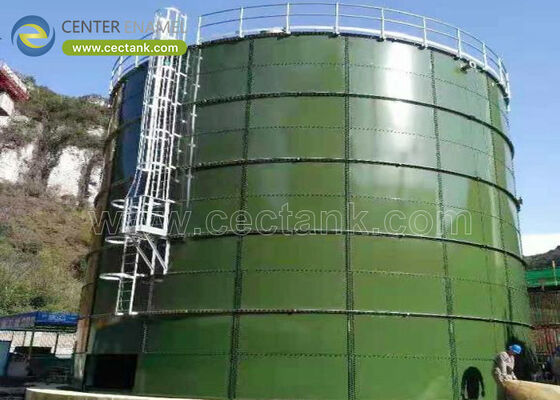
Glass-Fused-to-Steel (GFS) Coating for Data Center Tanks: The Corrosion Science
| Place of Origin: | China |
| Brand Name: | CEC TANKS |
| Certification: | ISO 9001:2008, AWWA D103 , OSHA , BSCI |
| Model Number: | W |
| Minimum Order Quantity: | 1set |
| Price: | $5000~$20000 one set |
| Packaging Details: | PE poly-foam between each two steel plates ; wooden pallet and wooden |
| Delivery Time: | 10-30 days after deposit received |
| Payment Terms: | L/C,T/T |
| Supply Ability: | 60 sets per month |
|
Detail Information |
|||
| Place of Origin | China | Brand Name | CEC TANKS |
|---|---|---|---|
| Certification | ISO 9001:2008, AWWA D103 , OSHA , BSCI | Model Number | W |
| Tank Body Color: | Dark Green / Can Be Customized | Corrosion Integrity: | Excellent |
| Steel Plates Thickness: | 3mm To 12mm , Depends On The Tank Structure | Chemical Resistance: | Excellent |
| Size Of Panel: | 2.4M * 1.2M | Easy To Clean: | Smooth, Glossy, Inert, Anti-adhesion |
| Highlight: | Glass Fused to Steel tank coating,GFS coating for data centers,corrosion-resistant GFS tank coating |
||
Product Description
The phrase "glass-fused-to-steel" is sometimes used loosely, as if it were a paint. It is not. It is a layer of ground-glass enamel frit fired onto steel at 820-930C so it chemically bonds into a vitreous, inert surface. Understanding that science is the difference between specifying a coating that lasts decades and one that looks good on day one.
GFS coating is enamel frit fused onto steel at 820-930C into a non-porous glass layer (typically 0.25-0.45 mm per face), rated at about 6.0 Mohs hardness with adhesion near 3450 N/cm2, and verified by a 100% 1500 V holiday test. Because the layer is glass, it is inert to a wide range of water chemistries and does not rust, which is why it suits data center fire, potable and process water.
Enamel frit is finely ground glass with fluxes and stabilizers. Sprayed onto the steel panel and fired above 820C, it melts and wets the surface, then cools into a continuous glass layer chemically bonded to the steel. The bond is not adhesion alone - it is a fusion at the interface, which is why the layer survives thermal and mechanical cycling.
- Frit = ground glass with fluxes.
- Fired at 820-930C to fuse.
- Chemically bonded, not just stuck on.
The fired face is typically 0.25-0.45 mm per side, hard enough (6.0 Mohs) to resist abrasion from waterborne grit, and adheres around 3450 N/cm2 so it will not flake under load. The single most important QA step is a 100% 1500 V holiday test that finds every pinhole across the whole surface.
| Property | Typical value | Why it matters |
|---|---|---|
| Coating thickness | 0.25-0.45 mm/face | Coverage without firing risk. |
| Hardness | 6.0 Mohs | Abrasion resistance. |
| Adhesion | ~3450 N/cm2 | No flaking under load. |
| Holiday test | 100% at 1500 V | Zero pinholes. |
Fire water may sit stagnant for months; potable water must stay hygienic; process water varies in chemistry. A glass face is inert to all three and does not leach or rust. That inertness is also what lets a potable lining meet NSF/ANSI 61 health-effect limits.
- Stagnant fire water: no rust bloom.
- Potable water: inert, cleanable.
- Variable process water: chemically stable.
The Italy Sardinia water project (2025) included a chilled process-water tank of 30,549 m3 (phi48.13 x 16.8 m) with an enamel roof - the largest GFS tank built by an Asian supplier. A vessel of that scale and duty is direct evidence that GFS coating performs in large process-water service.
- Italy Sardinia 2025: 30,549 m3 process-water tank.
- Enamel roof, single large shell.
- Largest GFS by an Asian supplier.
Center Enamel develops its own enamel frit and controls the firing process in-house, with 200-plus enamel patents, so the coating chemistry and the furnace curve are managed as one accountable system rather than bought in.
No - it is glass fused onto steel at 820-930C into a vitreous, inert layer, not a film applied at ambient temperature.
Typically 0.25-0.45 mm per face, enough for coverage without risking the firing quality.
It finds every pinhole across 100% of the coated surface, so there is no hidden path for water to reach the steel.
Fire water stagnates, potable water must stay clean, process water varies - glass resists all three without rusting or leaching.
About 6.0 Mohs, which resists abrasion from grit in the water stream.
Yes - the 30,549 m3 Italy Sardinia process-water tank (2025) is a delivered example at that scale.
GFS coating is corrosion science, not marketing. A fused glass layer at 0.25-0.45 mm, 6.0 Mohs, ~3450 N/cm2 adhesion and a 100% 1500 V test is what makes a data center tank inert to fire, potable and process water for decades. Specifying it on the numbers, not the name, is what protects the asset.
Suggested CTA: Ask us for the enamel frit composition, the firing curve and the 1500 V test record for your batch and we will show the coating is controlled end to end.