-
Glass Fused To Steel Tanks (822)
-
Stainless Steel Tanks (434)
-
Fusion Bonded Epoxy Tanks (622)
-
Galvanized Steel Tanks (321)
-
Aluminum Dome Roofs (1336)
-
Wastewater Storage Tanks (280)
-
Welded Steel Tanks (457)
-
Pressure Vessels (295)
-
Anaerobic Digester (202)
-
Industrial Water Tanks (349)
-
Glass Lined Steel Tanks (180)
-
Bolted Steel Tanks (389)
-
Sludge Storage Tank (115)
-
Biogas Storage Tank (173)
-
Leachate Storage Tanks (133)
-
Agricultural Water Storage Tanks (179)
-
Fire Water Tank (166)
-
Grain Storage Silos (146)
-
Biogas Projects (424)
-
Wastewater Treatment Projects (1590)
-
Double Membrane Roof (223)
|
Data Center Tank Total Cost of Ownership: Beyond the Sticker Price
| Place of Origin: | China |
| Brand Name: | CEC TANKS |
| Certification: | ISO 9001:2008, AWWA D103 , OSHA , BSCI |
| Model Number: | W20160504020 |
| Minimum Order Quantity: | 1set |
| Price: | $5000~$20000 one set |
| Packaging Details: | PE poly-foam between each two steel plates ; wooden pallet and wooden box |
| Delivery Time: | 0-60 days after deposit received |
| Payment Terms: | L/C,T/T |
| Supply Ability: | 60 sets per month |
|
Detail Information |
|||
Product Description
The purchase price is the smallest number in a tank program. Over a 30-year life the operating costs - recoating, inspection, unscheduled downtime, water loss and the labor to babysit a failing lining - usually dwarf the capital. For a data center, where water loss can mean lost cooling or a failed fire test, TCO is the number that should drive the spec.
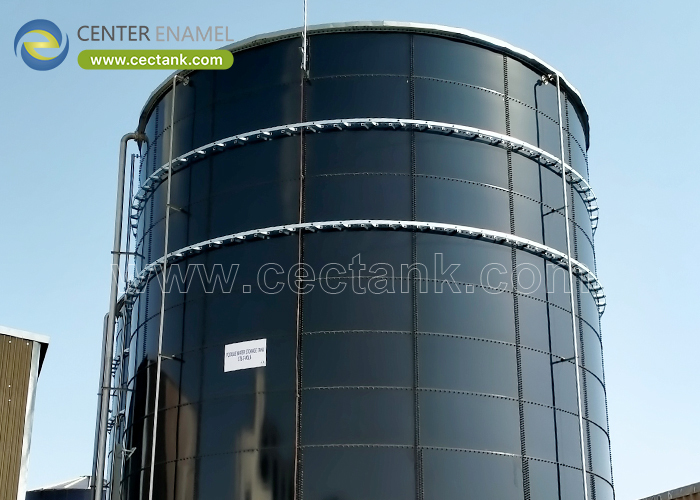
Over a 30-year life, a Glass-Fused-to-Steel (GFS) tank typically wins on total cost of ownership because its fired glass face (0.25-0.45 mm per face, fused at 820-930C, 6.0 Mohs hardness) resists corrosion without periodic repainting. Painted or hot-dip-galvanized steel needs recoating cycles that add labor, downtime and water-loss risk. Evaluate TCO, not just the purchase price.
A tank program accrues cost through recoating labor, inspection access, unscheduled outage, water treatment disruption, and the administrative cost of managing a corrosion program. Each recoating cycle on a painted tank means draining, abrasive blasting, repainting and re-commissioning - all of which a data center would rather avoid.
| Cost element | GFS | Painted / galvanized |
|---|---|---|
| Recoating cycle | None for 30-50 yr design life | Every 7-15 years |
| Blasting downtime | Avoided | Required each cycle |
| Corrosion inspections | Routine | Frequent |
| Water-loss risk | Low (inert face) | Higher at coating breach |
GFS fuses a glass layer to steel at 820-930C, producing an inert, non-porous surface rated at 6.0 Mohs with adhesion around 3450 N/cm2. Because the lining is glass, it does not rust the way painted steel does, and it does not rely on a thin zinc layer that eventually consumes itself.
- Fired glass face, not paint or zinc.
- 30-50 year design life in many waters.
- Inert to a wide range of water chemistries.
A data center tank failure is not just a repair bill. A breach in fire-water storage can fail a firemarshal inspection; a breach in cooling make-up can threaten rack temperatures. The Ecuador installation that survived a 7.8-magnitude earthquake in 2016 and the Indonesia fire-water tower at 34.8 m (the tallest GFS tank built by an Asian manufacturer, 2018) illustrate structural resilience that protects uptime.
- Ecuador 2016: GFS tanks stable after 7.8 earthquake.
- Indonesia 2018: 34.8 m GFS fire-water tower, tallest of its kind.
Ask each supplier for the expected recoating interval, the access and downtime required, and the design life in your specific water. Then model three decades of those inputs. The tank with the higher sticker often wins decisively.
- Collect design life per water chemistry.
- Quantify recoat labor and outage.
- Add water-loss and inspection overhead.
Center Enamel's GFS tanks use a fired glass-to-steel coating controlled in-house, with a 30-50 year design life in suitable duty, which is the basis for a low-maintenance, low-TCO water asset.
In most potable and fire-water duties yes, because it avoids recoating. In highly aggressive chemical duty, a different lining may be specified, so compare on your actual water.
Typically 30-50 years in suitable water, because the fired glass face does not rust like painted or galvanized steel.
Yes, usually every 7-15 years with blasting and repainting, each cycle requiring drain and downtime.
A fire-water breach can fail inspection; a cooling make-up breach can threaten rack temperatures. Both are uptime and compliance risks.
The Ecuador 2016 installation remained stable after a 7.8 earthquake, demonstrating the bolted shell resilience when engineered to the load.
Design life per your water, expected recoat interval, access/downtime for maintenance, and the coating test record.
Buy the tank on the number that matters for thirty years, not the one that matters for thirty minutes. A GFS fired-glass lining removes the recoating treadmill and the downtime that comes with it, and that is where data center tank cost is actually won or lost.
Suggested CTA: Tell us your water chemistry and duty and we will model a 30-year TCO comparison against painted and galvanized options using our coating and design data.