-
Glass Fused To Steel Tanks (762)
-
Stainless Steel Tanks (434)
-
Fusion Bonded Epoxy Tanks (592)
-
Galvanized Steel Tanks (321)
-
Aluminum Dome Roofs (1336)
-
Wastewater Storage Tanks (237)
-
Welded Steel Tanks (457)
-
Pressure Vessels (295)
-
Anaerobic Digester (202)
-
Industrial Water Tanks (349)
-
Glass Lined Steel Tanks (180)
-
Bolted Steel Tanks (389)
-
Sludge Storage Tank (115)
-
Biogas Storage Tank (173)
-
Leachate Storage Tanks (133)
-
Agricultural Water Storage Tanks (179)
-
Fire Water Tank (166)
-
Grain Storage Silos (146)
-
Biogas Projects (424)
-
Wastewater Treatment Projects (1450)
-
Double Membrane Roof (223)
|
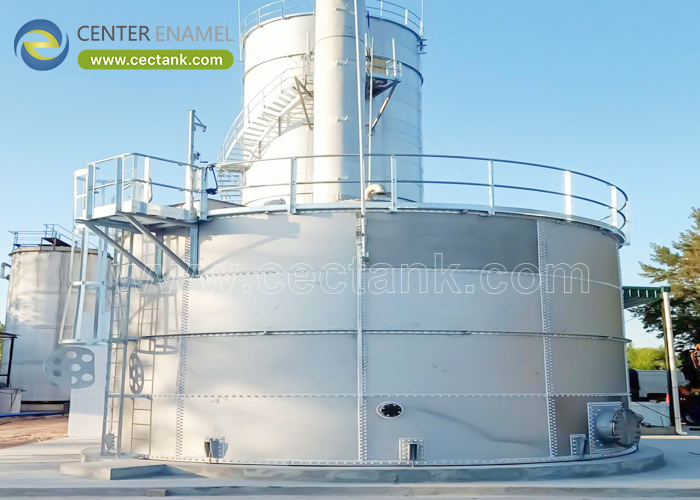
Stainless Steel Tank: Hygienic Storage for Food, Pharma, Water
| Brand Name: | Shijiazhuang Zhengzhong Technology Co.,Ltd |
|
Detail Information |
|||
Product Description
Stainless Steel Tank: Hygienic Storage for Food, Pharma, Water
Food, pharmaceutical, and water utilities across processing and municipal sites face the same pressure: store liquids hygienically, resist corrosion without constant repainting, and satisfy audit and food-safety rules. A tank that sheds coating, or a surface that traps bacteria, turns a storage asset into a contamination risk.
Engineered by Shijiazhuang Zhengzhong Technology Co., Ltd. (Center Enamel), a stainless steel tank in 304 or 316L gives an inert, easy-clean surface for potable water, process, and high-purity service, with no enamel or paint to fail.
1. What a Stainless Steel Tank Delivers
A stainless steel tank stores potable water, process fluids, and high-purity products in a surface that is inert, non-porous, and simple to sanitize, which is why food, pharma, and water plants specify it. Grade 304 suits most potable and process duty, while 316L adds molybdenum for chloride and coastal service, and a 3-12 mm shell carries the hydrostatic head from 5-20,000 m3 in a single vessel. The metal itself is the protection, so there is no coating to blister or leach.
- Surface: Inert and non-porous, so it cleans and inspects far more easily than coated steel.
- Grade: 304 for general duty, 316L where chloride or aggressive cleaning dominates.
- Capacity: Single tanks span 5-20,000 m3, covering one plant's throughput in one vessel.
- Head: A 3-12 mm shell carries the hydrostatic load from floor to roof without a lining.
- Why it matters: The metal is the protection, so there is no coating failure mode to manage.
2. Grade, Finish, and Passivation
Material choice follows the product: 304 for general duty, 316L where chloride or aggressive cleaning dominates, with a surface finished to Ra 0.4-0.8 um so it cleans and inspects easily. After fabrication the surface is passivated with citric or nitric acid to rebuild the chromium-oxide layer that gives stainless its corrosion resistance, because welds and scratches otherwise become the first points of attack. The result is a tank that meets hygiene audits without a liner.
- Grade: 304 general, 316L for chloride and coastal or aggressive-cleaning service.
- Finish: Ra 0.4-0.8 um is smooth enough to clean and inspect quickly.
- Passivation: Citric or nitric acid rebuilds the chromium-oxide layer after welding.
- Welds: Treated and inspected so they do not become the first corrosion point.
- Why it matters: A properly finished and passivated surface is what survives a hygiene audit.
3. Codes, Joints, and Inspection
A stainless tank is built to AWWA D103-09 and ISO 28765 with welds qualified and examined so hidden defects do not become leaks, then hydrostatically tested to prove the shell before service. Capacities span 5-20,000 m3 and operating temperatures reach 20-80 °C for clean-in-place duty, so the vessel suits both cold water and heated process service. Inspection and mill records travel with the tank, which is what makes a hygienic asset insurable and permit-ready.
- Codes: AWWA D103-09 and ISO 28765 govern structure, welding, and inspection.
- Joints: Welds are qualified and examined so hidden defects do not become leaks.
- Hydrotest: The shell is proven under water before the tank enters service.
- Range: 5-20,000 m3 and 20-80 °C cover cold water and heated process duty.
- Why it matters: Records are what make a hygienic tank insurable and permit-ready.
| Design parameter | Typical value or range | Why it matters |
|---|---|---|
| Grade | 304 / 316L | Hygiene vs corrosion |
| Surface finish | Ra 0.4-0.8 um | Cleanability |
| Shell thickness | 3-12 mm | Pressure and head |
| Capacity range | 5-20,000 m3 | Single-tank throughput |
| Operating temp | 20-80 °C | Product and CIP |
| Passivation | Citric / nitric | Chromium oxide layer |
| Service life | 30-50 years | Design target |
| Coating | None required | Inert surface |
| Standards | AWWA D103-09 | Design authority |
| Limitation to check | higher first cost than GFS | Watch this in the spec |
| Wind / seismic load | 0.5-1.5 kPa | Roof and shell load |
| Foundation settle | 0.1-0.3 m | Controlled subgrade |
| Throughput | 50-500 m3/d | Typical draw |
| Operating temp | 20-60 °C | Product and climate |
| Product density | 800-950 kg/m3 | Typical range |
| Design margin | 10-20 % | Allowance in steel |
| Criterion | Stainless steel tank | GFS tank | Welded carbon steel |
|---|---|---|---|
| Hygiene | Inert, easy-clean | Inert enamel | Coating-dependent |
| Corrosion defense | 304 / 316L alloy | Vitreous enamel | Paint / lining |
| Capacity range | 5-20,000 m3 | 20-20,000 m3 | Up to 150,000 m3 |
| First cost | Higher | Mid | Lower |
| Service life | 30-50 years | 30-50 years | 30-50 years |
Engineering Assurance and Project Support
Every structure delivered by Shijiazhuang Zhengzhong Technology Co., Ltd. (Center Enamel) is engineered against EN 1090 and AWWA D103-09 with finite element verification of shell, roof and nozzle loads, fabricated under ISO 9001 and ISO 45001 control, inspected across one hundred percent of critical joints, and assembled with Grade 8.8 bolts and manufacturer-certified sealant.
A stainless steel tank is not just a container; it is an inert, inspectable surface that food, pharma, and water plants can trust for decades.
Frequently Asked Questions (FAQ)
What is a stainless steel tank used for?
It stores potable water, process fluids, and high-purity products where an inert, easy-clean surface matters, from 5-20,000 m3 in a single vessel.
Which grade of stainless steel should I choose?
Grade 304 suits most potable and process duty, while 316L adds chloride resistance for coastal or aggressive-cleaning service; the surface is finished to Ra 0.4-0.8 um.
How is corrosion controlled on a stainless tank?
The alloy itself resists corrosion and is passivated after fabrication; no paint or enamel is needed, which removes the coating-failure mode.
Can a stainless steel tank be customized for my site?
Yes. Grade, finish, nozzles, jackets, and instrumentation are matched to the product and code. Shijiazhuang Zhengzhong Technology Co., Ltd. (Center Enamel) issues drawings and the inspection package per tank.