-
Glass Fused To Steel Tanks (659)
-
Stainless Steel Tanks (434)
-
Fusion Bonded Epoxy Tanks (592)
-
Galvanized Steel Tanks (321)
-
Aluminum Dome Roofs (1336)
-
Wastewater Storage Tanks (237)
-
Welded Steel Tanks (457)
-
Pressure Vessels (295)
-
Anaerobic Digester (202)
-
Industrial Water Tanks (349)
-
Glass Lined Steel Tanks (180)
-
Bolted Steel Tanks (389)
-
Sludge Storage Tank (115)
-
Biogas Storage Tank (173)
-
Leachate Storage Tanks (133)
-
Agricultural Water Storage Tanks (179)
-
Fire Water Tank (166)
-
Grain Storage Silos (146)
-
Biogas Projects (424)
-
Wastewater Treatment Projects (1369)
-
Double Membrane Roof (223)


|
Converting Ghana Food Waste to Biogas with CSTR Process and CBG Plant EPC Solutions
| Place of Origin: | China |
| Brand Name: | CEC TANKS |
| Certification: | ISO 9001:2008, AWWA D103 , OSHA , BSCI |
| Model Number: | W |
| Minimum Order Quantity: | 1set |
| Price: | $5000~$20000 one set |
| Packaging Details: | PE poly-foam between each two steel plates ; wooden pallet and wooden |
| Delivery Time: | 10-30 days after deposit received |
| Payment Terms: | L/C,T/T |
| Supply Ability: | 60 sets per month |
|
Detail Information |
|||
| Place of Origin | China | Brand Name | CEC TANKS |
|---|---|---|---|
| Certification | ISO 9001:2008, AWWA D103 , OSHA , BSCI | Model Number | W |
| Tank Body Color: | Dark Green / Can Be Customized | Corrosion Integrity: | Excellent |
| Steel Plates Thickness: | 3mm To 12mm , Depends On The Tank Structure | Chemical Resistance: | Excellent |
| Size Of Panel: | 2.4M * 1.2M | Easy To Clean: | Smooth, Glossy, Inert, Anti-adhesion |
| Highlight: | Ghana food waste biogas plant,CSTR process biogas conversion,CBG plant EPC solutions |
||
Product Description
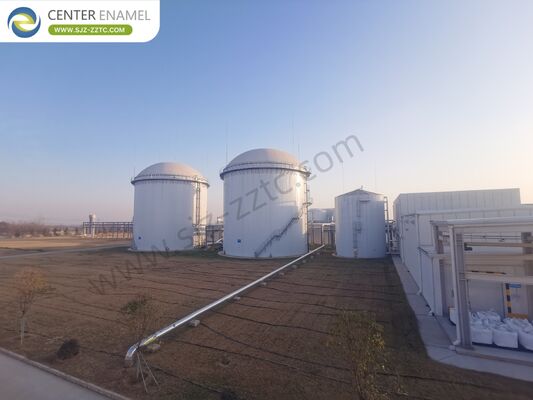
Ghana faces growing challenges in managing organic waste, particularly in urban centers. Converting food waste to biogas offers a dual solution: waste reduction and renewable energy generation. This article explores the potential for Ghana's food waste-to-biogas projects, focusing on the CSTR Process, GFS Tanks, and the role of CBG Plant EPC Solutions in delivering sustainable energy infrastructure.
Food waste in Ghana is generated across the supply chain, with significant contributions from agricultural activities, food processing, markets, and households. Research in Cape Coast estimated approximately 6,400 tons of food waste generated in 2021, with projections reaching 11,000 tons by 2050. This represents a substantial resource for biogas production.
In rural Ghana, limited access to affordable, clean cooking fuels drives the need for decentralised waste-to-energy solutions. The organic fraction of municipal solid waste, including fruit waste and food processing residues, provides suitable feedstock for anaerobic digestion. The valorisation of organic waste through anaerobic co-digestion remains underutilised in Ghana due to financial, technical, and infrastructural constraints.
Anaerobic digestion converts food waste into biogas through a series of metabolic reactions. The process involves four major biochemical stages: hydrolysis, acidogenesis, acetogenesis, and methanogenesis, which decompose organic matter under anaerobic conditions.
The resulting biogas primarily contains methane and carbon dioxide, with trace amounts of hydrogen sulfide and moisture. The biomethane potential of Ghanaian food waste has been demonstrated in studies, with methane yields of up to 441.54 NmL CH₄/g VS achieved from fruit waste and molasses co-digestion. Biogas upgrading to biomethane enables injection into the national gas grid or use as compressed biogas, with Ghana's food waste estimated to yield 3,700,000 m³ of biomethane in 2021.
The Continuous Stirred-Tank Reactor is a well-established technology for food waste anaerobic digestion. The CSTR is a closed tank equipped with a mechanical stirring device that ensures fermentation feedstock and microorganisms are fully mixed for optimal biogas production. This complete mixing prevents solids from settling and maintains a stable biological environment.
For Ghana's context, the CSTR Process offers advantages in handling high-solids organic waste streams. The system can be operated continuously or semi-continuously at a constant temperature to maximise biogas yields. Studies demonstrate CSTR systems achieve considerable biogas production from food waste, making them suitable for large- and medium-scale biogas projects.
GFS Tanks provide superior corrosion resistance and long service life for biogas applications. The high-temperature firing process (820°C–930°C) fuses glass to steel, creating an inert barrier that protects against corrosive acids and hydrogen sulfide. This technology ensures the tank remains structurally sound for over 30 years with minimal maintenance.
The Double Membrane Roof is ideal for biogas collection and storage. Its superior air-tightness ensures safe biogas containment and odour control, while the integrated design saves space compared to traditional ground-mounted gas holders. This combination of GFS Tanks and Double Membrane Roofs provides durable, efficient infrastructure for Ghanaian biogas projects.
Center Enamel provides a range of storage tank cover solutions:
- Aluminum Geodesic Dome Roof: Corrosion-resistant with expansive clear span capability.
- Glass-Fused-to-Steel Roof: Air-tightness for pressurized structures and odour control.
- Aluminum Alloy Trough Deck Roof: An economical option for wastewater storage.
- Stainless Steel Roof: Super anti-corrosion performance and long service life.
- FRP Roof: Suitable for applications where air-tightness is not required.
Complete biogas systems require supporting equipment:
- Gas Holder: Stores biogas for later use.
- Black Membrane: Covers storage ponds or provides gas collection.
- Solid-liquid Separator: Separates digestate components.
- Torch System: Safely burns excess biogas.
- Lifting Pump: Transfers liquids and slurries.
- Dehydration and Desulfurization Tank: Cleans biogas of moisture and hydrogen sulfide.
- Screw Sludge Dewatering Machine: Processes solid digestate.
Center Enamel offers comprehensive EPC services for biogas projects:
- Turnkey Project Delivery: Managing the full project lifecycle from design to commissioning, providing a consistent framework for project execution.
- Adaptation to Local Conditions: Designing plants optimised for local feedstock composition and climatic conditions.
- Accelerated Commissioning: Streamlining project execution and regulatory compliance to reduce time-to-operation.
- Long-term Support: Providing operations and maintenance services to ensure reliable post-commissioning plant performance.
- Global Quality Standards: Manufacturing certified to international standards including ISO 9001, NSF/ANSI 61, and AWWA D103-09, ensuring high-quality, durable infrastructure.
Ghana's food waste represents a significant opportunity for renewable energy generation. By deploying the CSTR Process with GFS Tanks and partnering with an experienced CBG Plant EPC Solutions provider, Ghana can transform waste into a valuable resource while advancing its sustainable energy goals. Center Enamel's comprehensive EPC capabilities make them well-positioned to support Ghana's waste-to-energy transition.
1. How does the CSTR Process handle Ghana's tropical climate?
The CSTR Process can be designed with appropriate insulation and temperature control systems to maintain optimal operating conditions, ensuring consistent biogas production despite ambient temperature variations.
2. What makes GFS Tanks suitable for Ghana's biogas projects?
GFS Tanks provide exceptional corrosion resistance against aggressive biogas components, ensuring a service life of over 30 years with minimal maintenance. Their bolted construction enables rapid on-site assembly, even in remote locations.
3. What is the advantage of an integrated EPC approach for biogas projects?
An integrated EPC approach ensures consistency from engineering design to commissioning, eliminating coordination delays and reducing project risk. It provides project developers with a single point of accountability.