-
Glass Fused To Steel Tanks (674)
-
Stainless Steel Tanks (434)
-
Fusion Bonded Epoxy Tanks (592)
-
Galvanized Steel Tanks (321)
-
Aluminum Dome Roofs (1336)
-
Wastewater Storage Tanks (237)
-
Welded Steel Tanks (457)
-
Pressure Vessels (295)
-
Anaerobic Digester (202)
-
Industrial Water Tanks (349)
-
Glass Lined Steel Tanks (180)
-
Bolted Steel Tanks (389)
-
Sludge Storage Tank (115)
-
Biogas Storage Tank (173)
-
Leachate Storage Tanks (133)
-
Agricultural Water Storage Tanks (179)
-
Fire Water Tank (166)
-
Grain Storage Silos (146)
-
Biogas Projects (424)
-
Wastewater Treatment Projects (1379)
-
Double Membrane Roof (223)


|
Advanced Slaughterhouse Wastewater Treatment in Egypt with GFS Tanks and a Reliable EPC Contractor
| Place of Origin: | China |
| Brand Name: | CEC TANKS |
| Certification: | ISO 9001:2008, AWWA D103 , OSHA , BSCI |
| Model Number: | W |
| Minimum Order Quantity: | 1set |
| Price: | $5000~$20000 one set |
| Packaging Details: | PE poly-foam between each two steel plates ; wooden pallet and wooden |
| Delivery Time: | 10-30 days after deposit received |
| Payment Terms: | L/C,T/T |
| Supply Ability: | 60 sets per month |
|
Detail Information |
|||
| Place of Origin | China | Brand Name | CEC TANKS |
|---|---|---|---|
| Certification | ISO 9001:2008, AWWA D103 , OSHA , BSCI | Model Number | W |
| Tank Body Color: | Dark Green / Can Be Customized | Corrosion Integrity: | Excellent |
| Steel Plates Thickness: | 3mm To 12mm , Depends On The Tank Structure | Chemical Resistance: | Excellent |
| Size Of Panel: | 2.4M * 1.2M | Easy To Clean: | Smooth, Glossy, Inert, Anti-adhesion |
| Highlight: | slaughterhouse wastewater treatment GFS tanks,wastewater treatment EPC contractor Egypt,GFS tanks wastewater treatment Egypt |
||
Product Description
This article explores how Egyptian slaughterhouses can transform high-strength wastewater into renewable energy. It details the sources of this waste, the anaerobic digestion process, and the vital roles of GFS Tanks and a professional EPC Contractor in delivering comprehensive, sustainable treatment solutions for the Egyptian meat processing industry.
Egypt's rapidly growing meat processing sector faces a critical environmental challenge: managing the substantial volume of high-strength wastewater generated during slaughterhouse operations. This effluent, rich in organic pollutants including fats, proteins, and blood, requires sophisticated treatment solutions. Research on Egyptian slaughterhouses has documented Chemical Oxygen Demand (COD) levels reaching 7,065 ± 3,721 mg/L, indicating a markedly high organic load that demands robust treatment infrastructure. Through modern anaerobic digestion technology and professional EPC Contractor services, this wastewater is increasingly viewed as a valuable resource for renewable energy production, helping Egyptian facilities meet environmental regulations while achieving energy independence.
Slaughterhouse wastewater originates from multiple stages of the meat processing cycle, including carcass washing, organ cleaning, and facility sanitation. The effluent contains significant concentrations of organic substances, fatty oils, and suspended solids that cause substantial environmental pollution. The composition includes meat fragments, traces of blood and fat, as well as residual detergents and sanitizers used during industrial cleaning processes. Research has documented Biological Oxygen Demand (BOD) levels ranging from 610 to 4,635 mg/L and Total Suspended Solids (TSS) between 300 and 2,800 mg/L, indicating a markedly high organic load. This potent mixture of pollutants demands a robust and resilient treatment system for effective management.
The conversion of slaughterhouse wastewater into biogas occurs through anaerobic digestion, a biological process where naturally occurring microorganisms break down organic matter in an oxygen-free environment. This process proceeds through four essential biochemical stages: hydrolysis, acidogenesis, acetogenesis, and methanogenesis. During hydrolysis, complex organic polymers are broken down into soluble monomers. Acidogenic bacteria then ferment these monomers into volatile fatty acids, which are subsequently converted into acetic acid, hydrogen, and carbon dioxide during acetogenesis. The final methanogenesis stage produces methane-rich biogas suitable for energy recovery. This biological treatment effectively neutralizes pathogens, reduces waste volume, and generates a renewable energy source that can be used for heating, electricity generation, or steam production within the industrial process.
The Continuous Stirred-Tank Reactor (CSTR) is the cornerstone of effective biogas production for challenging feedstocks like slaughterhouse wastewater. The CSTR is a sealed reactor equipped with a mechanical stirring device that ensures fermentation materials and microorganisms are maintained in a completely mixed state. This continuous agitation is critical for treating wastewater with high suspended solids, as it prevents solids from settling and breaks up floating scum layers. The mixer, with its paddles and agitator shaft, maximizes contact between the anaerobic bacteria and the organic matter, leading to higher degradation rates and more stable operation. CSTR systems are particularly well-suited to handling variable waste composition while maintaining optimal mesophilic temperature conditions for microbial activity.
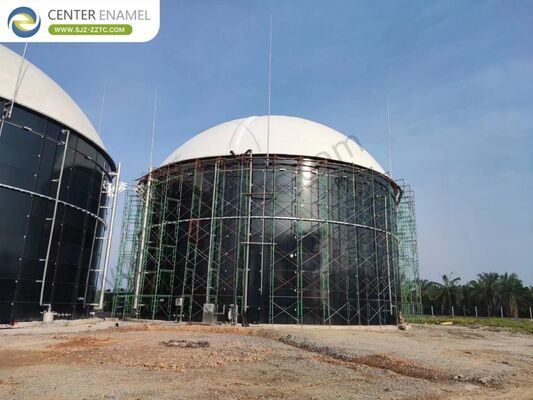
For Egyptian biogas projects, the selection of durable and corrosion-resistant infrastructure is paramount given the country's climate and the chemically aggressive environment within digesters. Glass-Fused-to-Steel (GFS) Tanks represent the premium coating technology for these applications. The manufacturing process involves firing at temperatures exceeding 800°C to fuse a glass coating to steel, creating an inert, non-porous surface that provides exceptional resistance to hydrogen sulfide, volatile fatty acids, and pH fluctuations. Complementing these tanks is the Double Membrane Roof, which provides an integrated gas storage solution directly atop the digester. This design eliminates the need for a separate ground-mounted gas holder, saving valuable land and reducing foundation construction costs.
A comprehensive treatment system incorporates various tank and cover options tailored to specific project requirements. For storage applications, options include Galvanized Steel Tanks providing a tough zinc coating, Fusion Bonded Epoxy (FBE) Tanks developed with advanced coating technology for enhanced corrosion protection, and Stainless Steel Tanks for demanding or high-purity applications. For covering these tanks, a variety of roof systems are available to meet different operational needs:
- Aluminum Geodesic Dome Roof offers advanced corrosion resistance and expansive clear span capability with efficient construction.
- Glass-Fused-to-Steel Roof provides air-tightness for pressurized structures, suitable for demanding applications requiring superior corrosion protection.
- Aluminum Alloy Trough Deck Roof serves as an economical option for water storage, effectively protecting against rain and wind.
A functional biogas facility requires a comprehensive suite of supporting equipment beyond the core digester. A typical Egyptian system includes:
- Gas Holder: For storing the produced biogas and balancing supply with demand.
- Solid-liquid Separator: To separate the digested effluent into solid and liquid fractions, both usable as fertilizers.
- Torch System: A safety flare to safely combust excess biogas when production exceeds demand.
- Dehydration and Desulfurization Tank: To remove corrosive hydrogen sulfide (H₂S) and moisture before biogas is used in engines or boilers, as H₂S can cause corrosion to metal parts.
- Screw Sludge Dewatering Machine: To reduce the volume of residual sludge, minimizing disposal costs.
Center Enamel distinguishes itself as a premier EPC Contractor for slaughterhouse wastewater treatment projects in Egypt. Their strengths include:
- Full EPC Services: They provide comprehensive Engineering, Procurement, and Construction services, serving as a single point of responsibility from design through commissioning. This integrated approach reduces coordination delays and ensures consistency across processes.
- Efficient Installation: With an annual output of 250,000 GFS sheets, they can meet project timelines. The modular bolted design eliminates the need for on-site welding, and a trained local crew can erect a typical tank in 2-3 weeks under technical supervision.
- Regulatory Compliance: Their designs comply with stringent international standards including AWWA D103, EN28765, and OSHA, and help navigate the complex regulatory approvals essential for wastewater treatment projects.
- Operational Support: Beyond construction, they provide operations and maintenance support to ensure the plant runs reliably over its lifespan.
The treatment of slaughterhouse wastewater through biogas technology represents a transformative approach to waste management for Egypt's meat industry. This process addresses critical environmental challenges while generating renewable energy and valuable fertilizer. The success of these projects depends on implementing robust infrastructure, particularly GFS Tanks, and partnering with a professional EPC Contractor to deliver efficient, long-lasting solutions tailored to local conditions.