-
Glass Fused To Steel Tanks (674)
-
Stainless Steel Tanks (434)
-
Fusion Bonded Epoxy Tanks (592)
-
Galvanized Steel Tanks (321)
-
Aluminum Dome Roofs (1336)
-
Wastewater Storage Tanks (237)
-
Welded Steel Tanks (457)
-
Pressure Vessels (295)
-
Anaerobic Digester (202)
-
Industrial Water Tanks (349)
-
Glass Lined Steel Tanks (180)
-
Bolted Steel Tanks (389)
-
Sludge Storage Tank (115)
-
Biogas Storage Tank (173)
-
Leachate Storage Tanks (133)
-
Agricultural Water Storage Tanks (179)
-
Fire Water Tank (166)
-
Grain Storage Silos (146)
-
Biogas Projects (424)
-
Wastewater Treatment Projects (1379)
-
Double Membrane Roof (223)


|
Advanced Biogas Solutions for Slaughterhouse Wastewater in South Korea with GFS Tanks
| Place of Origin: | China |
| Brand Name: | CEC TANKS |
| Certification: | ISO 9001:2008, AWWA D103 , OSHA , BSCI |
| Model Number: | W |
| Minimum Order Quantity: | 1set |
| Price: | $5000~$20000 one set |
| Packaging Details: | PE poly-foam between each two steel plates ; wooden pallet and wooden |
| Delivery Time: | 10-30 days after deposit received |
| Payment Terms: | L/C,T/T |
| Supply Ability: | 60 sets per month |
|
Detail Information |
|||
| Place of Origin | China | Brand Name | CEC TANKS |
|---|---|---|---|
| Certification | ISO 9001:2008, AWWA D103 , OSHA , BSCI | Model Number | W |
| Tank Body Color: | Dark Green / Can Be Customized | Corrosion Integrity: | Excellent |
| Steel Plates Thickness: | 3mm To 12mm , Depends On The Tank Structure | Chemical Resistance: | Excellent |
| Size Of Panel: | 2.4M * 1.2M | Easy To Clean: | Smooth, Glossy, Inert, Anti-adhesion |
| Highlight: | biogas solutions for slaughterhouse wastewater,GFS tanks for wastewater treatment,slaughterhouse wastewater treatment in South Korea |
||
Product Description
This article explores how modern technology is transforming slaughterhouse wastewater treatment in South Korea. It examines the conversion process from waste to biogas, focusing on the essential roles of GFS Tanks and a reputable Biogas Project Contractor in delivering efficient and sustainable energy solutions for the Korean meat industry.
The meat processing industry in South Korea generates a significant volume of high-strength wastewater. This effluent, if left untreated, poses serious environmental risks. However, through advanced anaerobic digestion technology, this waste is converted into a valuable resource: renewable biogas. This process is critical for Korean slaughterhouses aiming to meet strict environmental regulations and achieve energy independence.
Slaughterhouse wastewater originates from various stages of the meat processing cycle. This includes water used for washing carcasses, cleaning viscera, and general facility sanitation. The resulting effluent is highly complex and laden with organic pollutants. It contains significant amounts of fats, oils, and grease (FOG), along with proteins, blood, and suspended solids. These components contribute to a very high Chemical Oxygen Demand (COD) and Biological Oxygen Demand (BOD), making it one of the most challenging industrial wastewaters to treat. The composition can also be highly variable, fluctuating with daily slaughter volumes and processing activities, which demands a robust and resilient treatment system.
The core technology for converting this high-strength organic waste into energy is anaerobic digestion. In this process, naturally occurring microorganisms break down the organic matter in an oxygen-free environment. The primary byproducts of this biological reaction are biogas, a mixture of methane (CH₄) and carbon dioxide (CO₂), and a nutrient-rich liquid called digestate. This process effectively stabilizes the waste, neutralizes pathogens, and significantly reduces its volume and odor, all while producing a renewable fuel source that can power the facility. For a slaughterhouse, implementing this system transforms a costly disposal problem into a revenue-generating asset.
The Continuous Stirred-Tank Reactor (CSTR) is the heart of the anaerobic digestion process for challenging feedstocks like slaughterhouse wastewater. The CSTR is specifically designed to handle wastewater with high suspended solids and high organic concentrations. Inside this enclosed tank, a mechanical stirring device is constantly at work. This continuous mixing ensures that the incoming waste and the anaerobic microorganisms are in a completely mixed and homogeneous state. The mixer, with its paddles and agitator shaft, prevents solids from settling and breaks up any floating scum layers, maximizing contact between the bacteria and their food source. Operating at a constant temperature, the CSTR provides an ideal environment for stable and efficient biogas production.
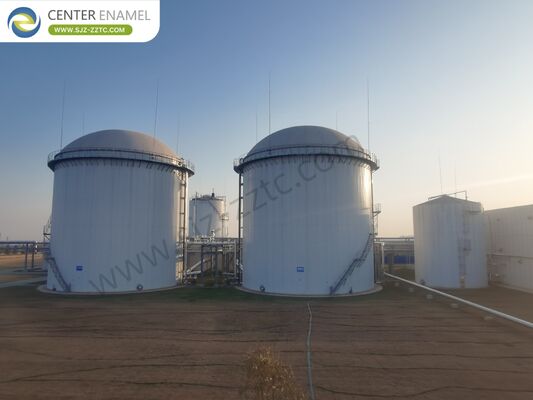
For South Korean biogas projects, the selection of durable and reliable infrastructure is paramount. Glass-Fused-to-Steel (GFS) Tanks are the premium solution for anaerobic digesters. They are created by fusing a glass coating to steel at extreme temperatures, resulting in an inert, highly corrosion-resistant, and smooth surface. This coating is essential for withstanding the chemically aggressive, acidic environment inside a digester and ensures a long service life with minimal maintenance.
Complementing the GFS tank is the Double Membrane Roof, which serves as an integrated gas holder. This roof is the preferred solution for biogas applications due to its cost optimization and space efficiency. It eliminates the need for a separate, ground-mounted gas holder, directly reducing the project's footprint and foundation costs. The design safely stores the generated biogas directly above the liquid, simplifying the site layout.
Center Enamel, a leading Biogas Project Contractor, offers a comprehensive range of tank and cover solutions tailored to specific project needs. For storage, they provide options beyond GFS, including Galvanized Steel Tanks for a tough, protective coating, Fusion Bonded Epoxy (FBE) Tanks developed in partnership with AkzoNobel for enhanced corrosion protection, and Stainless Steel Tanks for highly demanding or high-purity applications.
For covering these tanks, a variety of roof systems are available:
- Aluminum Geodesic Dome Roof: Provides advanced corrosion resistance and expansive clear span capability.
- Glass-Fused-to-Steel Roof: Offers air-tightness, often used for pressurized structures and odor control.
- Aluminum Alloy Trough Deck Roof: An economical option for non-airtight applications like water storage.
- FRP Roof: Suitable for applications not requiring air-tightness, such as drinking water storage.
A functional biogas facility requires a suite of supporting equipment. A typical system includes:
- Gas Holder: For storing the produced biogas and balancing supply and demand.
- Solid-liquid Separator: To separate the digested effluent into solid and liquid fertilizer.
- Torch System: A safety flare to safely burn excess biogas.
- Dehydration and Desulfurization Tank: To remove corrosive hydrogen sulfide (H₂S) and moisture before the biogas is used.
- Screw Sludge Dewatering Machine: To reduce the volume of waste sludge, minimizing disposal costs.
Center Enamel distinguishes itself as a premier one-stop Biogas Project Contractor for Korean clients. Their expertise ensures a seamless project from conception to completion.
Their key advantages include:
- Massive Production Capacity: With an annual production capacity of 250,000 GFS sheets, they can meet the demands of large-scale projects efficiently.
- Expertise and Scale: Supported by a 150,000㎡ R&D and production base and a team of over 500 employees, they bring deep industry knowledge to every project.
- Full-Scope EPC Services: They offer complete Engineering, Procurement, and Construction (EPC) services, managing every aspect of the project.
- International Standards: Their designs adhere to strict international standards like AWWA D103, EN28765, and EuroCode, ensuring quality and longevity.
The conversion of slaughterhouse wastewater into biogas represents a paradigm shift in waste management. In South Korea, this approach offers a sustainable path for the meat industry to treat its most challenging effluent, reduce its environmental footprint, and generate its own renewable energy. At the center of this transformation are robust GFS Tanks and the comprehensive expertise of a reliable Biogas Project Contractor like Center Enamel.
1. What makes slaughterhouse wastewater suitable for biogas production?
Slaughterhouse wastewater is rich in organic matter like fats, proteins, and blood, which are ideal feedstocks for anaerobic bacteria to produce methane-rich biogas.
2. What is the main advantage of using a CSTR for this process?
A CSTR's continuous mechanical mixing ensures even distribution of bacteria and waste, preventing solids from settling and maximizing biogas yield.
3. Why is a Double Membrane Roof preferred for biogas tanks?
It serves as an integrated gas holder, saving space and reducing costs compared to having a separate, external gas storage unit.