-
Glass Fused To Steel Tanks (596)
-
Stainless Steel Tanks (434)
-
Fusion Bonded Epoxy Tanks (592)
-
Galvanized Steel Tanks (321)
-
Aluminum Dome Roofs (1336)
-
Wastewater Storage Tanks (232)
-
Welded Steel Tanks (457)
-
Pressure Vessels (295)
-
Anaerobic Digester (202)
-
Industrial Water Tanks (349)
-
Glass Lined Steel Tanks (180)
-
Bolted Steel Tanks (389)
-
Sludge Storage Tank (115)
-
Biogas Storage Tank (173)
-
Leachate Storage Tanks (133)
-
Agricultural Water Storage Tanks (179)
-
Fire Water Tank (166)
-
Grain Storage Silos (146)
-
Biogas Projects (424)
-
Wastewater Treatment Projects (1248)
-
Double Membrane Roof (223)


|
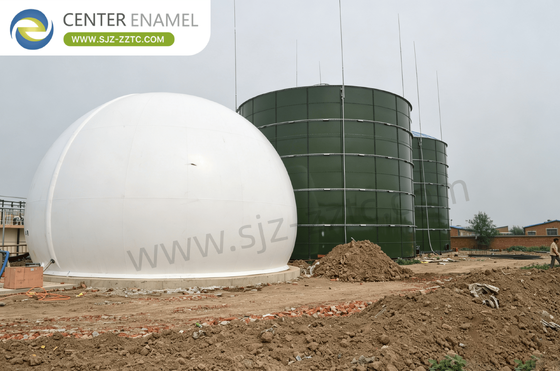
Professional Biogas Plant Project Design with GFS Tanks for Chicken Manure Treatment in Turkey
| Place of Origin: | China |
| Brand Name: | CEC TANKS |
| Certification: | ISO 9001:2008, AWWA D103 , OSHA , BSCI |
| Model Number: | W |
| Minimum Order Quantity: | 1set |
| Price: | $5000~$20000 one set |
| Packaging Details: | PE poly-foam between each two steel plates ; wooden pallet and wooden |
| Delivery Time: | 10-30 days after deposit received |
| Payment Terms: | L/C,T/T |
| Supply Ability: | 60 sets per month |
|
Detail Information |
|||
| Place of Origin | China | Brand Name | CEC TANKS |
|---|---|---|---|
| Certification | ISO 9001:2008, AWWA D103 , OSHA , BSCI | Model Number | W |
| Tank Body Color: | Dark Green / Can Be Customized | Corrosion Integrity: | Excellent |
| Steel Plates Thickness: | 3mm To 12mm , Depends On The Tank Structure | Chemical Resistance: | Excellent |
| Size Of Panel: | 2.4M * 1.2M | Easy To Clean: | Smooth, Glossy, Inert, Anti-adhesion |
| Highlight: | biogas plant design for chicken manure,GFS tanks for wastewater treatment,professional biogas project in Turkey |
||
Product Description
Turkey's rapidly growing poultry industry generates millions of tons of chicken manure annually, presenting both environmental challenges and renewable energy opportunities. Professional Biogas Plant Project Design utilizing Glass-Fused-to-Steel (GFS) Tanks provides a comprehensive solution for converting this organic waste into valuable biogas. This article examines the complete technological framework—from the anaerobic digestion process and CSTR technology to durable storage infrastructure and one-stop EPC services—empowering Turkish poultry operations to achieve sustainable waste management and energy independence.
Turkey ranks among Europe's largest poultry producers, with intensive farming operations concentrated across the Aegean, Marmara, and Mediterranean regions. This expansion has generated substantial chicken manure volumes that pose significant environmental challenges. Traditional disposal methods, such as direct land application or open storage, are proving inadequate for modern, intensively managed poultry operations. Chicken manure possesses high nitrogen content and rapidly produces ammonia, making it particularly challenging to handle. Studies indicate that nitrogen inhibition can reduce biogas production yields by as much as 54% when loading rates become excessive. The uncontrolled decomposition of poultry litter releases methane and ammonia, contributing to greenhouse gas emissions and regional air quality issues. Rainfall runoff from open storage areas leaches nitrates and phosphorus into water bodies, triggering eutrophication. Turkish environmental regulations, aligned with EU accession standards, require comprehensive waste treatment systems. These converging pressures compel poultry enterprises to adopt standardized waste stabilization and treatment systems that transform environmental liabilities into valuable resources.
The transformation of chicken manure into biogas follows a sophisticated, multi-stage biological process designed to maximize energy recovery while minimizing environmental impact. The process begins with systematic collection and pre-treatment, where manure and farm wash-water are consolidated in a homogenization sump to ensure consistent feedstock quality. Solid-liquid separators remove grit, feathers, and inert materials that could damage downstream equipment. The prepared slurry is then introduced into a sealed anaerobic reactor, where specialized microbial communities break down complex organic polymers through four synchronized biological stages: hydrolysis breaks down complex polymers into soluble monomers; acidogenesis converts these monomers into volatile fatty acids; acetogenesis transforms these acids into acetic acid, hydrogen, and carbon dioxide; and methanogenesis produces methane as the final byproduct. This oxygen-free environment allows bacteria to decompose organic matter, releasing biogas primarily composed of methane with a calorific value suitable for energy generation. After purification through desulfurization and dehydration systems, the captured biogas can fuel combined heat and power units to generate clean electricity and heat for farm operations.
The Continuous Stirred-Tank Reactor (CSTR) represents the optimal technology for anaerobic digestion of high-solids waste streams such as chicken manure. As a core processing unit, the CSTR converts organic waste into biogas and digestate through the action of anaerobic microorganisms, achieving waste reduction, stabilization, and renewable energy generation simultaneously. The CSTR system is equipped with specialized mechanical stirring devices that maintain fermentation materials and microorganisms in a state of continuous, thorough interaction, preventing solids from settling and ensuring optimal contact between bacteria and feedstock. This robust mixing mechanism is particularly valuable for Turkish poultry operations where feedstock characteristics may fluctuate due to seasonal variations in feeding practices. Within this closed, temperature-regulated environment, the reactor maximizes bacterial degradation of organic matter, achieving high organic loading rates that make it exceptionally reliable for intensive poultry farming applications. Research confirms that CSTR technology effectively handles the challenges of high-suspended-solids wastewater, consistently delivering stable biogas production even under varying operational conditions.
For secure, long-term biogas storage and digestion infrastructure, Glass-Fused-to-Steel (GFS) tanks combined with double membrane roofs provide superior solutions tailored to Turkey's diverse climate conditions. GFS tanks feature a glass coating fused to steel at temperatures exceeding 800°C, creating a hard, inert, and exceptionally smooth surface that delivers outstanding corrosion resistance against the acidic, chemically aggressive digester environment. This inorganic bond combines the strength and flexibility of steel with the corrosion resistance of glass, eliminating the need for costly annual anti-corrosive treatments. The smooth surface prevents biofilm buildup, reduces cleaning requirements, and ensures consistent performance over decades of service. The double membrane roof serves as an integrated gas holder, offering significant cost optimization by eliminating the need for separate ground-mounted gas holders, a critical advantage in Turkey's land-scarce agricultural regions. This space-efficient design reduces the overall plant footprint and saves foundation construction costs. The outer membrane withstands Turkey's variable climate—from hot, dry summers to cold winters—while the inner membrane maintains constant gas pressure for stable delivery to downstream equipment.
Center Enamel offers an extensive portfolio of storage tank and cover solutions tailored to diverse application requirements across Turkey's agricultural and industrial sectors. Beyond GFS tanks, the company provides Galvanized Steel Tanks, which receive a tough, wear-resistant protective coating offering superior corrosion resistance for less demanding applications. Fusion Bonded Epoxy (FBE) Tanks incorporate innovative coating technology developed in partnership with AkzoNobel, providing enhanced protection for challenging environments. Stainless Steel Tanks, available in AISI 304/316 grades, meet the most stringent requirements for high-purity and harsh environment applications. For roof solutions, the company offers multiple options:
- Aluminum Geodesic Dome Roofs provide expansive clear span capability with minimal maintenance requirements;
- Glass-Fused-to-Steel Roofs deliver air-tightness for pressurized structures and effective odor control;
- Single and Double Membrane Roofs serve as superior options for anaerobic digestion processes;
- Aluminum Alloy Trough Deck Roofs offer economical solutions for potable water and wastewater storage;
- Stainless Steel Roofs provide super anti-corrosion performance and extended service life; and
- FRP Roofs suit applications without air-tightness requirements.
A high-performance biogas system requires seamless integration of specialized equipment operating in coordinated fashion. The Mechanical Bar Screen serves as the first line of defense, intercepting larger solid impurities that could damage downstream equipment. The Homogenization Tank ensures consistent feedstock quality by equalizing variations in manure characteristics. The Solid-liquid Separator extracts solids from liquid post-fermentation, facilitating digestate management and nutrient recovery. The Biogas Dehydration system removes moisture that could corrode piping and reduce combustion efficiency. Desulfurization equipment purifies raw biogas by removing corrosive hydrogen sulfide, with H₂S removal rates capable of exceeding 97% using biological methods. Booster Fans maintain optimal gas flow pressure through the system. Flowmeters monitor gas production rates for operational control. The Torch System provides safe combustion of excess gas during maintenance, startup, or emergency conditions. The Biogas Generator converts purified biogas into electricity and heat. The Screw Sludge Dewatering Machine efficiently reduces the volume of residual sludge, lowering disposal costs and simplifying land application. Each component must be carefully specified and integrated to ensure optimal system performance and regulatory compliance.
Center Enamel delivers comprehensive Biogas Plant Project Design and EPC solutions, providing end-to-end project execution from conceptual design through commissioning. Key advantages include:
- Global Manufacturing Capacity: An R&D and production base spanning 150,000 square meters with annual output of 250,000 GFS sheets ensures timely delivery for projects of any scale.
- Professional Workforce: A team of over 500 employees, including experienced engineers, provides expert guidance throughout the project lifecycle.
- International Quality Certifications: Products meet rigorous standards including CE/EN1090, ISO 9001, NSF/ANSI 61, WRAS, and EN28765.
- Rapid On-Site Installation: The modular bolted design eliminates on-site welding and heavy concrete pouring, allowing a trained local crew to erect a 3,000-5,000 m³ GFS tank in just 2-3 weeks under expert supervision.
- Complete Turnkey Project Management: From site assessment and system design to equipment supply, construction, and commissioning, Center Enamel manages every aspect, reducing client burden.
- Comprehensive Equipment Supply: The company supplies all necessary components including gas holders, dehydration and desulfurization systems, solid-liquid separators, screw sludge dewatering machines, and biogas generators.
- Long-term Reliability: GFS tanks offer a service life exceeding 30 years with minimal maintenance, providing exceptional return on investment and predictable operational costs.
Turkey's poultry industry faces a pivotal moment where environmental stewardship and economic opportunity converge. Advanced biogas technology, powered by durable GFS Tanks and professional Biogas Plant Project Design, offers a proven pathway for transforming chicken manure treatment challenges into sustainable energy assets. The integrated approach—encompassing CSTR technology, robust storage infrastructure, diverse cover solutions, and complete equipment integration—enables Turkish poultry farmers to achieve waste reduction, generate clean electricity and heat, produce organic fertilizer, and comply with tightening environmental regulations. With its one-stop solutions and rapid installation capability, Center Enamel empowers Turkish agricultural enterprises to embrace sustainable practices while improving operational efficiency and energy independence.