-
Glass Fused To Steel Tanks (596)
-
Stainless Steel Tanks (434)
-
Fusion Bonded Epoxy Tanks (592)
-
Galvanized Steel Tanks (321)
-
Aluminum Dome Roofs (1336)
-
Wastewater Storage Tanks (232)
-
Welded Steel Tanks (457)
-
Pressure Vessels (295)
-
Anaerobic Digester (201)
-
Industrial Water Tanks (349)
-
Glass Lined Steel Tanks (180)
-
Bolted Steel Tanks (389)
-
Sludge Storage Tank (115)
-
Biogas Storage Tank (173)
-
Leachate Storage Tanks (133)
-
Agricultural Water Storage Tanks (179)
-
Fire Water Tank (166)
-
Grain Storage Silos (146)
-
Biogas Projects (425)
-
Wastewater Treatment Projects (828)
-
Double Membrane Roof (223)

|
Elevating Municipal Sewage Treatment in Tunisia: GFS Tanks and A2O Process
| Place of Origin: | China |
| Brand Name: | CEC TANKS |
| Certification: | ISO 9001:2008, AWWA D103 , OSHA , BSCI |
| Model Number: | W |
| Minimum Order Quantity: | 1set |
| Price: | $5000~$20000 one set |
| Packaging Details: | PE poly-foam between each two steel plates ; wooden pallet and wooden |
| Delivery Time: | 10-30 days after deposit received |
| Payment Terms: | L/C,T/T |
| Supply Ability: | 60 sets per month |
|
Detail Information |
|||
| Place of Origin | China | Brand Name | CEC TANKS |
|---|---|---|---|
| Certification | ISO 9001:2008, AWWA D103 , OSHA , BSCI | Model Number | W |
| Tank Body Color: | Dark Green / Can Be Customized | Corrosion Integrity: | Excellent |
| Steel Plates Thickness: | 3mm To 12mm , Depends On The Tank Structure | Chemical Resistance: | Excellent |
| Size Of Panel: | 2.4M * 1.2M | Easy To Clean: | Smooth, Glossy, Inert, Anti-adhesion |
| Highlight: | GFS tanks for sewage treatment,A2O process wastewater treatment,municipal sewage treatment Tunisia |
||
Product Description
Elevating Municipal Sewage Treatment in Tunisia: GFS Tanks and Aluminum Geodesic Dome Roofs
Tunisia is currently experiencing rapid urban development, which has placed significant pressure on the country's municipal wastewater infrastructure. As cities grow, the volume of domestic and industrial sewage has risen, creating an urgent demand for advanced and sustainable management strategies. Untreated wastewater—characterized by high concentrations of organic matter, pathogens, and harmful nutrients—poses a direct threat to Tunisia’s precious groundwater supplies and coastal ecosystems. Implementing modernized, robust treatment systems is now essential to protect public health and preserve the nation's environmental integrity. By upgrading infrastructure with cutting-edge technology, Tunisia can transform its approach to water security, ensuring that treated effluent is safe for discharge or future reuse.
Municipal Sewage Treatment Workflow
Modern municipal wastewater treatment relies on a meticulously sequenced biological process to neutralize pollutants effectively. The operational cycle begins with collection and equalization, which stabilizes the flow and quality of raw sewage entering the facility. Following this, the water enters biological reactors that utilize precise anaerobic, anoxic, and aerobic environments to decompose organic carbon and remove nutrients such as nitrogen and phosphorus. After these biological stages, the process employs advanced separation methods, such as Membrane Bioreactor (MBR) systems, followed by final disinfection through ultraviolet (UV) technology. This comprehensive workflow ensures the output consistently meets environmental safety standards, effectively turning waste into manageable, clean water.
Professional Design Solutions from Center Enamel
Center Enamel provides comprehensive, turnkey design services that are perfectly aligned with the specific operational requirements of Tunisia’s municipal sewage projects. With decades of global experience in environmental engineering, our technical team delivers solutions that extend beyond basic equipment supply to provide full-scale project integration. From conducting initial site feasibility studies and hydraulic design to custom manufacturing and on-site commissioning, we ensure every aspect of the treatment plant is optimized for peak performance. By focusing on localized pollutant loads and long-term sustainability, Center Enamel creates high-performance wastewater facilities that empower Tunisian municipalities to manage their water resources with greater efficiency, lower operational risk, and increased reliability.
Understanding the A2O Process
The A2O (Anaerobic-Anoxic-Oxic) process is a premier biological solution for treating nutrient-heavy wastewater. The sequence begins in the anaerobic tank, where specialized microorganisms break down complex organic matter. The sewage then moves to the anoxic zone, where denitrifying bacteria reduce nitrates into harmless nitrogen gas. Finally, the aerobic stage completes the process through nitrification, transforming ammonia nitrogen into nitrates. This highly coordinated, multi-stage anaerobic approach is exceptionally effective for municipal environments, ensuring that the final discharge is stripped of the nutrients that would otherwise cause environmental degradation, making it an ideal technology for protecting Tunisia's water bodies.
GFS Tanks and Aluminum Geodesic Dome Roofs
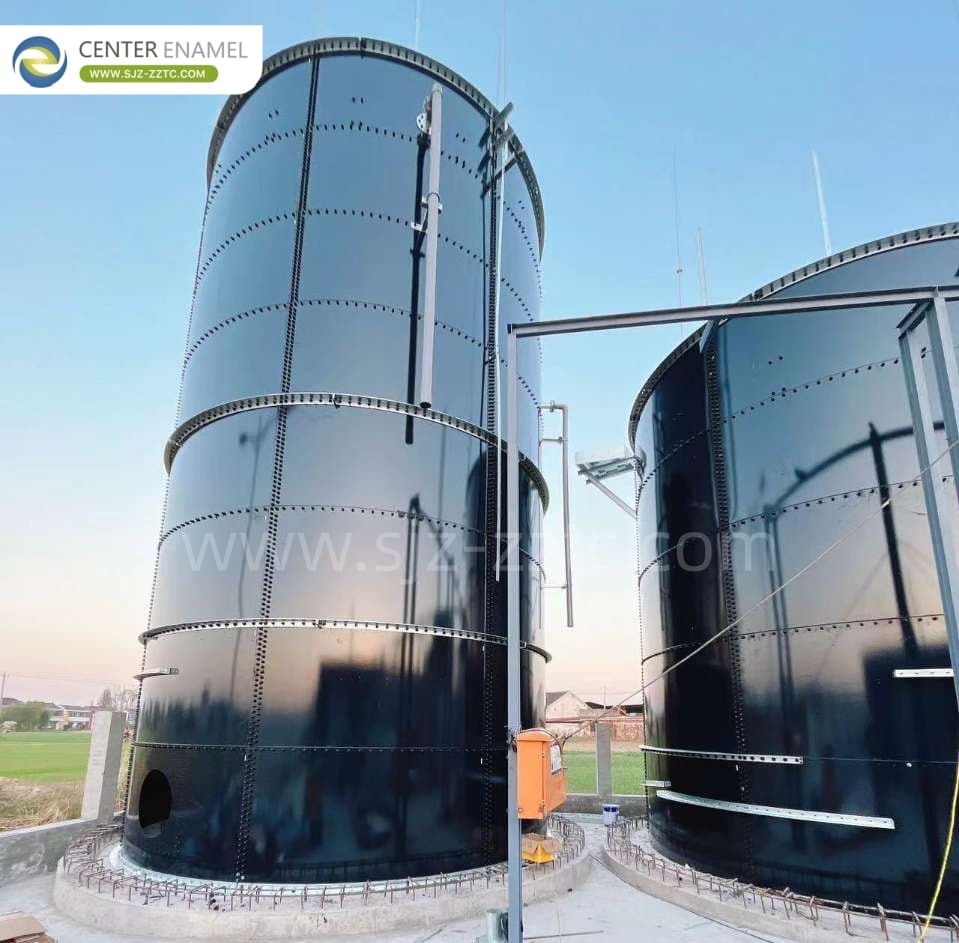
To ensure the long-term longevity of municipal infrastructure, Center Enamel utilizes Glass-Fused-to-Steel (GFS) tanks. These tanks are engineered by fusing molten glass to steel plates at high temperatures (820°C–930°C), creating an inert, glass-like bond that provides unparalleled corrosion resistance compared to traditional painted steel. To complement this, we integrate Aluminum Geodesic Dome Roofs. This pairing offers a lightweight, high-strength solution that provides expansive, clear-span coverage. These Aluminum Geodesic Dome Roofs are essentially maintenance-free and corrosion-proof, ensuring that the critical anaerobic environment within the tanks remains protected from external weather elements, making this combination the gold standard for municipal storage and treatment in Tunisia.
Key Supporting Equipment and Technologies
Center Enamel offers a suite of advanced equipment designed to enhance the precision and reliability of wastewater treatment plants:
Screw Stack Sludge Dewatering Machine: A high-efficiency unit that reduces sludge volume by effectively separating liquids from solid waste, simplifying subsequent disposal.
Sludge Transfer & Return Pumps: Specifically engineered for the controlled, continuous circulation of biomass, ensuring that microbial concentrations remain balanced throughout the A2O process.
Submersible Mixers: These ensure uniform internal tank conditions, preventing sedimentation and maximizing the contact area between bacteria and organic pollutants.
Lifting Pumps: These enable the seamless vertical transport of raw wastewater through different treatment phases, regardless of site elevation.
UV Sterilizers: An essential final-stage technology that utilizes intense ultraviolet light to neutralize viruses and bacteria, ensuring effluent safety.
One-Stop Solution Provider for Tunisia
Center Enamel is a premier, one-stop global partner for municipal wastewater infrastructure in Tunisia. Leveraging over 35 years of industry history, an expansive 150,000m² manufacturing facility, and a dedicated team of over 500 professionals, we manage the entire project lifecycle—from engineering design and equipment manufacturing to turnkey construction. We are committed to helping Tunisian municipalities overcome the challenges of rapid urbanization by providing comprehensive, high-quality, and sustainable wastewater treatment solutions. Our dedication to technical innovation ensures that your infrastructure investment remains durable, efficient, and fully compliant with all environmental standards for decades to come.
Conclusion
By combining the efficiency of the A2O process with the superior durability of GFS tanks and Aluminum Geodesic Dome Roofs, Center Enamel provides the essential infrastructure required to secure Tunisia's water future. Our focus on sustainable, high-tech engineering ensures that municipal sewage is handled safely and effectively. Through our one-stop project delivery model, we help Tunisian communities protect their natural water resources and meet their long-term environmental goals with confidence and reliability.
FAQ: Municipal Sewage Treatment
Q1: How do GFS tanks compare to traditional concrete tanks in terms of seismic resilience?
A: GFS tanks are inherently more flexible than brittle concrete structures. This flexibility allows them to better withstand seismic activity without cracking, ensuring the structural integrity of the wastewater containment during environmental disturbances.
Q2: What is the benefit of using Aluminum Geodesic Dome Roofs in coastal areas like Tunisia?
A: Coastal regions often experience high humidity and salt-laden air, which rapidly corrode standard metals. Aluminum Geodesic Dome Roofs are highly resistant to this atmospheric corrosion, making them ideal for ensuring long-term structural integrity in maritime climates.
Q3: Can the A2O process be integrated with renewable energy sources?
A: Yes, the biogas generated as a byproduct of the anaerobic digestion phase can be captured and utilized in combined heat and power (CHP) systems to generate electricity, which can then be used to power the plant’s own pumps and mixers, increasing energy self-sufficiency.