-
Glass Fused To Steel Tanks (596)
-
Stainless Steel Tanks (434)
-
Fusion Bonded Epoxy Tanks (592)
-
Galvanized Steel Tanks (321)
-
Aluminum Dome Roofs (1336)
-
Wastewater Storage Tanks (232)
-
Welded Steel Tanks (457)
-
Pressure Vessels (295)
-
Anaerobic Digester (201)
-
Industrial Water Tanks (349)
-
Glass Lined Steel Tanks (180)
-
Bolted Steel Tanks (389)
-
Sludge Storage Tank (115)
-
Biogas Storage Tank (173)
-
Leachate Storage Tanks (133)
-
Agricultural Water Storage Tanks (179)
-
Fire Water Tank (166)
-
Grain Storage Silos (146)
-
Biogas Projects (425)
-
Wastewater Treatment Projects (828)
-
Double Membrane Roof (223)

|
Enhancing Municipal Sewage Treatment in Malaysia: GFS Tanks and A2O Process
| Place of Origin: | China |
| Brand Name: | CEC TANKS |
| Certification: | ISO 9001:2008, AWWA D103 , OSHA , BSCI |
| Model Number: | W |
| Minimum Order Quantity: | 1set |
| Price: | $5000~$20000 one set |
| Packaging Details: | PE poly-foam between each two steel plates ; wooden pallet and wooden |
| Delivery Time: | 10-30 days after deposit received |
| Payment Terms: | L/C,T/T |
| Supply Ability: | 60 sets per month |
|
Detail Information |
|||
| Place of Origin | China | Brand Name | CEC TANKS |
|---|---|---|---|
| Certification | ISO 9001:2008, AWWA D103 , OSHA , BSCI | Model Number | W |
| Tank Body Color: | Dark Green / Can Be Customized | Corrosion Integrity: | Excellent |
| Steel Plates Thickness: | 3mm To 12mm , Depends On The Tank Structure | Chemical Resistance: | Excellent |
| Size Of Panel: | 2.4M * 1.2M | Easy To Clean: | Smooth, Glossy, Inert, Anti-adhesion |
| Highlight: | GFS tanks for sewage treatment,A2O process wastewater treatment,municipal sewage treatment Malaysia |
||
Product Description
Enhancing Municipal Sewage Treatment in Malaysia: GFS Tanks and A2O Process
Malaysia is currently undergoing a period of rapid urbanization, which has placed significant pressure on the country's existing municipal water infrastructure. As metropolitan areas continue to expand, the volume of domestic and industrial sewage has increased sharply, creating an urgent demand for advanced wastewater management strategies. Without effective treatment, this sewage—rich in organic matter, pathogens, and harmful nutrients—poses a direct threat to Malaysia’s rivers, vital coastal ecosystems, and essential groundwater supplies. Implementing modernized, sustainable treatment systems is now essential to protect public health and preserve the nation's natural beauty. By upgrading existing infrastructure with robust, high-tech solutions, Malaysia can transform its approach to water security, ensuring that treated effluent is safe for discharge or future reuse.
Municipal Sewage Treatment Workflow
Modern municipal wastewater treatment relies on a sequenced biological process to neutralize pollutants effectively. The operational cycle typically begins with the collection and equalization of raw sewage, which stabilizes the flow and quality before treatment. From there, the wastewater enters biological reactors that utilize precise anaerobic, anoxic, and aerobic environments to effectively remove nitrogen, phosphorus, and organic carbon. Following these biological stages, the process employs advanced separation methods, such as Membrane Bioreactor (MBR) systems, and concludes with final disinfection through ultraviolet (UV) technology. This ensures the output consistently meets environmental safety standards, turning waste into manageable, clean water.
Professional Design Solutions from Center Enamel
Center Enamel provides comprehensive, turnkey design services that are perfectly matched to the specific operational requirements of municipal sewage projects in Malaysia. With decades of global experience in environmental engineering, our technical team delivers solutions that go beyond simple equipment supply; we provide full-scale project integration. From initial site feasibility studies and hydraulic design to custom manufacturing and on-site commissioning, we ensure every aspect of the plant is optimized for success. By focusing on localized pollutant loads and long-term sustainability, Center Enamel creates high-performance wastewater facilities that empower Malaysian municipalities to manage their water resources with greater efficiency, lower operational risk, and increased reliability.
Understanding the A2O Process
The A2O (Anaerobic-Anoxic-Oxic) process is a premier biological solution for nutrient-heavy wastewater. The sequence begins in the anaerobic tank, where specialized microorganisms break down complex organic matter. The sewage then moves to the anoxic zone, where denitrifying bacteria reduce nitrates into harmless nitrogen gas. Finally, the aerobic stage completes the process through nitrification, transforming ammonia nitrogen into nitrates. This highly coordinated, multi-stage anaerobic approach is exceptionally effective for municipal environments, ensuring that the final discharge is stripped of the nutrients that would otherwise cause environmental degradation, making it an ideal technology for protecting Malaysia's water bodies.
Durable GFS Tanks for Municipal Infrastructure
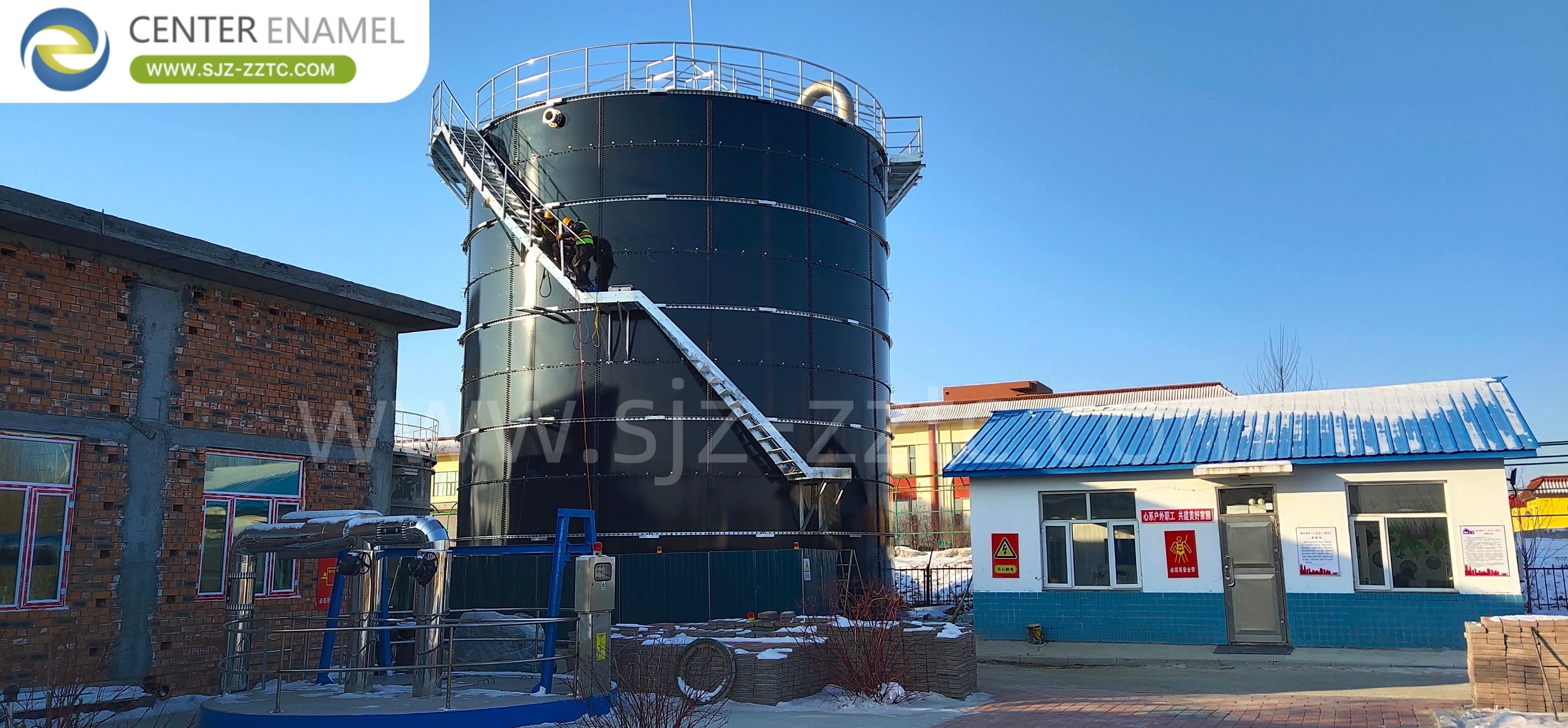
To ensure the longevity of municipal infrastructure, Center Enamel utilizes Glass-Fused-to-Steel (GFS) tanks. These tanks are engineered by fusing molten glass to steel plates at high temperatures (820°C–930°C), creating an inert, glass-like bond that provides unparalleled corrosion resistance compared to traditional painted steel. This glass-fused-to-steel technology offers significant benefits, including superior protection against the harsh, corrosive nature of municipal sewage. Furthermore, these tanks provide exceptional structural strength and a long service life, making them the gold standard for municipal storage and treatment. The modular design of GFS tanks also facilitates easier transport and faster assembly, offering a cost-effective and highly durable solution for large-scale treatment facilities.
Key Supporting Equipment and Technologies
Center Enamel offers a suite of advanced equipment designed to enhance the precision and reliability of wastewater treatment plants:
Screw Stack Sludge Dewatering Machine: A high-efficiency unit that reduces sludge volume by effectively separating liquids from solid waste, simplifying subsequent disposal.
Sludge Transfer & Return Pumps: Specifically engineered for the controlled, continuous circulation of biomass, ensuring that microbial concentrations remain balanced throughout the A2O process.
Submersible Mixers: These ensure uniform internal tank conditions, preventing sedimentation and maximizing the contact area between bacteria and organic pollutants.
Lifting Pumps: These enable the seamless vertical transport of raw wastewater through different treatment phases, regardless of site elevation.
UV Sterilizers: An essential final-stage technology that utilizes intense ultraviolet light to neutralize viruses and bacteria, ensuring effluent safety.
One-Stop Solution Provider for Malaysia
Center Enamel is a premier, one-stop global partner for municipal wastewater infrastructure in Malaysia. Leveraging over 35 years of industry history, an expansive 150,000m² manufacturing facility, and a dedicated team of over 500 professionals, we manage the entire project lifecycle—from engineering design and equipment manufacturing to turnkey construction. We are committed to helping Malaysian municipalities overcome the challenges of rapid urbanization by providing comprehensive, high-quality, and sustainable wastewater treatment solutions. Our dedication to technical innovation ensures that your infrastructure investment remains durable, efficient, and fully compliant with all environmental standards for decades to come.
Conclusion
By combining the efficiency of the A2O process with the superior durability of GFS tanks and advanced supporting equipment, Center Enamel provides the essential infrastructure required to secure Malaysia's water future. Our focus on sustainable, high-tech engineering ensures that municipal sewage is handled safely and effectively. Through our one-stop project delivery model, we help local communities protect their natural water resources and meet their long-term environmental goals with confidence and reliability.
FAQ: Municipal Sewage Treatment
Q1: How do GFS tanks help reduce maintenance costs in municipal treatment plants?
A: GFS tanks feature an inert, glass-like surface that is highly resistant to corrosion and chemical degradation. This eliminates the need for frequent painting or protective coatings, significantly reducing long-term maintenance requirements and operational downtime.
Q2: Can the A2O process effectively handle varying industrial and domestic wastewater mixtures?
A: Yes, the multi-stage nature of the A2O process—comprising anaerobic, anoxic, and aerobic zones—provides a flexible framework that can be optimized to treat complex mixtures of organic matter and nutrients found in municipal wastewater.
Q3: How does the use of submersible mixers improve the overall performance of treatment tanks?
A: Submersible mixers maintain homogeneity within the tanks by preventing the sedimentation of solids. By keeping biomass in suspension, they maximize the contact surface area between microorganisms and organic pollutants, which is crucial for achieving high-efficiency degradation.