-
Glass Fused To Steel Tanks (596)
-
Stainless Steel Tanks (434)
-
Fusion Bonded Epoxy Tanks (592)
-
Galvanized Steel Tanks (321)
-
Aluminum Dome Roofs (1336)
-
Wastewater Storage Tanks (232)
-
Welded Steel Tanks (457)
-
Pressure Vessels (295)
-
Anaerobic Digester (201)
-
Industrial Water Tanks (349)
-
Glass Lined Steel Tanks (180)
-
Bolted Steel Tanks (389)
-
Sludge Storage Tank (115)
-
Biogas Storage Tank (173)
-
Leachate Storage Tanks (133)
-
Agricultural Water Storage Tanks (179)
-
Fire Water Tank (166)
-
Grain Storage Silos (146)
-
Biogas Projects (425)
-
Wastewater Treatment Projects (828)
-
Double Membrane Roof (223)

|
Efficient Municipal Sewage Treatment in Rwanda: Leveraging GFS Tanks and A2O Process
| Place of Origin: | China |
| Brand Name: | CEC TANKS |
| Certification: | ISO 9001:2008, AWWA D103 , OSHA , BSCI |
| Model Number: | W |
| Minimum Order Quantity: | 1set |
| Price: | $5000~$20000 one set |
| Packaging Details: | PE poly-foam between each two steel plates ; wooden pallet and wooden |
| Delivery Time: | 10-30 days after deposit received |
| Payment Terms: | L/C,T/T |
| Supply Ability: | 60 sets per month |
|
Detail Information |
|||
| Place of Origin | China | Brand Name | CEC TANKS |
|---|---|---|---|
| Certification | ISO 9001:2008, AWWA D103 , OSHA , BSCI | Model Number | W |
| Tank Body Color: | Dark Green / Can Be Customized | Corrosion Integrity: | Excellent |
| Steel Plates Thickness: | 3mm To 12mm , Depends On The Tank Structure | Chemical Resistance: | Excellent |
| Size Of Panel: | 2.4M * 1.2M | Easy To Clean: | Smooth, Glossy, Inert, Anti-adhesion |
| Highlight: | municipal sewage treatment GFS tanks,wastewater treatment A2O process,sewage treatment Rwanda projects |
||
Product Description
Efficient Municipal Sewage Treatment in Rwanda: Leveraging GFS Tanks and A2O Process
Rwanda is experiencing rapid urbanization and economic growth, which has placed significant pressure on the country’s existing water infrastructure. Managing municipal sewage—the liquid waste generated from homes, businesses, and public facilities—has become a critical challenge. Untreated sewage, laden with organic matter, nutrients, pathogens, and various chemicals, poses severe risks to public health and environmental integrity, threatening local water sources and ecosystems. To address this, implementing sustainable and robust wastewater treatment systems is essential to ensure that treated effluent meets safety standards for discharge or reuse, thereby protecting Rwanda’s precious water resources.
Municipal Sewage Treatment Workflow
Effective municipal wastewater treatment follows a systematic workflow to remove pollutants. The process typically begins with the collection and equalization of sewage in a tank to stabilize water quality and quantity. Subsequently, the water undergoes biological treatment stages—often incorporating anaerobic, anoxic, and aerobic processes—to decompose organic matter and remove nitrogen and phosphorus. Finally, advanced separation technologies, such as Membrane Bioreactor (MBR) systems, followed by disinfection processes like ultraviolet (UV) treatment, ensure the final effluent is clean, safe, and compliant with environmental regulations.
Comprehensive Design Solutions from Center Enamel
Center Enamel provides professional, turnkey design solutions specifically tailored to the unique demands of municipal sewage treatment projects. Drawing upon years of technical expertise and extensive experience in environmental engineering, our team offers a holistic approach that covers initial design, equipment manufacturing, and project construction. By conducting thorough site assessments and understanding the specific pollutant profiles, we develop customized treatment strategies that maximize efficiency, minimize environmental impact, and provide long-term operational reliability for our clients in Rwanda and beyond.
Understanding the A2O Process
The A2O (Anaerobic-Anoxic-Oxic) process is a highly effective biological wastewater treatment method designed to remove organic matter, nitrogen, and phosphorus. In the anaerobic tank, microorganisms decompose complex organic matter. The sewage then flows into the anoxic tank, where denitrifying bacteria reduce nitrate nitrogen to nitrogen gas. Finally, in the aerobic tank, microorganisms perform further decomposition and nitrification, converting ammonia nitrogen into nitrate nitrogen. This integrated, multi-stage anaerobic solution ensures high-quality effluent and efficient nutrient removal.
Durable GFS Tanks and Aluminum Geodesic Dome Roofs
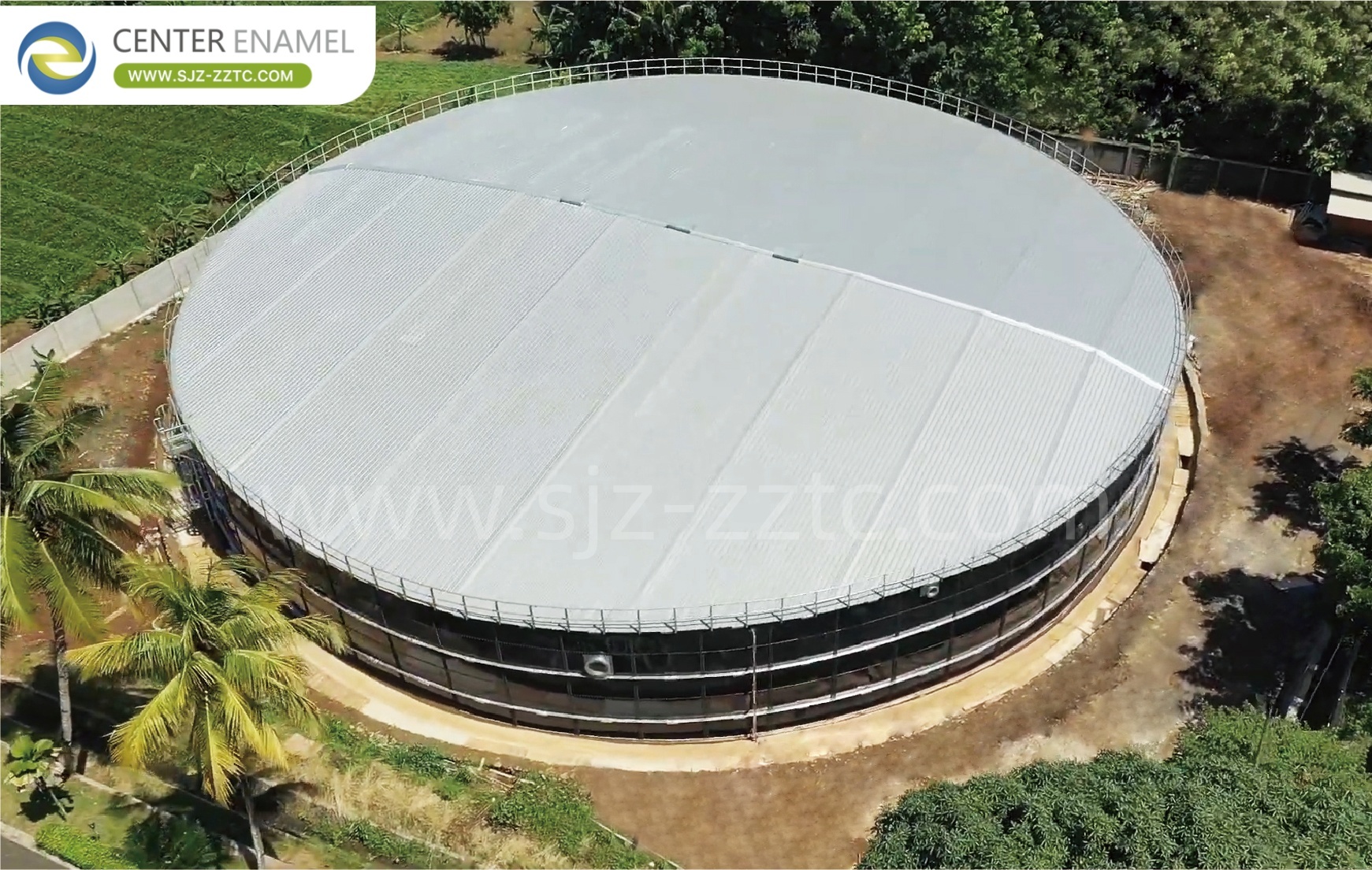
For robust infrastructure, Center Enamel utilizes Glass-Fused-to-Steel (GFS) tanks, which are engineered for superior strength and corrosion resistance. Created by firing molten glass at 820°C–930°C to form an inert bond with the steel plate, these tanks offer significant longevity over standard epoxy or painted alternatives. When paired with an Aluminum Geodesic Dome Roof, the system gains advanced corrosion resistance, expansive clear span capability, and low maintenance requirements. This combination represents the premium standard in the storage tanks market for municipal sewage and industrial wastewater applications.
Key Supporting Equipment and Technologies
Beyond core tanks, Center Enamel provides a comprehensive suite of integrated, high-performance equipment to optimize treatment efficiency:
Screw Stack Sludge Dewatering Machine: Designed for efficient water separation and sludge reduction, minimizing volume for easier handling.
Sludge Transfer Pump & Return Pump: Precision-engineered pumps ensure the consistent flow and circulation of sludge throughout the treatment stages.
Submersible Mixer: Essential for maintaining homogeneity within tanks, preventing sedimentation, and promoting optimal biological activity.
Lifting Pump: Provides reliable movement of raw wastewater through different elevation levels in the treatment plant.
UV Sterilizer: A vital final-stage unit that utilizes ultraviolet radiation to effectively neutralize bacteria, viruses, and other harmful microorganisms, ensuring environmental safety.
One-Stop Solution Provider for Rwanda
Center Enamel stands as a premier global water treatment solution provider, offering one-stop services from engineering design and equipment manufacturing to turnkey construction. With 35+ years of experience, an R&D and manufacturing center spanning 150,000m², and a dedicated team of over 500 professionals, we are fully equipped to provide Rwanda with comprehensive, sustainable, and innovative sewage treatment project solutions. We empower local sectors to address critical wastewater challenges through high-quality technical support and durable infrastructure.
Conclusion
By integrating advanced anaerobic solutions, the robust durability of GFS tanks, and efficient treatment technologies, Center Enamel provides the essential infrastructure needed to combat sewage hazards and protect environmental quality. Our commitment to high-tech, sustainable wastewater engineering ensures that Rwanda can achieve safer, cleaner water management, meeting both current needs and future developmental goals.
FAQ: Biogas and Anaerobic Treatment
Q1: How does the temperature inside an anaerobic tank affect biogas production? A: Anaerobic bacteria are highly sensitive to temperature. Maintaining an optimal temperature range (mesophilic or thermophilic) is crucial, as lower temperatures can significantly slow down microbial activity, thereby reducing the rate of organic matter decomposition and the subsequent volume of biogas produced.
Q2: Can municipal sewage treatment systems be self-sufficient in energy?
A: Yes, by utilizing anaerobic digestion, the organic matter in sewage can be converted into biogas (methane). This biogas can be captured and utilized in combined heat and power (CHP) engines to generate electricity and heat, potentially powering a significant portion of the wastewater treatment plant’s operations.
Q3: What are the primary factors that cause a drop in biogas yield in an anaerobic system?
A: A decrease in yield is often caused by factors such as "shock loading" (sudden changes in inflow volume or composition), pH imbalances, the introduction of toxic substances that inhibit bacteria, or significant temperature fluctuations, all of which disrupt the delicate microbial balance required for digestion.