-
Glass Fused To Steel Tanks (596)
-
Stainless Steel Tanks (434)
-
Fusion Bonded Epoxy Tanks (592)
-
Galvanized Steel Tanks (321)
-
Aluminum Dome Roofs (1336)
-
Wastewater Storage Tanks (232)
-
Welded Steel Tanks (457)
-
Pressure Vessels (295)
-
Anaerobic Digester (201)
-
Industrial Water Tanks (349)
-
Glass Lined Steel Tanks (180)
-
Bolted Steel Tanks (389)
-
Sludge Storage Tank (115)
-
Biogas Storage Tank (173)
-
Leachate Storage Tanks (133)
-
Agricultural Water Storage Tanks (179)
-
Fire Water Tank (166)
-
Grain Storage Silos (146)
-
Biogas Projects (425)
-
Wastewater Treatment Projects (828)
-
Double Membrane Roof (223)

|
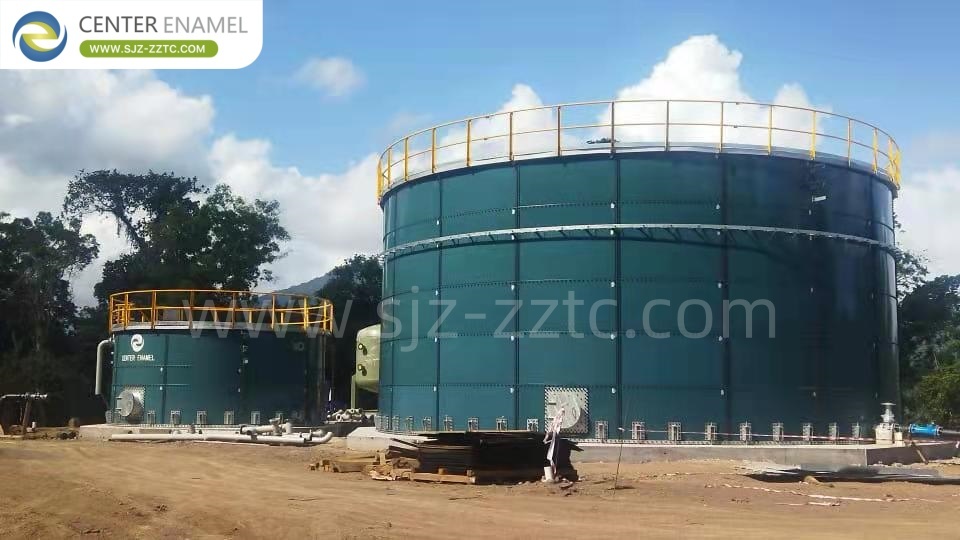
Advancing Municipal Sewage Treatment in Kenya: GFS Tanks and A2O Process
| Place of Origin: | China |
| Brand Name: | CEC TANKS |
| Certification: | ISO 9001:2008, AWWA D103 , OSHA , BSCI |
| Model Number: | W |
| Minimum Order Quantity: | 1set |
| Price: | $5000~$20000 one set |
| Packaging Details: | PE poly-foam between each two steel plates ; wooden pallet and wooden |
| Delivery Time: | 10-30 days after deposit received |
| Payment Terms: | L/C,T/T |
| Supply Ability: | 60 sets per month |
|
Detail Information |
|||
| Place of Origin | China | Brand Name | CEC TANKS |
|---|---|---|---|
| Certification | ISO 9001:2008, AWWA D103 , OSHA , BSCI | Model Number | W |
| Tank Body Color: | Dark Green / Can Be Customized | Corrosion Integrity: | Excellent |
| Steel Plates Thickness: | 3mm To 12mm , Depends On The Tank Structure | Chemical Resistance: | Excellent |
| Size Of Panel: | 2.4M * 1.2M | Easy To Clean: | Smooth, Glossy, Inert, Anti-adhesion |
| Highlight: | GFS tanks for sewage treatment,A2O process wastewater treatment,municipal sewage treatment Kenya |
||
Product Description
Advancing Municipal Sewage Treatment in Kenya: GFS Tanks and Aluminum Geodesic Dome Roofs
As Kenya experiences a period of robust economic growth and rapid urban migration, its municipal water infrastructure is facing unprecedented pressure. Cities are struggling to keep pace with the rising volume of domestic and industrial wastewater, making the management of municipal sewage a top-tier challenge for local government authorities. Untreated or poorly managed sewage—often containing hazardous pathogens, high nutrient levels, and toxic substances—poses an immediate threat to the cleanliness of Kenya's rivers, lakes, and vital groundwater sources. Developing sustainable, high-capacity treatment solutions is not merely an environmental preference but a crucial necessity to protect public health and maintain the ecological balance of the region for future generations.
Municipal Sewage Treatment Workflow
A modern municipal sewage treatment plant operates through a highly engineered, multi-step process designed to achieve maximum pollutant removal. The workflow typically commences with a collection and equalization stage, which acts as a buffer to normalize the fluctuating quality and volume of incoming sewage. The core of the treatment is a sophisticated biological phase, often utilizing anaerobic, anoxic, and aerobic reactors to break down complex organic matter and perform targeted removal of nitrogen and phosphorus. Following this biological foundation, the system often integrates advanced separation technologies, such as Membrane Bioreactor (MBR) systems, and final polishing steps like ultraviolet (UV) sterilization. This ensures the output is safe, clean, and fully compliant with environmental discharge standards.
Professional Design Solutions from Center Enamel
Center Enamel provides comprehensive, turnkey design services that are expertly calibrated to meet the complex requirements of municipal sewage treatment in Kenya. With over three decades of international experience in environmental engineering, our team delivers solutions that transcend basic equipment supply by offering total project lifecycle management. From the initial site survey and hydraulic engineering to bespoke equipment manufacturing and final on-site commissioning, we ensure every element of the facility is optimized for peak performance. By carefully assessing local pollutant loads and environmental conditions, Center Enamel develops customized treatment strategies that empower Kenyan municipalities to handle their wastewater efficiently, minimize long-term operational risks, and achieve superior environmental outcomes.
Understanding the A2O Process
The A2O (Anaerobic-Anoxic-Oxic) process is a premier biological strategy essential for effective nutrient removal in municipal settings. The process begins in the anaerobic tank, where specialized microorganisms initiate the decomposition of complex organic carbon. The sewage then transitions into an anoxic zone, where denitrifying bacteria facilitate the reduction of nitrates into harmless nitrogen gas. Finally, the aerobic stage achieves comprehensive nitrification, converting ammonia nitrogen into nitrates. This highly coordinated, multi-stage anaerobic solution is exceptionally effective for municipal environments, ensuring the final effluent is stripped of the nutrients that would otherwise contribute to aquatic pollution and ecosystem degradation in Kenya's waterways.
GFS Tanks and Aluminum Geodesic Dome Roofs
To ensure the long-term resilience of municipal infrastructure, Center Enamel utilizes Glass-Fused-to-Steel (GFS) tanks. These tanks are engineered by fusing high-quality glass to steel plates at high temperatures (820°C–930°C), creating an inert, glass-like bond that provides superior corrosion resistance compared to traditional painted or welded steel. To further protect these systems, we integrate Aluminum Geodesic Dome Roofs. This pairing offers a lightweight, high-strength solution that provides expansive, clear-span coverage. The Aluminum Geodesic Dome Roofs are virtually maintenance-free and corrosion-proof, ensuring that the critical treatment process remains shielded from external weather and contaminants, establishing this combination as the gold standard for municipal storage in Kenya.
Key Supporting Equipment and Technologies
Center Enamel provides a suite of advanced equipment designed to enhance the precision and reliability of municipal wastewater treatment plants:
Screw Stack Sludge Dewatering Machine: A high-efficiency unit that optimizes sludge volume reduction through advanced liquid-solid separation, greatly simplifying downstream handling.
Sludge Transfer & Return Pumps: Precision-engineered for the continuous, consistent circulation of biomass, ensuring that microbial concentrations remain balanced throughout the A2O stages.
Submersible Mixers: Essential for maintaining uniform conditions within the tanks, preventing sedimentation, and maximizing the contact area between microbes and organic pollutants.
Lifting Pumps: These facilitate the reliable vertical transport of raw wastewater between different treatment phases, regardless of the site’s topography.
UV Sterilizers: An essential final-stage technology that utilizes intense ultraviolet light to neutralize viruses and bacteria, ensuring effluent safety.
One-Stop Solution Provider for Kenya
Center Enamel is a premier, one-stop global partner for municipal wastewater infrastructure in Kenya. Leveraging over 35 years of industry experience, an expansive 150,000m² manufacturing facility, and a dedicated team of 500+ specialists, we manage the entire project lifecycle—from engineering design and equipment supply to turnkey construction. We are committed to helping Kenyan municipalities navigate the challenges of rapid urbanization by providing comprehensive, high-quality, and sustainable wastewater solutions. Our dedication to technical innovation ensures that your infrastructure investment remains durable, efficient, and fully compliant with all environmental standards for many years to come.
Conclusion
By combining the biological efficiency of the A2O process with the superior durability of GFS tanks and Aluminum Geodesic Dome Roofs, Center Enamel provides the essential infrastructure required to secure Kenya's water future. Our focus on sustainable, high-tech engineering ensures that municipal sewage is handled safely and effectively. Through our one-stop project delivery model, we help Kenyan communities protect their natural water resources and meet their long-term environmental goals with confidence and operational reliability.
FAQ: Municipal Sewage Treatment
Q1: Why is "sludge age" a critical parameter in the A2O process?
A: Sludge age represents the average time microorganisms spend in the treatment system. It is vital because it determines which types of bacteria can survive; if the age is too short, the beneficial nitrifying bacteria may wash out of the system, preventing effective nitrogen removal.
Q2: How do Aluminum Geodesic Dome Roofs contribute to operational safety?
A: Beyond protecting tanks from weather and debris, these roofs effectively contain odors and trap greenhouse gases produced during treatment. This containment is essential for plants located near urban centers, ensuring they remain good neighbors to local communities.
Q3: Can GFS tanks be easily expanded if a city's population grows?
A: Yes, the modular design of GFS tanks allows for efficient capacity upgrades. Unlike traditional concrete tanks, GFS structures can be dismantled, moved, or expanded to meet increasing wastewater volumes, providing municipalities with the flexibility needed to plan for future urban growth.