-
Glass Fused To Steel Tanks (596)
-
Stainless Steel Tanks (434)
-
Fusion Bonded Epoxy Tanks (592)
-
Galvanized Steel Tanks (321)
-
Aluminum Dome Roofs (1336)
-
Wastewater Storage Tanks (232)
-
Welded Steel Tanks (457)
-
Pressure Vessels (295)
-
Anaerobic Digester (201)
-
Industrial Water Tanks (349)
-
Glass Lined Steel Tanks (180)
-
Bolted Steel Tanks (389)
-
Sludge Storage Tank (115)
-
Biogas Storage Tank (173)
-
Leachate Storage Tanks (133)
-
Agricultural Water Storage Tanks (179)
-
Fire Water Tank (166)
-
Grain Storage Silos (146)
-
Biogas Projects (425)
-
Wastewater Treatment Projects (828)
-
Double Membrane Roof (223)

|
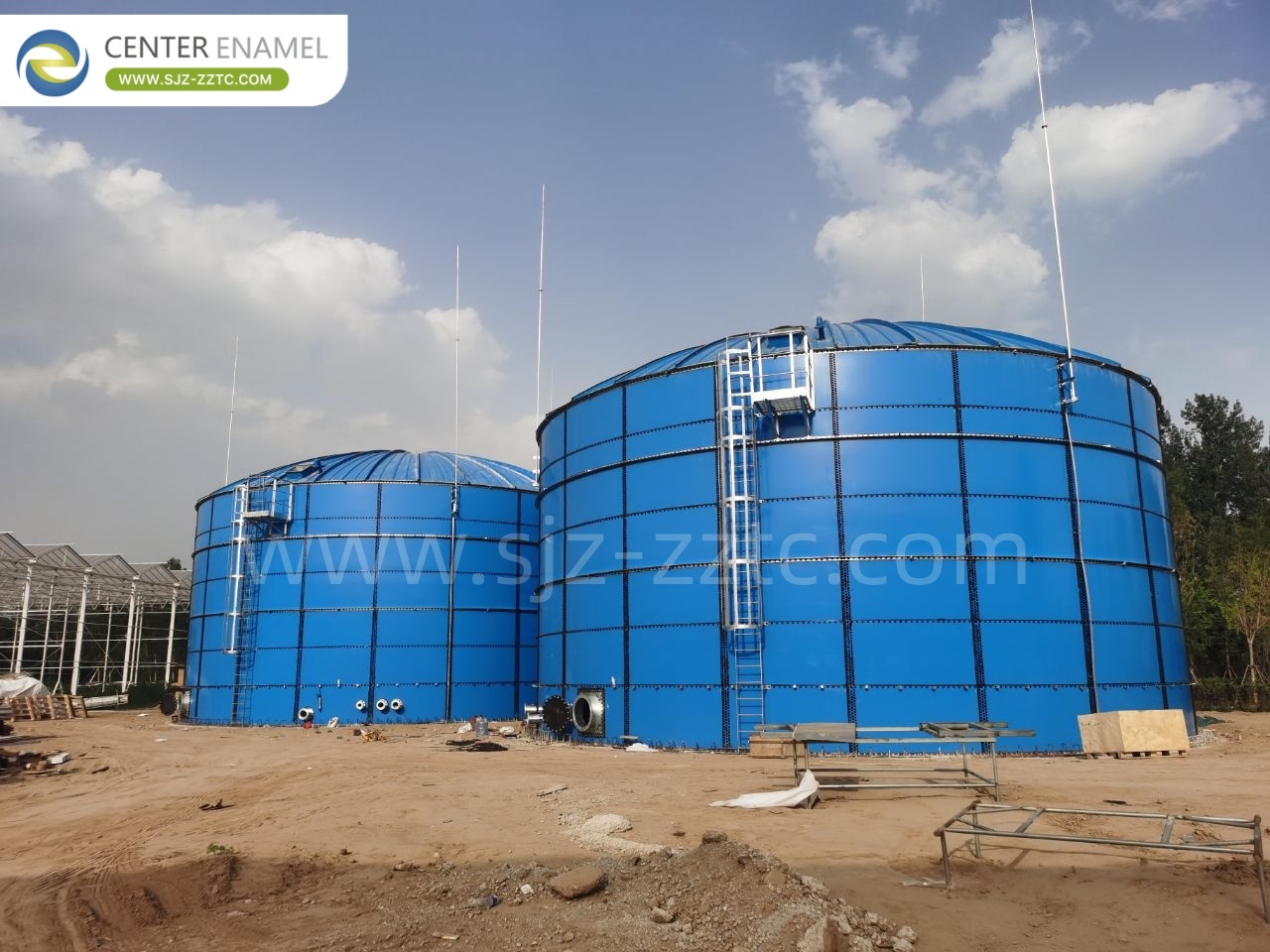
Advanced Municipal Sewage Treatment in Thailand: GFS Tanks and A2O Process
| Place of Origin: | China |
| Brand Name: | CEC TANKS |
| Certification: | ISO 9001:2008, AWWA D103 , OSHA , BSCI |
| Model Number: | W |
| Minimum Order Quantity: | 1set |
| Price: | $5000~$20000 one set |
| Packaging Details: | PE poly-foam between each two steel plates ; wooden pallet and wooden |
| Delivery Time: | 10-30 days after deposit received |
| Payment Terms: | L/C,T/T |
| Supply Ability: | 60 sets per month |
|
Detail Information |
|||
| Place of Origin | China | Brand Name | CEC TANKS |
|---|---|---|---|
| Certification | ISO 9001:2008, AWWA D103 , OSHA , BSCI | Model Number | W |
| Tank Body Color: | Dark Green / Can Be Customized | Corrosion Integrity: | Excellent |
| Steel Plates Thickness: | 3mm To 12mm , Depends On The Tank Structure | Chemical Resistance: | Excellent |
| Size Of Panel: | 2.4M * 1.2M | Easy To Clean: | Smooth, Glossy, Inert, Anti-adhesion |
| Highlight: | GFS tanks for sewage treatment,A2O process wastewater treatment,municipal sewage treatment Thailand |
||
Product Description
Advanced Municipal Sewage Treatment in Thailand: GFS Tanks and Aluminum Geodesic Dome Roofs
Thailand is undergoing a period of rapid urbanization and industrial growth, which has placed significant pressure on the country's existing water infrastructure. As population centers expand, managing municipal sewage—which includes domestic waste, commercial effluent, and urban runoff—has become a vital challenge for local authorities. If left untreated, the organic matter, nitrogen, phosphorus, and dangerous pathogens found in this sewage threaten to contaminate Thailand’s vital rivers, canals, and fragile aquatic ecosystems. Ensuring that treated water meets rigorous safety standards is no longer just an environmental goal, but a national necessity for sustainable water reuse in irrigation and industrial sectors. Center Enamel stands at the forefront of this mission, providing the engineering expertise required to safeguard Thailand's water future.
Municipal Sewage Treatment Workflow
The journey toward clean, reusable water follows a meticulous, multi-stage workflow designed to neutralize a wide range of pollutants. The process begins with collection and equalization, which levels out variations in sewage quality and flow rates. The core of the treatment is biological, where microorganisms are harnessed in controlled environments to break down complex organic pollutants and remove nutrients like nitrogen and phosphorus. This is followed by advanced physical separation technologies, such as Membrane Bioreactor (MBR) systems, and final polishing through ultraviolet (UV) disinfection to ensure the effluent is safe and compliant with stringent discharge standards.
Professional Design Solutions from Center Enamel
Center Enamel delivers turnkey, tailor-made design solutions that address the specific, high-capacity demands of Thailand’s municipal sewage sector. With over 35 years of global engineering experience, our team approaches every project with a deep understanding of site-specific pollutant profiles and regional climatic constraints. We provide a holistic service model—from initial conceptual design and precise equipment manufacturing to the final construction and commissioning. By integrating cutting-edge environmental technology with operational reliability, we ensure that municipal treatment plants in Thailand operate at peak efficiency, minimizing environmental footprint while maximizing long-term infrastructure lifespan.
Understanding the A2O Process
The A2O (Anaerobic-Anoxic-Oxic) process is a high-performance biological strategy essential for modern nutrient removal. In the anaerobic stage, specific microorganisms begin the breakdown of complex organic matter. The sewage then transitions into the anoxic stage, where denitrifying bacteria facilitate the reduction of nitrates into harmless nitrogen gas. Finally, in the aerobic stage, the system achieves full decomposition and nitrification, successfully converting ammonia nitrogen into nitrate nitrogen. This multi-stage anaerobic solution is highly effective, ensuring that the resulting effluent is not only clear but also stripped of the nutrients that would otherwise contribute to aquatic pollution.
GFS Tanks and Aluminum Geodesic Dome Roofs
For infrastructure that must endure harsh environmental conditions, Center Enamel’s Glass-Fused-to-Steel (GFS) tanks offer unmatched resilience. By firing molten glass at temperatures between 820°C and 930°C, we create a steel-glass bond that is remarkably resistant to corrosion, superior to traditional welded or painted steel options. To protect these systems further, we incorporate Aluminum Geodesic Dome Roofs. This pairing provides expansive clear-span coverage that is lightweight, highly corrosion-resistant, and virtually maintenance-free, making it the industry standard for large-scale municipal storage and treatment applications in Thailand.
Key Supporting Equipment and Technologies
Beyond our core tank systems, we provide a complete line of high-efficiency equipment tailored for municipal operations:
Screw Stack Sludge Dewatering Machine: Optimizes sludge volume reduction through efficient solid-liquid separation.
Sludge Pumps (Transfer & Return): Engineered for the precise, consistent circulation of biomass throughout the A2O process stages.
Submersible Mixers: Crucial for preventing sedimentation in tanks and ensuring uniform biological contact.
Lifting Pumps: Enable the reliable vertical movement of raw sewage between different treatment elevations.
UV Sterilizers: The final safety barrier, using high-intensity UV radiation to eliminate persistent viruses and bacteria.
One-Stop Solution Provider for Thailand
Center Enamel is more than a manufacturer; we are a comprehensive solution provider committed to Thailand’s infrastructure development. Supported by a 150,000m² manufacturing facility and a workforce of over 500 specialists, we provide the full spectrum of project delivery—design, equipment, and construction—under one roof. Our goal is to empower local partners to overcome the challenges of rapid urban wastewater growth through the deployment of sustainable, high-quality, and long-lasting engineering solutions.
Conclusion
By synthesizing the efficiency of the A2O process with the unmatched durability of GFS tanks and advanced supporting equipment, Center Enamel provides the bedrock for modern municipal sewage management in Thailand. Our commitment to high-tech, sustainable infrastructure ensures that the nation can achieve its water management goals, fostering a cleaner and more secure environment for future generations.
FAQ: Municipal Sewage Treatment
Q1: How do GFS tanks facilitate easier installation in limited urban spaces?
A: GFS tanks are modular and can be erected faster than traditional concrete tanks, allowing for rapid deployment in dense urban environments where construction time and space are limited.
Q2: What is the primary role of the anaerobic zone in the A2O process for municipal sewage?
A: The anaerobic zone is primarily responsible for the release of phosphorus and the initial breakdown of complex organic carbon, which prepares the wastewater for more effective nutrient removal in the subsequent anoxic and aerobic stages.
Q3: How do Aluminum Geodesic Dome Roofs prevent odor issues in residential areas?
A: These domes provide a high-strength, sealed cover that effectively contains odors produced during the anaerobic digestion of sewage, making them ideal for municipal plants located near residential or commercial zones.