-
Glass Fused To Steel Tanks (596)
-
Stainless Steel Tanks (434)
-
Fusion Bonded Epoxy Tanks (592)
-
Galvanized Steel Tanks (321)
-
Aluminum Dome Roofs (1336)
-
Wastewater Storage Tanks (232)
-
Welded Steel Tanks (457)
-
Pressure Vessels (295)
-
Anaerobic Digester (201)
-
Industrial Water Tanks (349)
-
Glass Lined Steel Tanks (180)
-
Bolted Steel Tanks (389)
-
Sludge Storage Tank (115)
-
Biogas Storage Tank (173)
-
Leachate Storage Tanks (133)
-
Agricultural Water Storage Tanks (179)
-
Fire Water Tank (166)
-
Grain Storage Silos (146)
-
Biogas Projects (425)
-
Wastewater Treatment Projects (828)
-
Double Membrane Roof (223)


|
Leading Anaerobic Solutions in the Philippines: GFS Tanks and Double Membrane Roofs for Poultry Waste
| Place of Origin: | China |
| Brand Name: | CEC TANKS |
| Certification: | ISO 9001:2008, AWWA D103 , OSHA , BSCI |
| Model Number: | W |
| Minimum Order Quantity: | 1set |
| Price: | $5000~$20000 one set |
| Packaging Details: | PE poly-foam between each two steel plates ; wooden pallet and wooden |
| Delivery Time: | 10-30 days after deposit received |
| Payment Terms: | L/C,T/T |
| Supply Ability: | 60 sets per month |
|
Detail Information |
|||
| Place of Origin | China | Brand Name | CEC TANKS |
|---|---|---|---|
| Certification | ISO 9001:2008, AWWA D103 , OSHA , BSCI | Model Number | W |
| Tank Body Color: | Dark Green / Can Be Customized | Corrosion Integrity: | Excellent |
| Steel Plates Thickness: | 3mm To 12mm , Depends On The Tank Structure | Chemical Resistance: | Excellent |
| Size Of Panel: | 2.4M * 1.2M | Easy To Clean: | Smooth, Glossy, Inert, Anti-adhesion |
| Highlight: | anaerobic wastewater treatment solutions,poultry waste GFS tanks,double membrane roofs wastewater |
||
Product Description
Leading Anaerobic Solutions in the Philippines: GFS Tanks and Double Membrane Roofs for Poultry Waste
The poultry sector in the Philippines has expanded rapidly, playing a pivotal role in the national economy. However, this growth has intensified the challenge of managing vast quantities of chicken manure. Traditional disposal methods, often involving open-air lagoons or land application, are struggling to keep pace with the sheer volume of organic output. These outdated practices frequently result in severe odor nuisances, groundwater contamination risks, and the loss of potentially valuable bio-energy. For modern Filipino poultry farms, the necessity to adopt advanced waste-to-energy technologies has never been more urgent. Transitioning to integrated anaerobic management systems is now essential for farms aiming to balance high-capacity production with strict environmental stewardship and sustainable operational goals.
The Strategic Advantages of Turning Chicken Manure into Biogas
Repurposing poultry manure via anaerobic digestion provides a dual benefit: it resolves critical waste management hurdles while establishing a reliable renewable energy stream. This process is highly effective at destroying pathogens inherent in raw manure, significantly improving farm hygiene and reducing disease transmission risks. Furthermore, the biogas produced offers a carbon-neutral alternative for electricity and heating, directly lowering farm energy expenditures. The process also generates nutrient-rich digestate, which serves as an excellent organic fertilizer, helping Filipino farmers optimize soil health, reduce reliance on synthetic fertilizers, and support a more resilient, circular agricultural economy.
Center Enamel: Bespoke Anaerobic Solutions for the Philippines
Center Enamel provides high-performance, customized biogas engineering solutions specifically optimized for the unique climatic conditions and operational demands of the Philippines. We recognize that chicken manure requires specialized handling, and our expert team develops bespoke systems that ensure maximum gas yields while maintaining robust stability. From initial site feasibility to final project commissioning, we deliver comprehensive, sustainable wastewater and biogas engineering designs. We are committed to empowering Filipino agricultural enterprises to move past traditional waste challenges by implementing sophisticated, durable, and highly reliable systems that provide immediate economic value and long-term environmental sustainability.
Advanced Pre-treatment: Streamlining Waste for Fermentation
Efficiency in biogas production starts with effective pre-treatment. Our system integrates high-precision screening and crushing technologies to intercept and eliminate larger solid impurities from the raw manure stream. This vital phase cleans and simplifies the organic feedstock, ensuring that it is in an ideal physical state for effective digestion. By reducing the mechanical burden on downstream systems, this process ensures a consistent and stable feedstock flow, which is fundamental for maintaining the high-efficiency performance and operational longevity of the entire anaerobic facility.
CSTR Process: Maximizing Efficiency via Continuous Stirred-Tank Reactor
Our solutions are anchored by CSTR (Continuous Stirred-Tank Reactor) technology, the industry standard for handling high-solid organic waste. The CSTR system is designed for high-intensity operation within a closed, temperature-regulated environment. It features specialized mechanical stirring devices that keep fermentation materials and microorganisms in a state of continuous, thorough interaction. This robust mixing mechanism ensures maximum bacterial degradation of organic matter, resulting in a steady, high-output production of biogas that is both efficient and exceptionally reliable for intensive poultry farming.
GFS Tanks and Double Membrane Roofs: The Superior Construction Choice
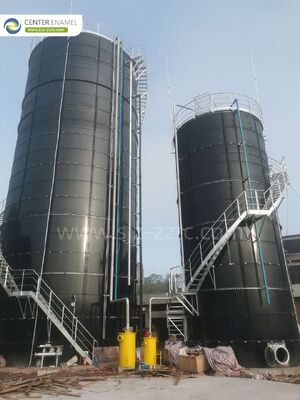
For robust, long-term storage, Center Enamel integrates Glass-Fused-to-Steel (GFS) tanks with advanced double membrane roofs. GFS tanks provide exceptional resistance to corrosion and mechanical wear, ensuring high durability in the Philippines' humid, tropical environment. When paired with a double membrane roof—which is highly space-efficient and minimizes foundation construction costs—this combination creates an ideal storage environment. The system effectively manages biogas volume fluctuations safely, offering a more compact, secure, and cost-effective alternative to traditional, static gas-holding structures.
Comprehensive Equipment Integration
A complete, high-performance biogas system requires the seamless integration of specialized components:
Solid-liquid Separator: Essential for extracting liquid waste from solids after the fermentation process to simplify digestate management.
Dehydration and Desulfurization Tank: Vital for purifying raw biogas by removing moisture and hydrogen sulfide, ensuring the gas is safe for downstream combustion.
Lifting Pump & Screw Sludge Dewatering Machine: These components ensure the efficient movement and concentration of sludge throughout the treatment cycle.
Torch System: Acts as a vital safety feature to flare excess biogas when storage limits are reached.
Gas Holder: Provides reliable, flexible buffer storage to balance fluctuations in biogas supply and demand.
Your One-Stop Solution Provider for the Philippines
Center Enamel is a leading global supplier of turnkey biogas infrastructure. Drawing on over 35 years of engineering experience and a world-class R&D center, we offer a seamless, end-to-end service model for the Filipino market. We manage the entire project lifecycle, including professional engineering design, high-quality equipment manufacturing, and expert on-site installation. We are dedicated to providing the Philippine agricultural sector with robust, integrated anaerobic solutions that meet the highest international standards for quality, safety, and sustainable energy production.
By integrating cutting-edge CSTR technology, durable GFS tanks, and intelligent double membrane roofs, Center Enamel provides the definitive waste-to-energy solution for the Philippines’ poultry industry. Our systems effectively mitigate environmental risks while delivering reliable renewable energy and valuable organic byproducts. Partner with us to modernize your waste management and harness the full potential of your farm’s bio-energy resources today.
Frequently Asked Questions (FAQ)
1. How does Center Enamel ensure the CSTR process is resistant to the Philippines’ heavy monsoon rainfall?
Our GFS tanks are entirely non-porous and waterproof, preventing any moisture ingress from heavy rain. Additionally, our system components are elevated and protected with weather-shielded electrical enclosures to maintain operational integrity and safety during extreme weather events.
2. Can the CSTR system adapt to changes in manure composition if the farm switches poultry feed?
Yes. Our CSTR systems are equipped with integrated monitoring sensors that track biological stability in real-time. If feedstock composition changes, the system allows for the precise adjustment of retention times and mixing intensity to ensure that the anaerobic microorganism colony remains balanced and productive.
3. What are the key maintenance requirements for the double membrane roof? The double membrane roof is designed for low maintenance. It features a continuous air-pressure control system that keeps the outer membrane inflated, preventing water accumulation and ensuring tension. Routine inspections primarily involve checking the blower and pressure-relief valves to ensure the airtight seals remain intact.