-
Glass Fused To Steel Tanks (596)
-
Stainless Steel Tanks (434)
-
Fusion Bonded Epoxy Tanks (592)
-
Galvanized Steel Tanks (321)
-
Aluminum Dome Roofs (1336)
-
Wastewater Storage Tanks (232)
-
Welded Steel Tanks (457)
-
Pressure Vessels (295)
-
Anaerobic Digester (201)
-
Industrial Water Tanks (349)
-
Glass Lined Steel Tanks (180)
-
Bolted Steel Tanks (389)
-
Sludge Storage Tank (115)
-
Biogas Storage Tank (173)
-
Leachate Storage Tanks (133)
-
Agricultural Water Storage Tanks (179)
-
Fire Water Tank (166)
-
Grain Storage Silos (146)
-
Biogas Projects (425)
-
Wastewater Treatment Projects (828)
-
Double Membrane Roof (223)


|
Empowering Morocco’s Poultry Industry: GFS Tanks and CSTR Process for Chicken Manure
| Place of Origin: | China |
| Brand Name: | CEC TANKS |
| Certification: | ISO 9001:2008, AWWA D103 , OSHA , BSCI |
| Model Number: | W |
| Minimum Order Quantity: | 1set |
| Price: | $5000~$20000 one set |
| Packaging Details: | PE poly-foam between each two steel plates ; wooden pallet and wooden |
| Delivery Time: | 10-30 days after deposit received |
| Payment Terms: | L/C,T/T |
| Supply Ability: | 60 sets per month |
|
Detail Information |
|||
| Place of Origin | China | Brand Name | CEC TANKS |
|---|---|---|---|
| Certification | ISO 9001:2008, AWWA D103 , OSHA , BSCI | Model Number | W |
| Tank Body Color: | Dark Green / Can Be Customized | Corrosion Integrity: | Excellent |
| Steel Plates Thickness: | 3mm To 12mm , Depends On The Tank Structure | Chemical Resistance: | Excellent |
| Size Of Panel: | 2.4M * 1.2M | Easy To Clean: | Smooth, Glossy, Inert, Anti-adhesion |
| Highlight: | GFS tanks for chicken manure,CSTR process wastewater treatment,Morocco poultry industry wastewater solutions |
||
Product Description
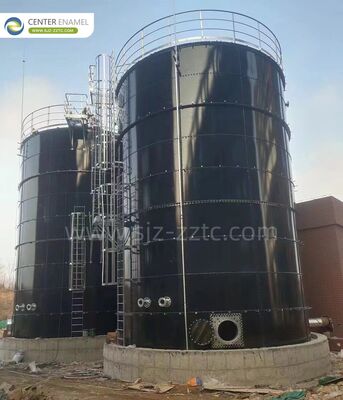
Empowering Morocco’s Poultry Industry: GFS Tanks and CSTR Process for Chicken Manure
The Moroccan poultry sector is expanding rapidly to satisfy increasing domestic food requirements. However, this growth has created a significant hurdle: the management of substantial volumes of raw chicken manure. Traditionally, poultry operations have depended on conventional disposal methods such as field spreading or raw storage, which often lead to persistent odor issues, potential groundwater pollution, and the attraction of pests. As Morocco strives to implement stricter environmental regulations and adopt sustainable agricultural practices, these outdated methods are becoming increasingly unsustainable. For modern poultry enterprises, investing in an efficient, closed-loop waste management system is essential to ensure long-term operational viability and environmental stewardship.
The Strategic Advantages of Turning Chicken Manure into Biogas
Repurposing chicken manure through anaerobic digestion offers Moroccan farmers a highly effective, dual-benefit strategy. First, it provides a comprehensive solution for waste management by neutralizing pathogens that can harm livestock, thereby improving overall farm sanitation. Second, it transforms a waste burden into a renewable energy asset; the captured biogas serves as a consistent, carbon-neutral fuel source that significantly lowers energy costs for farm heating and operations. Additionally, the resulting digestate is a nutrient-rich organic fertilizer that enhances soil fertility, allowing farmers to reduce their reliance on synthetic fertilizers and promote a more resilient, circular agricultural economy.
Center Enamel: Professional Biogas Project Designs for Morocco
Center Enamel provides comprehensive, high-efficiency biogas engineering solutions tailored specifically to the unique requirements of the Moroccan market. We recognize that the high nitrogen and solid content characteristic of poultry manure demands extreme precision in system design to ensure stable, high-output biogas production. Our team of experts performs detailed site-specific analyses to develop bespoke biogas projects that prioritize long-term reliability and operational ease. By blending technical innovation with over 35 years of global engineering experience, we empower Moroccan poultry enterprises to move beyond traditional, environmentally damaging waste disposal techniques and transition toward sustainable, profitable infrastructure.
Advanced Pre-treatment: Streamlining Waste for Fermentation
Efficiency in biogas production is heavily dependent on the quality of the feedstock entering the reactor. Our pre-treatment stage utilizes advanced screening and crushing technologies specifically designed to remove bulky materials, feathers, and grit from the raw poultry manure. This crucial preparation step standardizes the organic matter, ensuring the feedstock enters the digestion chamber in an optimal state for rapid and effective biological breakdown. By significantly minimizing the mechanical strain on pumps and agitators, this phase effectively prevents internal clogging and ensures the long-term, consistent operation of the entire system.
CSTR Process: Maximizing Efficiency via Continuous Stirred-Tank Reactor
Our solutions are anchored by the Continuous Stirred-Tank Reactor (CSTR) technology, which is widely recognized as the industry gold standard for treating organic waste with high solid concentrations. Within a closed, temperature-regulated environment, our CSTR systems utilize high-performance mechanical mixing devices to maintain a constant, thorough interaction between organic particles and anaerobic bacteria. This continuous mixing mechanism effectively prevents crusting and stratification, creating a homogeneous environment that maximizes bacterial degradation. This results in a steady, high-rate production of biogas, making it the most reliable solution for poultry farms requiring high-yield energy production year-round.
GFS Tanks and Double Membrane Roofs: The Superior Construction Choice
For secure, scalable storage, Center Enamel employs Glass-Fused-to-Steel (GFS) tanks paired with advanced double membrane roofs. GFS technology offers unparalleled resistance to corrosion and mechanical abrasion, ensuring durability even in Morocco’s diverse climate. When integrated with a flexible double membrane roof, the storage system becomes exceptionally space-efficient and cost-effective. The inner membrane safely contains the biogas, while the outer membrane provides an essential weather-protective layer. This combination creates a flexible, secure, and easily manageable storage volume that is significantly safer and more economical than traditional, rigid gas-holding containers.
Comprehensive Equipment Integration
A complete, high-performance biogas system requires the seamless integration of specialized equipment:
Solid-liquid Separator: Essential for extracting liquid waste from solids after the fermentation process to simplify digestate handling.
Dehydration and Desulfurization Tank: Vital for purifying raw biogas by removing moisture and hydrogen sulfide, ensuring the gas is safe for combustion equipment.
Lifting Pump & Screw Sludge Dewatering Machine: These components ensure the efficient movement and concentration of sludge throughout the treatment cycle.
Torch System: Serves as a critical safety feature to safely flare excess biogas during unexpected pressure spikes.
Gas Holder: Provides essential, flexible buffer storage to balance fluctuations in real-time gas supply and consumption.
Your One-Stop Solution Provider for Morocco
Center Enamel is a leading global supplier of turnkey biogas infrastructure. With over 35 years of engineering experience and a world-class R&D center, we offer a seamless, end-to-end service model for the Moroccan market. We manage the entire project lifecycle, including professional engineering design, high-quality equipment manufacturing, and expert on-site installation. We are dedicated to providing Morocco’s agricultural sector with robust, integrated anaerobic solutions that meet the highest international standards for quality, safety, and sustainable energy production.
By integrating cutting-edge CSTR technology, durable GFS tanks, and intelligent double membrane roofs, Center Enamel provides the definitive waste-to-energy solution for Morocco’s poultry industry. Our systems effectively neutralize environmental risks while delivering reliable renewable energy and valuable organic byproducts. Partner with us to modernize your waste management and realize the full potential of your farm’s bio-energy resources today.
Frequently Asked Questions (FAQ)
1. Does the GFS tank require internal coating to prevent corrosion from manure? No. The GFS technology uses glass fused to steel at high temperatures, creating a chemically inert, non-porous surface that is naturally resistant to the acidic and corrosive nature of chicken manure, eliminating the need for periodic re-coating.
2. How does the system handle high ambient temperatures in Moroccan summers? Our CSTR designs incorporate advanced thermal insulation and automated climate-control interfaces that maintain the reactor’s internal temperature within the optimal range for anaerobic bacteria, ensuring consistent gas production despite high external temperatures.
3. How is the digestate handled after the fermentation process?
The digestate is processed through our solid-liquid separator, which produces a stable solid fraction that can be easily composted or used directly as organic fertilizer, and a liquid fraction that can be used for nutrient-rich irrigation or recycled within the system.