-
Glass Fused To Steel Tanks (596)
-
Stainless Steel Tanks (434)
-
Fusion Bonded Epoxy Tanks (592)
-
Galvanized Steel Tanks (321)
-
Aluminum Dome Roofs (1336)
-
Wastewater Storage Tanks (232)
-
Welded Steel Tanks (457)
-
Pressure Vessels (295)
-
Anaerobic Digester (201)
-
Industrial Water Tanks (349)
-
Glass Lined Steel Tanks (180)
-
Bolted Steel Tanks (389)
-
Sludge Storage Tank (115)
-
Biogas Storage Tank (173)
-
Leachate Storage Tanks (133)
-
Agricultural Water Storage Tanks (179)
-
Fire Water Tank (166)
-
Grain Storage Silos (146)
-
Biogas Projects (425)
-
Wastewater Treatment Projects (828)
-
Double Membrane Roof (223)


|
Advanced Biogas Solutions in Singapore: GFS Tanks and Double Membrane Roofs for Chicken Manure
| Place of Origin: | China |
| Brand Name: | CEC TANKS |
| Certification: | ISO 9001:2008, AWWA D103 , OSHA , BSCI |
| Model Number: | W |
| Minimum Order Quantity: | 1set |
| Price: | $5000~$20000 one set |
| Packaging Details: | PE poly-foam between each two steel plates ; wooden pallet and wooden |
| Delivery Time: | 10-30 days after deposit received |
| Payment Terms: | L/C,T/T |
| Supply Ability: | 60 sets per month |
|
Detail Information |
|||
| Place of Origin | China | Brand Name | CEC TANKS |
|---|---|---|---|
| Certification | ISO 9001:2008, AWWA D103 , OSHA , BSCI | Model Number | W |
| Tank Body Color: | Dark Green / Can Be Customized | Corrosion Integrity: | Excellent |
| Steel Plates Thickness: | 3mm To 12mm , Depends On The Tank Structure | Chemical Resistance: | Excellent |
| Size Of Panel: | 2.4M * 1.2M | Easy To Clean: | Smooth, Glossy, Inert, Anti-adhesion |
| Highlight: | biogas solutions GFS tanks,double membrane roofs chicken manure,wastewater treatment biogas projects |
||
Product Description
Advanced Biogas Solutions in Singapore: GFS Tanks and Double Membrane Roofs for Chicken Manure
In land-scarce Singapore, the poultry industry operates under rigorous environmental standards, making the management of chicken manure a high-priority challenge. Farms are tasked with maintaining immaculate operational environments while handling concentrated volumes of organic waste. Improper management not only threatens compliance with local environmental regulations but also risks creating odor issues that impact surrounding areas. As Singapore pushes toward its "Green Plan" objectives and increased energy self-reliance, the traditional disposal of poultry waste is becoming an untenable liability. Adopting advanced, closed-loop anaerobic digestion is the essential next step for Singaporean farms to transform waste into a clean, renewable energy asset while adhering to the highest standards of sustainable farming.
The Strategic Advantages of Turning Chicken Manure into Biogas
Transitioning from traditional manure management to anaerobic digestion offers significant strategic advantages for the Singaporean poultry sector. This advanced process effectively eliminates the biological hazards and offensive odors associated with raw chicken waste, aligning farm operations with Singapore's strict sanitation and environmental mandates. Beyond regulatory compliance, the digestion process captures methane to produce renewable biogas, which can directly supplement a farm's electricity or heat requirements. Additionally, the resulting digestate provides a nutrient-rich, bio-based organic fertilizer, creating a sustainable cycle that reduces dependency on imported chemical inputs and significantly improves the farm’s overall operational efficiency and ecological profile.
Center Enamel: Expert Design for Singapore’s Biogas Challenges
Center Enamel provides high-tech, space-optimized biogas engineering solutions engineered to meet the unique, high-density requirements of the Singaporean market. Our design approach focuses on high-efficiency, modular footprints that maximize gas yield within limited land areas, ensuring that farms can implement large-scale biogas production without compromising valuable space. From initial regulatory feasibility assessments to system commissioning, we deliver sustainable wastewater and biogas engineering designs. By leveraging our deep technical expertise, Center Enamel helps Singaporean agricultural enterprises convert environmental challenges into long-term energy assets, ensuring compliance with local sustainability goals through precision-engineered technology.
Advanced Pre-treatment: Streamlining Waste for Fermentation
Efficiency begins at the source with our comprehensive pre-treatment stage. We utilize precise screening and crushing technologies to intercept and reduce larger solid impurities, ensuring that the feedstock is perfectly prepared for biological conversion. By cleaning and simplifying the organic waste stream in this phase, our systems effectively reduce the operational burden on downstream equipment. This meticulous preparation is vital for ensuring a consistent, stable feedstock flow, which in turn optimizes the health of the anaerobic bacteria and guarantees the long-term longevity and reliable performance of the entire biogas facility.
CSTR Process: Maximizing Efficiency via Continuous Stirred-Tank Reactor
Our biogas projects utilize the CSTR (Continuous Stirred-Tank Reactor) process, which is the most effective technology for managing high-suspended-solid waste like chicken manure. The CSTR system is designed for high-intensity, continuous operation within a closed and temperature-controlled environment. By employing advanced mechanical stirring devices, the system maintains a perfect, uniform mixture of raw materials and anaerobic microorganisms. This constant, high-level interaction maximizes the rate of organic degradation, allowing for a steady, high-output production of biogas that is essential for maximizing the renewable energy return on every kilogram of waste processed.
GFS Tanks and Double Membrane Roofs: The Superior Construction Choice
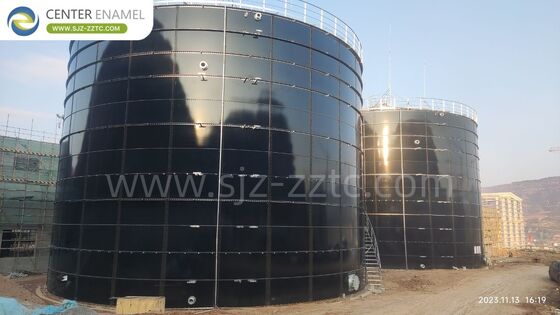
For secure, long-term gas storage, Center Enamel integrates Glass-Fused-to-Steel (GFS) tanks with sophisticated double membrane roofs. GFS tanks are engineered for exceptional durability and total corrosion resistance, making them ideal for Singapore's humid climate. When paired with a double membrane roof—which is highly cost-efficient and maximizes vertical space utilization—this combination creates an ideal storage environment. The double membrane system effectively captures and modulates biogas volume under normal conditions, offering a safer, more compact, and more economical storage alternative compared to traditional, large-footprint gas holding structures.
Comprehensive Equipment Integration
To ensure a fully optimized and high-performance system, Center Enamel integrates a suite of essential, specialized auxiliary equipment:
Solid-liquid Separator: Crucial for managing post-fermentation waste by efficiently separating solid and liquid fractions.
Dehydration and Desulfurization Tank: A vital purification unit that removes moisture and hydrogen sulfide to ensure the biogas is clean and safe for combustion equipment.
Lifting Pump & Screw Sludge Dewatering Machine: These components ensure the precise, efficient movement and processing of sludge throughout the treatment cycle.
Torch System: Acts as an essential safety feature, providing a controlled method to flare excess biogas when pressure limits are reached.
Gas Holder: Provides reliable, temporary, and flexible storage to balance real-time fluctuations in gas supply and farm energy demand.
Your One-Stop Solution Provider for Singapore
Center Enamel serves as a premier, global supplier of turnkey biogas solutions. With over 35 years of engineering experience and a world-class R&D infrastructure, we offer a seamless, end-to-end service model for the Singaporean market. We manage the entire project lifecycle, including professional engineering design, high-quality equipment manufacturing, and expert on-site installation. We are dedicated to providing Singapore’s agricultural sector with comprehensive, end-to-end biogas infrastructure that meets the highest international standards of quality, reliability, and environmental sustainability.
By integrating cutting-edge CSTR technology, durable GFS tanks, and intelligent double membrane roofs, Center Enamel provides the definitive, space-optimized solution for poultry waste challenges in Singapore. Our approach transforms complex environmental liabilities into reliable renewable energy and valuable organic byproducts. Partner with Center Enamel to modernize your waste management and harness the full potential of circular bio-energy production today.
Frequently Asked Questions (FAQ)
1. How does the CSTR system maintain a consistent output when manure supply fluctuates?
Our CSTR systems feature an automated feeding control mechanism that regulates the influent rate based on real-time sensor data. This ensures that the anaerobic microorganisms always have an optimal substrate-to-bacteria ratio, effectively buffering against fluctuations in daily manure supply to keep biogas production steady.
2. Are GFS tanks susceptible to seismic activity in the region?
GFS tanks are engineered with high mechanical strength and flexibility. The bolting system and the glass-fused-to-steel panels provide inherent resilience, allowing the structure to withstand significant stress compared to traditional concrete digesters, which are prone to cracking under seismic pressure.
3. What is the role of the automated monitoring system in the biogas plant?
The monitoring system provides 24/7 oversight of critical variables like pH, temperature, gas pressure, and methane concentration. This real-time data allows operators to make immediate, informed adjustments to ensure the biological health of the CSTR process, preventing downtime and optimizing energy recovery.