-
Glass Fused To Steel Tanks (596)
-
Stainless Steel Tanks (434)
-
Fusion Bonded Epoxy Tanks (592)
-
Galvanized Steel Tanks (321)
-
Aluminum Dome Roofs (1336)
-
Wastewater Storage Tanks (232)
-
Welded Steel Tanks (457)
-
Pressure Vessels (295)
-
Anaerobic Digester (201)
-
Industrial Water Tanks (349)
-
Glass Lined Steel Tanks (180)
-
Bolted Steel Tanks (389)
-
Sludge Storage Tank (115)
-
Biogas Storage Tank (173)
-
Leachate Storage Tanks (133)
-
Agricultural Water Storage Tanks (179)
-
Fire Water Tank (166)
-
Grain Storage Silos (146)
-
Biogas Projects (425)
-
Wastewater Treatment Projects (828)
-
Double Membrane Roof (223)


|
Optimizing Biogas Projects: GFS Tanks+Double Membrane Roof for Slaughterhouse Wastewater in Thailand
| Place of Origin: | China |
| Brand Name: | CEC TANKS |
| Certification: | ISO 9001:2008, AWWA D103 , OSHA , BSCI |
| Model Number: | W |
| Minimum Order Quantity: | 1set |
| Price: | $5000~$20000 one set |
| Packaging Details: | PE poly-foam between each two steel plates ; wooden pallet and wooden |
| Delivery Time: | 10-30 days after deposit received |
| Payment Terms: | L/C,T/T |
| Supply Ability: | 60 sets per month |
|
Detail Information |
|||
| Place of Origin | China | Brand Name | CEC TANKS |
|---|---|---|---|
| Certification | ISO 9001:2008, AWWA D103 , OSHA , BSCI | Model Number | W |
| Tank Body Color: | Dark Green / Can Be Customized | Corrosion Integrity: | Excellent |
| Steel Plates Thickness: | 3mm To 12mm , Depends On The Tank Structure | Chemical Resistance: | Excellent |
| Size Of Panel: | 2.4M * 1.2M | Easy To Clean: | Smooth, Glossy, Inert, Anti-adhesion |
| Highlight: | GFS tanks for slaughterhouse wastewater,double membrane roof biogas projects,wastewater treatment tanks Thailand |
||
Product Description
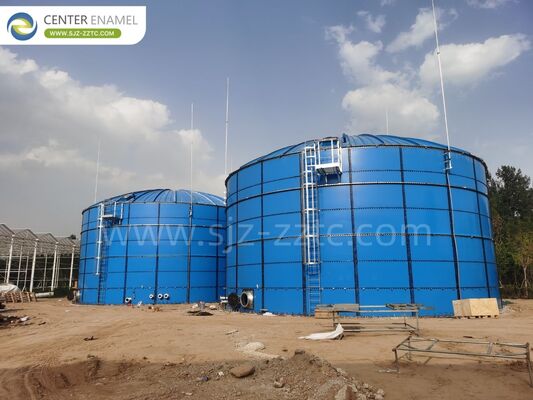
Optimizing Biogas Projects: GFS Tanks+Double Membrane Roof for Slaughterhouse Wastewater in Thailand
The Thai meat processing industry is expanding rapidly, yet this growth is accompanied by the daunting challenge of managing high-volume, high-strength wastewater. This effluent is typically saturated with organic materials, fats, oils, grease, and suspended solids, which traditional treatment facilities in Thailand often struggle to process effectively. The improper disposal of such waste leads to significant environmental issues, including the contamination of local water supplies, persistent foul odors, and the rapid proliferation of dangerous pathogens. Consequently, there is an urgent need for resilient, sustainable technologies to help Thai slaughterhouse operators mitigate environmental damage, maintain compliance with strict regulations, and transition toward a circular economy.
The Strategic Advantage of Biogas Conversion
Converting slaughterhouse wastewater into biogas delivers a dual benefit: it effectively stabilizes hazardous waste while generating valuable renewable energy. Through controlled anaerobic digestion, microorganisms break down complex organic pollutants, which substantially lowers the chemical oxygen demand (COD) and biological oxygen demand (BOD) of the waste stream. The resulting biogas is a clean-burning, methane-rich fuel that can be utilized for electricity generation or onsite heating. This process successfully transforms a costly waste disposal burden into a source of sustainable revenue, enhancing the overall economic viability of the processing facility.
Center Enamel: Expert Design for Slaughterhouse Biogas Projects
Center Enamel provides specialized engineering expertise in designing bespoke anaerobic digestion systems calibrated to the unique profile of slaughterhouse effluent. We acknowledge the inherent variability and high solids concentration in this waste, and we engineer integrated process packages to ensure maximum degradation efficiency. By pairing sophisticated process technologies with our industry-leading storage systems, we offer Thailand a turnkey approach to biogas infrastructure. This ensure that facilities achieve long-term operational stability, meet all necessary regulatory standards, and reach peak energy production performance.
Efficient Pre-treatment Technologies
The journey toward effective biogas production begins with rigorous pre-treatment to "clean and simplify" raw waste:
Screening and Crushing: Specialized screens are used to intercept large solid impurities, followed by a crushing device that reduces particle size to protect downstream systems.
Homogenization: Wastewater is pumped into collection and mixing tanks to remove sand and heavy particles, ensuring a uniform feedstock that maintains a stable fermentation environment.
High-Performance CSTR Technology
Center Enamel utilizes the Continuous Stirred-Tank Reactor (CSTR) for slaughterhouse waste. This technology is specifically designed for high-strength, high-solids wastewater. By incorporating a robust mechanical stirring device, the CSTR ensures that fermentation materials and microorganisms are thoroughly mixed in a closed tank. This continuous, temperature-controlled process maximizes organic matter degradation and ensures a consistent biogas output.
The Synergy of GFS Tanks+Double Membrane Roof
For demanding biogas storage requirements, the combination of Glass-Fused-to-Steel (GFS) tanks with a double membrane roof represents the industry gold standard. GFS tanks provide extreme durability and resistance to harsh weather conditions. Complementing this, the double membrane roof optimizes space and significantly reduces construction costs for ground-mounted gas holders. This hybrid configuration creates a reliable, gas-tight environment that outperforms traditional rigid-roof structures in both longevity and efficiency.
Essential Companion Equipment
To maintain seamless operation as shown in image_be8a85.jpg, we provide a full suite of equipment:
Gas Holder: Offers secure, flexible storage for biogas.
Black Membrane: Designed for containment and solar-assisted heating.
Solid-Liquid Separator: Facilitates efficient waste management by separating solids from liquids.
Torch System: Ensures safe disposal of excess biogas.
Dehydration and Desulfurization Tank: Purifies biogas by removing moisture and hydrogen sulfide.
Screw Sludge Dewatering Machine: Concentrates sludge for easier processing.
Center Enamel: Your Comprehensive Partner in Thailand
With over 36 years of history and successful projects in over 100 countries, Center Enamel serves as a comprehensive EPC service provider for Thailand. As the largest manufacturer of GFS tanks in Asia, we offer end-to-end expertise—from initial process design and equipment supply to final installation and commissioning. Our commitment is to deliver scalable, high-quality biogas solutions that secure the long-term success of your facility.
Conclusion
Transitioning to advanced anaerobic digestion is vital for the sustainable development of the Thai meat processing industry. By utilizing Center Enamel’s core technologies—including high-strength GFS tanks, efficient CSTR reactors, and professional EPC services—operators can convert environmental liabilities into renewable energy assets. We are ready to provide the specialized support necessary to transform your waste management operations.
Frequently Asked Questions (FAQ)
1. What is the significance of the "gas-tight" seal in GFS storage systems?
A gas-tight seal is essential to prevent methane leakage, which maximizes energy recovery and ensures site safety, protecting the local environment from odors while ensuring captured biogas is fully available for use.
2. How does the CSTR system manage variations in daily waste loading?
The CSTR system is designed for operational flexibility; its robust mechanical mixing and temperature control systems allow it to effectively buffer fluctuations in influent concentration, maintaining a stable biological environment even when daily waste volume varies.
3. Can biogas be used for cooling applications in meat processing plants?
Yes, biogas can be utilized in absorption chillers to produce cooling for refrigeration or air conditioning, offering an efficient way for slaughterhouses to utilize renewable energy for their onsite temperature-control needs.