-
Glass Fused To Steel Tanks (596)
-
Stainless Steel Tanks (434)
-
Fusion Bonded Epoxy Tanks (592)
-
Galvanized Steel Tanks (321)
-
Aluminum Dome Roofs (1336)
-
Wastewater Storage Tanks (232)
-
Welded Steel Tanks (457)
-
Pressure Vessels (295)
-
Anaerobic Digester (201)
-
Industrial Water Tanks (349)
-
Glass Lined Steel Tanks (180)
-
Bolted Steel Tanks (389)
-
Sludge Storage Tank (115)
-
Biogas Storage Tank (173)
-
Leachate Storage Tanks (133)
-
Agricultural Water Storage Tanks (179)
-
Fire Water Tank (166)
-
Grain Storage Silos (146)
-
Biogas Projects (425)
-
Wastewater Treatment Projects (828)
-
Double Membrane Roof (223)


|
Leading Anaerobic Solutions: GFS Tanks+Double Membrane Roof for Slaughterhouse Wastewater in Indonesia
| Place of Origin: | China |
| Brand Name: | CEC TANKS |
| Certification: | ISO 9001:2008, AWWA D103 , OSHA , BSCI |
| Model Number: | W |
| Minimum Order Quantity: | 1set |
| Price: | $5000~$20000 one set |
| Packaging Details: | PE poly-foam between each two steel plates ; wooden pallet and wooden |
| Delivery Time: | 10-30 days after deposit received |
| Payment Terms: | L/C,T/T |
| Supply Ability: | 60 sets per month |
|
Detail Information |
|||
| Place of Origin | China | Brand Name | CEC TANKS |
|---|---|---|---|
| Certification | ISO 9001:2008, AWWA D103 , OSHA , BSCI | Model Number | W |
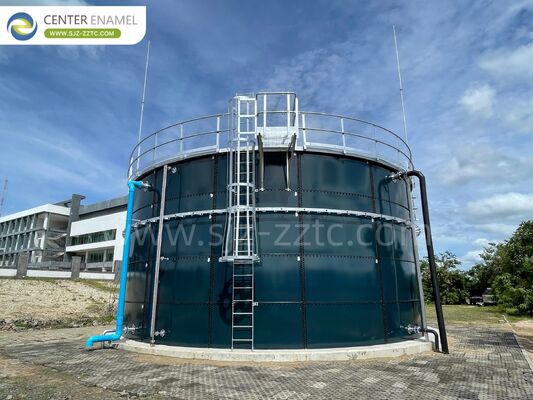
| Tank Body Color: | Dark Green / Can Be Customized | Corrosion Integrity: | Excellent |
| Steel Plates Thickness: | 3mm To 12mm , Depends On The Tank Structure | Chemical Resistance: | Excellent |
| Size Of Panel: | 2.4M * 1.2M | Easy To Clean: | Smooth, Glossy, Inert, Anti-adhesion |
| Highlight: | GFS tanks slaughterhouse wastewater treatment,double membrane roof anaerobic solutions,Indonesia slaughterhouse wastewater treatment projects |
||
Product Description
Leading Anaerobic Solutions: GFS Tanks+Double Membrane Roof for Slaughterhouse Wastewater in Indonesia
The Indonesian meat processing sector is experiencing significant growth, yet this expansion brings the critical challenge of managing high-strength slaughterhouse wastewater. This waste stream is characterized by substantial concentrations of fats, oils, grease, suspended solids, and complex organic matter. Improper management of these effluents leads to severe environmental degradation, including water source contamination, persistent odors, and the rapid growth of hazardous pathogens. Traditional treatment infrastructures in the region often struggle to process such heavy, complex loads efficiently. Consequently, Indonesian operators are in urgent need of robust, sustainable technology to mitigate these environmental impacts and align with modern circular economy standards.
Benefits of Converting Slaughterhouse Waste into Biogas
Transitioning to biogas production offers a transformative opportunity for slaughterhouse operators: it simultaneously stabilizes high-strength waste and produces renewable energy. By employing anaerobic digestion, organic pollutants are broken down by microorganisms within a controlled environment, which dramatically lowers the chemical oxygen demand (COD) and biological oxygen demand (BOD). The resulting biogas, primarily composed of methane, acts as a high-value, combustible fuel. This enables operators to repurpose a waste disposal liability into a sustainable revenue stream, suitable for electricity generation, industrial heating, or even vehicle fueling.
Center Enamel: Professional Anaerobic Solutions for Biogas Projects
Center Enamel delivers engineering excellence through bespoke anaerobic digestion systems specifically calibrated for the unique characteristics of slaughterhouse effluent. Our engineering team specializes in addressing the challenges posed by high solids content and variability in organic waste, designing integrated process packages that ensure optimal degradation efficiency. By combining our advanced process technologies with industry-leading storage solutions, we provide Indonesia with end-to-end biogas infrastructure. Our designs are engineered to guarantee maximum energy output, maintain long-term operational stability, and ensure full compliance with regional regulatory requirements.
Efficient Pre-treatment Technologies
Effective biogas generation begins with a rigorous pre-treatment phase designed to "clean and simplify" the raw waste:
Screening and Crushing: The waste is processed through specialized screens to intercept larger solid impurities, then passed through a crushing device to reduce particle size, protecting downstream systems from clogs and unnecessary wear.
Homogenization: Wastewater is routed into collection and mixing tanks to remove sand and heavy particles, creating a uniform feedstock that is essential for a stable fermentation process.
Advanced CSTR Process Integration
For high-strength slaughterhouse waste, Center Enamel utilizes the Continuous Stirred-Tank Reactor (CSTR). This technology is expertly engineered to handle wastewater with high suspended solids and high organic concentrations. By utilizing a robust mechanical stirring device within a closed tank, the CSTR ensures that raw fermentation materials and microorganisms are kept in a state of complete, continuous mixture. This temperature-controlled fermentation process maximizes the breakdown of organic matter, ensuring a steady and consistent output of biogas.
The Synergy of GFS Tanks+Double Membrane Roof
For sophisticated anaerobic solutions, the combination of Glass-Fused-to-Steel (GFS) tanks and a double membrane roof serves as the industry gold standard. GFS tanks are renowned for their extreme durability and exceptional resistance to harsh environmental conditions, ensuring structural integrity and longevity. The integration of a double membrane roof provides unmatched space efficiency and cost-effectiveness compared to traditional rigid-roof structures. This hybrid system creates a reliable, gas-tight environment for biogas storage, significantly lowering foundation and construction costs for ground-mounted installations.
Essential Companion Equipment
To guarantee the seamless, high-performance operation of your biogas facility, we provide a complete suite of specialized equipment:
Gas Holder: Facilitates safe, flexible storage of generated biogas.
Black Membrane: Optimized for containment and applications involving solar-assisted heating.
Solid-Liquid Separator: Efficiently extracts digestate solids, simplifying the waste management process.
Torch System: Ensures the safe, controlled disposal of excess biogas.
Dehydration and Desulfurization Tank: Purifies biogas by removing moisture and impurities like hydrogen sulfide.
Screw Sludge Dewatering Machine: Concentrates sludge effectively for easier disposal or fertilizer repurposing.
Center Enamel: Your One-Stop Biogas Solution Provider in Indonesia
With over 36 years of industry experience and successful project implementation in over 100 countries, Center Enamel is a comprehensive EPC (Engineering, Procurement, and Construction) service provider. We offer Indonesia unparalleled expertise, spanning from process design and equipment supply to final installation and project commissioning. As the largest manufacturer of GFS tanks in Asia, we are uniquely positioned to deliver scalable, high-quality anaerobic solutions that ensure the long-term operational success of your biogas projects.
Conclusion
Adopting advanced anaerobic digestion technologies is essential for the sustainable advancement of the Indonesian meat processing industry. By leveraging Center Enamel’s core technologies—including high-strength GFS tanks, optimized CSTR reactors, and professional EPC services—slaughterhouse operators can successfully convert environmental liabilities into sustainable energy assets. We are dedicated to providing the specialized support needed to revolutionize your waste management and energy production.
Frequently Asked Questions (FAQ)
1.Can GFS tanks be expanded if the slaughterhouse increases production?
Yes, GFS tanks are modular. Their design allows for the future addition of panels or the expansion of the tank structure, providing a scalable solution that grows alongside your processing capacity.
2.How does the CSTR system handle the varying daily load of a slaughterhouse?
The CSTR system is designed for operational flexibility; its robust mixing and temperature control systems allow it to buffer fluctuations in influent concentration and flow, maintaining a stable biological environment even when daily waste volume varies.
3.What is the lifespan of a GFS tank in a biogas application?
GFS tanks are designed for a long service life, typically exceeding 30 years. Their glass-fused-to-steel technology is highly resistant to the corrosive environment created by anaerobic digestion, far outperforming traditional steel or concrete tank options.