-
Glass Fused To Steel Tanks (596)
-
Stainless Steel Tanks (434)
-
Fusion Bonded Epoxy Tanks (592)
-
Galvanized Steel Tanks (321)
-
Aluminum Dome Roofs (1336)
-
Wastewater Storage Tanks (232)
-
Welded Steel Tanks (457)
-
Pressure Vessels (295)
-
Anaerobic Digester (201)
-
Industrial Water Tanks (349)
-
Glass Lined Steel Tanks (180)
-
Bolted Steel Tanks (389)
-
Sludge Storage Tank (115)
-
Biogas Storage Tank (173)
-
Leachate Storage Tanks (133)
-
Agricultural Water Storage Tanks (179)
-
Fire Water Tank (166)
-
Grain Storage Silos (146)
-
Biogas Projects (425)
-
Wastewater Treatment Projects (828)
-
Double Membrane Roof (223)


|
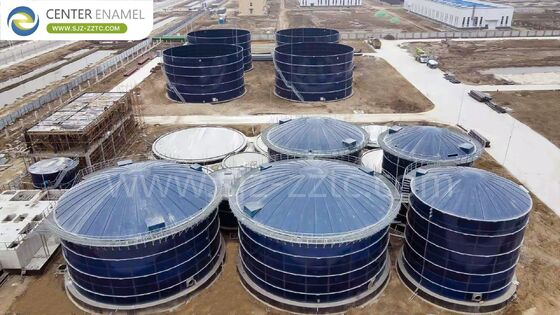
Leading Anaerobic Solutions: GFS Tanks+Double Membrane Roof for Slaughterhouse Wastewater in Cambodia
| Place of Origin: | China |
| Brand Name: | CEC TANKS |
| Certification: | ISO 9001:2008, AWWA D103 , OSHA , BSCI |
| Model Number: | W |
| Minimum Order Quantity: | 1set |
| Price: | $5000~$20000 one set |
| Packaging Details: | PE poly-foam between each two steel plates ; wooden pallet and wooden |
| Delivery Time: | 10-30 days after deposit received |
| Payment Terms: | L/C,T/T |
| Supply Ability: | 60 sets per month |
|
Detail Information |
|||
| Place of Origin | China | Brand Name | CEC TANKS |
|---|---|---|---|
| Certification | ISO 9001:2008, AWWA D103 , OSHA , BSCI | Model Number | W |
| Tank Body Color: | Dark Green / Can Be Customized | Corrosion Integrity: | Excellent |
| Steel Plates Thickness: | 3mm To 12mm , Depends On The Tank Structure | Chemical Resistance: | Excellent |
| Size Of Panel: | 2.4M * 1.2M | Easy To Clean: | Smooth, Glossy, Inert, Anti-adhesion |
| Highlight: | GFS tanks slaughterhouse wastewater,double membrane roof wastewater treatment,anaerobic solutions Cambodia wastewater projects |
||
Product Description
Leading Anaerobic Solutions: GFS Tanks+Double Membrane Roof for Slaughterhouse Wastewater in Cambodia
The meat processing industry in Cambodia is currently witnessing a period of sustained growth, which brings forward the pressing need for advanced management of high-strength wastewater. Slaughterhouse operations inherently generate effluent saturated with complex organic pollutants, fats, grease, oils, and suspended solids, which present formidable obstacles for standard treatment infrastructures. In many areas of Cambodia, existing treatment systems are struggling to cope with these intensive waste loads, often resulting in significant environmental degradation. Consequences of this inefficiency include the contamination of vital local waterways, the generation of pervasive foul odors, and the rapid, unchecked spread of dangerous pathogens. Consequently, there is an urgent demand for resilient and modern technological interventions that allow Cambodian slaughterhouse operators to mitigate these environmental impacts while aligning their facilities with global circular economy benchmarks.
The Strategic Advantage of Converting Wastewater to Biogas
Transforming slaughterhouse wastewater into biogas provides a vital dual-purpose solution: it effectively stabilizes hazardous organic waste while simultaneously generating a valuable, renewable energy resource. By employing sophisticated anaerobic digestion technologies, specialized microorganisms are utilized to decompose complex organic matter within a secure and controlled environment. This biological process performs a critical function by significantly lowering the chemical oxygen demand (COD) and biological oxygen demand (BOD) of the influent waste stream. The resulting biogas, which is rich in methane, serves as a high-value, combustible fuel. By successfully capturing this energy, operators are able to convert an expensive and burdensome disposal liability into a sustainable revenue stream, which can be utilized for onsite electricity generation, industrial heating requirements, or as a clean fuel source for transport fleets.
Center Enamel: Professional Anaerobic Solutions for Slaughterhouse Projects
Center Enamel offers engineering excellence through the design of bespoke anaerobic digestion systems that are meticulously calibrated to the specific chemical profile of slaughterhouse effluent. We possess a deep understanding of the inherent variability and high solids concentration typical of this waste, and we engineer integrated process packages to ensure maximum degradation efficiency for every project we undertake. By combining our advanced processing technologies with industry-leading storage systems, we offer Cambodia a comprehensive, turnkey approach to building robust biogas infrastructure. Our designs are engineered to guarantee maximum energy output, maintain long-term operational stability, and ensure complete compliance with all necessary environmental and regulatory standards.
Efficient Pre-treatment Technologies
Effective biogas generation begins with a rigorous pre-treatment phase designed to "clean and simplify" the raw waste stream:
Screening and Crushing: Specialized mechanical screens are utilized to intercept large solid impurities, followed by a crushing device that reduces particle size to protect downstream equipment from clogs and unnecessary wear.
Homogenization: Wastewater is pumped into collection and mixing tanks to remove sand and heavy particles, ensuring a uniform feedstock that is essential for maintaining a stable and efficient fermentation process.
Advanced CSTR Process Integration
For the treatment of high-strength slaughterhouse waste, Center Enamel utilizes the Continuous Stirred-Tank Reactor (CSTR). This technology is expertly engineered to handle wastewater characterized by high suspended solids and high organic concentrations. By incorporating a robust mechanical stirring device within a closed tank, the CSTR ensures that raw fermentation materials and active microorganisms are kept in a state of complete, continuous mixture. This temperature-controlled fermentation process maximizes the degradation of organic matter and ensures a steady and consistent output of biogas.
The Synergy of GFS Tanks+Double Membrane Roof
For the most demanding biogas storage requirements, the combination of Glass-Fused-to-Steel (GFS) tanks and a double membrane roof serves as the industry gold standard. GFS tanks are renowned for their extreme durability and exceptional resistance to harsh environmental conditions, which ensures structural integrity and long-term longevity. When integrated with a double membrane roof, the system offers unmatched space efficiency and cost-effectiveness compared to traditional, rigid-roof structures. This hybrid configuration creates a reliable, gas-tight environment for biogas storage, significantly lowering the foundation and construction costs for ground-mounted installations.
Essential Companion Equipment
To guarantee the seamless, high-performance operation of your facility, we provide a full suite of specialized equipment:
Gas Holder: Facilitates the safe and flexible storage of generated biogas.
Black Membrane: Optimized for containment applications and solar-assisted heating.
Solid-Liquid Separator: Efficiently extracts digestate solids, simplifying the waste management process.
Torch System: Ensures the safe, controlled disposal of excess biogas.
Dehydration and Desulfurization Tank: Purifies the biogas by removing moisture and impurities like hydrogen sulfide.
Screw Sludge Dewatering Machine: Concentrates sludge effectively for easier disposal or fertilizer repurposing.
Center Enamel: Your One-Stop Anaerobic Solutions Provider in Cambodia
With over 36 years of industry experience and successful project implementation in over 100 countries, Center Enamel is a comprehensive EPC (Engineering, Procurement, and Construction) service provider. We offer Cambodia unparalleled expertise, spanning from initial process design and equipment supply to final installation and project commissioning. As the largest manufacturer of GFS tanks in Asia, we are uniquely positioned to deliver scalable, high-quality anaerobic solutions that ensure the long-term operational success of your biogas projects.
Conclusion
Adopting advanced anaerobic digestion technologies is essential for the sustainable advancement of the Cambodian meat processing industry. By leveraging Center Enamel’s core technologies—including high-strength GFS tanks, optimized CSTR reactors, and professional EPC services—slaughterhouse operators can successfully convert environmental liabilities into sustainable energy assets. We are dedicated to providing the specialized support needed to revolutionize your waste management and energy production.
Frequently Asked Questions (FAQ)
1. How does the CSTR system handle sudden changes in influent temperature?
Our CSTR systems are equipped with integrated heating coils and thermal sensors that automatically maintain the internal environment within the optimal range for methanogenic bacteria, ensuring consistent gas production despite external temperature fluctuations.
2.Can the digestate be used immediately on crops after exiting the dewatering machine?
The output from our screw sludge dewatering machine is a stabilized, nutrient-rich biosolid that is much safer for soil application than raw waste, though it should be applied according to local agricultural guidelines for soil conditioning.
2. What measures are taken to prevent gas pressure buildup in the GFS tank?
The system incorporates automated pressure-relief valves and continuous monitoring sensors that manage gas outflow to the gas holder, ensuring the internal pressure always stays within safe operating parameters for the GFS structure.