-
Glass Fused To Steel Tanks (596)
-
Stainless Steel Tanks (434)
-
Fusion Bonded Epoxy Tanks (592)
-
Galvanized Steel Tanks (321)
-
Aluminum Dome Roofs (1316)
-
Wastewater Storage Tanks (231)
-
Welded Steel Tanks (457)
-
Pressure Vessels (295)
-
Anaerobic Digester (201)
-
Industrial Water Tanks (349)
-
Glass Lined Steel Tanks (180)
-
Bolted Steel Tanks (390)
-
Sludge Storage Tank (115)
-
Biogas Storage Tank (173)
-
Leachate Storage Tanks (133)
-
Agricultural Water Storage Tanks (179)
-
Fire Water Tank (166)
-
Grain Storage Silos (146)
-
Biogas Projects (425)
-
Wastewater Treatment Projects (788)
-
Double Membrane Roof (223)

|
FBE Rainwater Tanks: The 2026 Engineering Standard for Sustainable Water Harvesting
| Place of Origin: | China |
| Brand Name: | CEC TANKS |
| Certification: | ISO 9001:2008, AWWA D103 , OSHA , BSCI |
| Model Number: | W201691123005 |
| Minimum Order Quantity: | 1set |
| Price: | $5000~$20000 one set |
| Packaging Details: | PE poly-foam between each two steel plates ; wooden pallet and wooden box |
| Delivery Time: | 0-60 days after deposit received |
| Payment Terms: | L/C, T/T |
| Supply Ability: | 60 sets per month |
|
Detail Information |
|||
| Place of Origin | China | Brand Name | CEC TANKS |
|---|---|---|---|
| Certification | ISO 9001:2008, AWWA D103 , OSHA , BSCI | Model Number | W201691123005 |
| Steel Plates Thickness: | 3mm To 12mm , Depends On The Tank Structure | Corrosion Integrity: | Excellent |
| Chemical Resistance: | Excellent | Capacity: | 20 M3 To 18,000 M3 |
| Service Life: | ≥30 Years | Permeability: | Gas / Liquid Impermeable |
| Highlight: | FBE rainwater tanks with warranty,sustainable water harvesting tanks,fusion bonded epoxy water tanks |
||
Product Description
FBE Rainwater Tanks: The 2026 Engineering Standard for Sustainable Water Harvesting
In the 2026 commercial, industrial, and municipal infrastructure sectors, rainwater harvesting has evolved from an eco-friendly option into a core regulatory and operational requirement. Driven by stricter stormwater management laws, LEED certification standards, and climate resilience mandates, modern facilities require high-capacity storage assets capable of capturing and holding massive volumes of intermittent runoff.
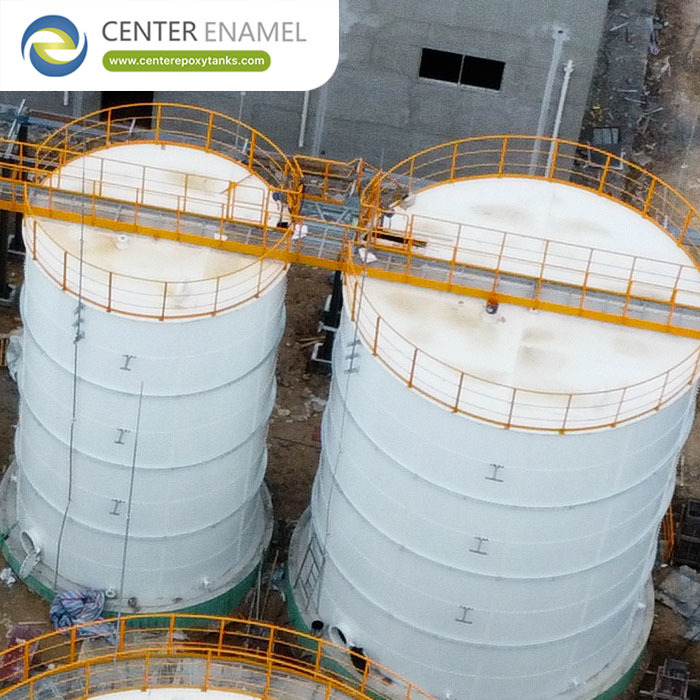
Fusion Bonded Epoxy (FBE) bolted steel tanks have become a leading global infrastructure choice for large-scale rainwater harvesting loops. By combining the structural durability of factory-fabricated carbon steel with an advanced, molecularly cross-linked polymer lining, FBE tanks offer a highly secure, scalable, and cost-effective alternative to traditional concrete cisterns or unlined metal storage.
1. What is an FBE Rainwater Tank?
An FBE rainwater tank is a modular, bolted storage vessel designed to buffer sudden, high-volume inflows from rooftop or surface drainage networks.
Unlike traditional field-painted tanks that are highly vulnerable to environmental defects and uneven application during construction, the Fusion Bonded Epoxy process takes place under rigorous factory-controlled conditions. Carbon steel panels are grit-blasted to a near-white finish (Sa 2.5 / SSPC-SP10), pre-heated to temperatures between 180°C and 230°C, and electrostatically sprayed with dry polymer powder. The powder melts, flows, and chemically cross-links inside an automated curing oven to form an inseparable protective barrier permanently bonded to the steel substrate. This produces a high-density, glass-smooth internal lining that isolates the structural steel shell from water contact.
2. Technical Performance: Managing the Dynamics of Stormwater Runoff
Rainwater is often perceived as pure, but the initial runoff—frequently referred to as the "first flush"—carries unpredictable chemical and physical contaminants. FBE technology is engineered to handle these dynamic parameters through several critical performance factors:
Broad Chemical Stability and pH Fluctuations
Rainwater can be naturally acidic due to dissolved atmospheric carbon dioxide (acid rain) or localized industrial emissions, often exhibiting a pH as low as 4.5. Conversely, runoff from concrete roofs or paved surfaces can be highly alkaline. FBE coatings are chemically inert and provide reliable structural defense across a wide chemical spectrum (typically pH 3.0 to 11.0), preventing the acid etching or concrete spalling common in traditional cisterns.
Advanced Protection Against Silt and Sediment Abrasion
Stormwater runoff carries heavy loads of environmental debris, including sand, grit, asphalt shingles particulates, and silt. During intense downpours, these abrasive solids enter the tank at high velocities. The thermoset molecular structure of FBE yields a tough, scratch-resistant finish that prevents the mechanical scouring and peeling common in softer liquid epoxies or field-applied coatings.
Inhibition of Algae and Microbial Biofilms
Rainwater containment systems naturally accumulate organic nutrients, creating an environment prone to bacterial biofilms and algae growth under warm conditions. The smooth, non-porous interior finish of an FBE lining reduces the surface micro-roughness that allows organic matter to adhere to container walls. This discourages biofilm formation, preserves water clarity, and simplifies high-pressure washing protocols during routine maintenance cycles.
100% Factory Holiday Testing
Because collected rainwater can act as an electrolyte that accelerates galvanic corrosion, localized coating defects are unacceptable. Every single FBE panel undergoes a high-voltage electronic Holiday Test ( 1100V) at the factory to locate and eliminate microscopic pinholes before flat-packing and transport.
3. Comparison Matrix: FBE vs. Concrete Cisterns
4. Strategic Integration Across Water Harvesting Workflows
FBE rainwater tanks serve as versatile, high-capacity nodes across diverse water reuse workflows:
-
Stormwater Retention & Detention Basins: Buffering sudden surges during extreme weather events to alleviate municipal stormwater networks, followed by a metered, regulated release.
-
On-Site Non-Potable Water Reuse Loops: Supplying constant, reliable volumes for commercial building cooling towers, industrial process water loops, toilet flushing, and large-scale landscape irrigation.
-
Pre-Treatment Balancing Reservoirs: Holding raw harvested water upstream of localized filtration plants, carbon filters, or UV sterilization arrays before integration into high-purity or potable water systems.
5. Engineering Standards and Global Compliance
To satisfy strict civil engineering criteria, green building mandates, and pass rigorous industrial bidding screens, premium FBE rainwater tanks—such as those manufactured by global leaders like Center Enamel (Shijiazhuang Zhengzhong Technology)—comply with the following international codes:
-
AWWA D103-19: The premier global benchmark standard for factory-coated bolted carbon steel liquid storage systems, validating structural calculations for hydrostatic pressure, snow loads, and seismic stress profiles.
-
ISO 28765:2016: The specific international standard governing high-performance coating quality, thickness tolerances, and holiday testing profiles for water and industrial effluent storage.
-
ASCE 7-22 / Eurocode 3: Structural design engineering parameters ensuring that the modular tank calculates for high seismic resilience and extreme wind loads up to 250 km/h—critical for exposed rooftop or open facility layouts.
-
NSF/ANSI 61 Compliance: Ensures that the internal coating chemistry does not introduce volatile organic compounds (VOCs) or toxic compounds into water loops that may eventually feed treatment plants or potable networks.
Future-Proofing Sustainable Water Capital
For civil engineers, commercial facility managers, and environmental EPC contractors focused on maximizing Return on Investment (ROI), the FBE bolted steel rainwater tank represents the most secure, scalable, and economical asset for 2026. By utilizing a modular, top-down assembly method with synchronized hydraulic jacking systems, these structures are erected entirely from ground level without high-altitude scaffolding or intensive field welding, cutting installation timelines by up to 50%. By eliminating the cracking, structural leakage, and algae-trapping vulnerabilities of concrete, FBE technology ensures safe, reliable, and maintenance-free rainwater management for an operational lifespan exceeding 30 years.
Are you currently designing a stormwater management loop or upgrading a water harvesting system for a commercial or industrial facility, and would you like a detailed technical proposal including sizing, engineering drawings, and structural load calculations for your required volume?