-
Glass Fused To Steel Tanks (596)
-
Stainless Steel Tanks (434)
-
Fusion Bonded Epoxy Tanks (592)
-
Galvanized Steel Tanks (321)
-
Aluminum Dome Roofs (1316)
-
Wastewater Storage Tanks (231)
-
Welded Steel Tanks (457)
-
Pressure Vessels (295)
-
Anaerobic Digester (201)
-
Industrial Water Tanks (349)
-
Glass Lined Steel Tanks (180)
-
Bolted Steel Tanks (390)
-
Sludge Storage Tank (115)
-
Biogas Storage Tank (173)
-
Leachate Storage Tanks (133)
-
Agricultural Water Storage Tanks (179)
-
Fire Water Tank (166)
-
Grain Storage Silos (146)
-
Biogas Projects (425)
-
Wastewater Treatment Projects (788)
-
Double Membrane Roof (223)

|
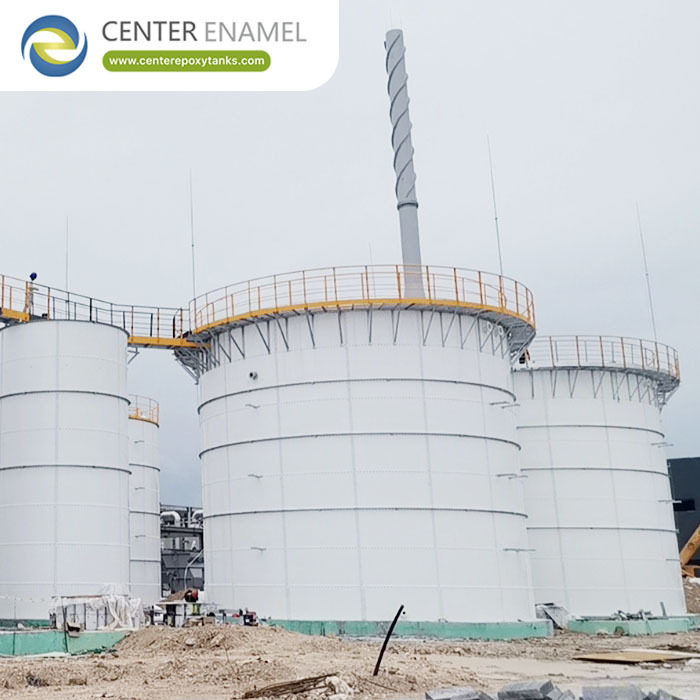
FBE Irrigation Water Tanks: The 2026 Engineering Standard for Agricultural Water Security
| Place of Origin: | China |
| Brand Name: | CEC TANKS |
| Certification: | ISO 9001:2008, AWWA D103 , OSHA , BSCI |
| Model Number: | W201691123005 |
| Minimum Order Quantity: | 1set |
| Price: | $5000~$20000 one set |
| Packaging Details: | PE poly-foam between each two steel plates ; wooden pallet and wooden box |
| Delivery Time: | 0-60 days after deposit received |
| Payment Terms: | L/C, T/T |
| Supply Ability: | 60 sets per month |
|
Detail Information |
|||
| Place of Origin | China | Brand Name | CEC TANKS |
|---|---|---|---|
| Certification | ISO 9001:2008, AWWA D103 , OSHA , BSCI | Model Number | W201691123005 |
| Steel Plates Thickness: | 3mm To 12mm , Depends On The Tank Structure | Corrosion Integrity: | Excellent |
| Chemical Resistance: | Excellent | Capacity: | 20 M3 To 18,000 M3 |
| Service Life: | ≥30 Years | Permeability: | Gas / Liquid Impermeable |
| Highlight: | FBE irrigation water tanks,agricultural water security tanks,fusion bonded epoxy water tanks |
||
Product Description
FBE Irrigation Water Tanks: The 2026 Engineering Standard for Agricultural Water Security
In the 2026 agricultural and commercial farming landscapes, water security is directly tied to operational profitability. Facing shifting climate patterns and stricter environmental regulations, modern agribusinesses require large-scale water storage that is rapidly deployable, structurally durable, and chemically inert. Fusion Bonded Epoxy (FBE) irrigation water tanks have emerged as the premier modular infrastructure solution, offering a strategic balance of longevity and cost-efficiency.
1. What is an FBE Irrigation Water Tank?
An FBE irrigation water tank is a modular, bolted steel storage vessel where each carbon steel panel is factory-coated with a high-performance thermoset epoxy resin.
Unlike traditional field-applied liquid paints, the Fusion Bonded Epoxy process involves electrostatically applying dry powder to grit-blasted, pre-heated steel plates at temperatures exceeding 200°C. This thermal processing creates a molecularly cross-linked protective barrier permanently bonded to the steel substrate. The result is a high-density, glass-smooth lining that prevents corrosion and preserves water quality.
2. Technical Performance: Built for Agricultural Demands
Agricultural water storage presents unique challenges, from handling aggressive liquid fertilizers to resisting harsh environmental exposure. FBE technology excels in these environments through several critical engineering factors:
● Corrosion Resistance against Mixed Water Sources: Irrigation systems increasingly draw from varied water sources, including groundwater, harvested rainwater, and treated agricultural runoff. FBE coatings provide an inert barrier stable across a wide pH range (3 to 11), easily resisting the mineral salinity and dissolved chemicals that degrade unlined concrete or galvanized steel.
● Algae and Biofilm Mitigation: The high-gloss, non-porous interior surface of an FBE tank limits the surface area available for organic attachment. This reduces biofilm accumulation and algae growth, preventing clogging in downstream drip irrigation lines and micro-sprinklers.
● Zero-Discontinuity Quality Assurance: Liquid storage failure can disrupt entire crop cycles. Every FBE panel undergoes a high-voltage Holiday Test ($geq 1100text{V}$) at the factory to guarantee a 100% pinhole-free barrier before shipment.
● Advanced "Edge Wrap" Technology: Modern manufacturers utilize specialized powder-coating techniques to ensure that the sharp edges of the steel plates and bolt holes achieve uniform coating thickness, preventing the premature edge-rusting common in painted tanks.
3. Comparison Matrix: FBE vs. Concrete vs. HDPE Lining
| Feature | FBE Bolted Steel Tank | Reinforced Concrete | Galvanized Tank with HDPE Liner |
| Corrosion Protection | High (Inert Epoxy) | Moderate (Prone to leaching) | Moderate (Liner degradation risk) |
| Algae/Biofilm Resistance | Superior (Non-porous) | Poor (Porous surface) | Good |
| Installation Speed | Very Fast (Weeks) | Slow (Months of curing) | Fast |
| Modular Expandability | Yes (Add rings to scale) | No | No |
| Asset Lifespan | 30+ Years | 20–30 Years (with repairs) | 10–15 Years (Liner replacements needed) |
| Logistics to Remote Sites | Excellent (Flat-packed) | Poor (Heavy concrete mixers) | Good |
4. Strategic Integration into Modern Farming Systems
FBE irrigation water tanks act as the primary operational hub for diverse agricultural applications:
Large-Scale Pivot & Drip Irrigation
Serving as the central reservoir for high-efficiency irrigation loops. Because FBE tanks can scale to thousands of cubic meters, they store enough volume to balance peak pumping loads and utilize lower-cost off-peak electricity.
Fertigation and Chemigation Systems
In advanced farming, fertilizers and soil conditioners are dosed directly into the water storage tank. The chemically inert nature of the thermoset epoxy ensures that added chemicals like nitrogen or phosphorus blends do not corrode the structural steel panels.
Rainwater Harvesting and Storage
Acting as a high-capacity collection basin for greenhouse runoff or farm building rooftops, safeguarding water assets over dry seasons without mineral leaching.
5. Engineering Standards and Global Compliance
To ensure reliable performance under extreme weather conditions, premium FBE irrigation water tanks (such as those engineered by global leaders like Center Enamel / Shijiazhuang Zhengzhong Technology) comply with rigorous international codes:
1. AWWA D103-19: The global standard for factory-coated bolted carbon steel tanks.
2. ISO 28765:2016: Governing high-performance coatings for industrial and municipal liquid containment.
3. ASCE 7-22 / Local Wind Codes: Structural design engineering that withstands seismic events and extreme coastal wind loads of up to 250 km/h.
4. NSF/ANSI 61 Compliance: Ensures the interior coating chemistry does not introduce toxic compounds into water designated for food crops or livestock.
6. Maximizing Agribusiness ROI with Modular Design
For agricultural project developers, construction speed directly impacts project economics. Bolted FBE tanks utilize a top-down assembly method with synchronized hydraulic jacking systems. This allows panels to be assembled safely at ground level without high-altitude scaffolding or on-site welding, reducing installation timelines by up to 60% compared to cast-in-place concrete.
Furthermore, the flat-packed shipping format lowers international logistics costs, allowing high-capacity storage components to be easily transported to remote agricultural fields worldwide.
Investing in an FBE irrigation water tank represents a future-proof step toward sustainable, resilient water asset management. By mitigating the structural cracking risks of concrete and the recurring replacement expenses of soft plastic liners, FBE technology ensures that agricultural enterprises secure clean, continuous irrigation water for a design life exceeding 30 years.
Are you evaluating a storage solution for a specific agricultural project, such as greenhouse rainwater collection or a large-scale crop fertigation loop, and would you like a detailed technical proposal for your volume requirements?