-
Glass Fused To Steel Tanks (596)
-
Stainless Steel Tanks (434)
-
Fusion Bonded Epoxy Tanks (592)
-
Galvanized Steel Tanks (321)
-
Aluminum Dome Roofs (1316)
-
Wastewater Storage Tanks (231)
-
Welded Steel Tanks (457)
-
Pressure Vessels (295)
-
Anaerobic Digester (201)
-
Industrial Water Tanks (349)
-
Glass Lined Steel Tanks (180)
-
Bolted Steel Tanks (390)
-
Sludge Storage Tank (115)
-
Biogas Storage Tank (173)
-
Leachate Storage Tanks (133)
-
Agricultural Water Storage Tanks (179)
-
Fire Water Tank (166)
-
Grain Storage Silos (146)
-
Biogas Projects (425)
-
Wastewater Treatment Projects (788)
-
Double Membrane Roof (223)

|
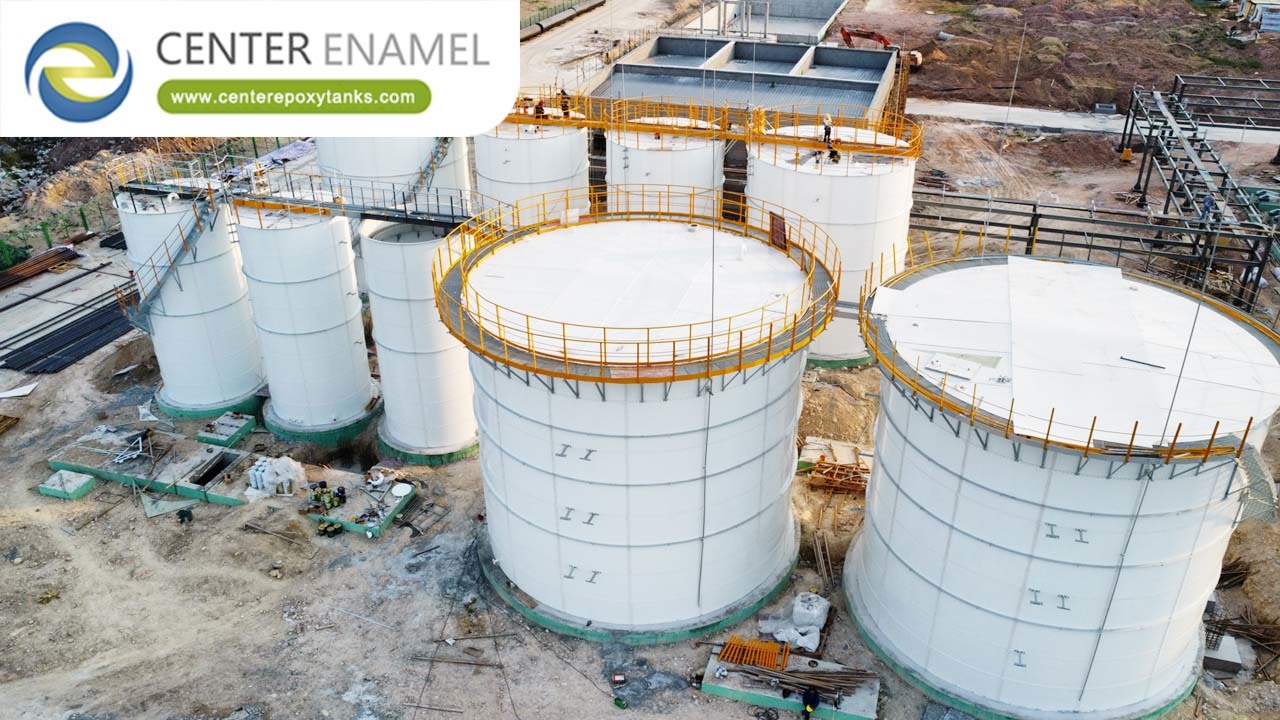
The 2026 Engineering Standard: FBE Biogas Tanks for Energy Recovery
| Place of Origin: | China |
| Brand Name: | CEC TANKS |
| Certification: | ISO 9001:2008, AWWA D103 , OSHA , BSCI |
| Model Number: | W201691123005 |
| Minimum Order Quantity: | 1set |
| Price: | $5000~$20000 one set |
| Packaging Details: | PE poly-foam between each two steel plates ; wooden pallet and wooden box |
| Delivery Time: | 0-60 days after deposit received |
| Payment Terms: | L/C, T/T |
| Supply Ability: | 60 sets per month |
|
Detail Information |
|||
| Place of Origin | China | Brand Name | CEC TANKS |
|---|---|---|---|
| Certification | ISO 9001:2008, AWWA D103 , OSHA , BSCI | Model Number | W201691123005 |
| Steel Plates Thickness: | 3mm To 12mm , Depends On The Tank Structure | Corrosion Integrity: | Excellent |
| Chemical Resistance: | Excellent | Capacity: | 20 M3 To 18,000 M3 |
| Service Life: | ≥30 Years | Permeability: | Gas / Liquid Impermeable |
| Highlight: | FBE biogas tanks for energy recovery,Fusion bonded epoxy biogas tanks,2026 engineering standard biogas tanks |
||
Product Description
The 2026 Engineering Standard: FBE Biogas Tanks for Energy Recovery
In the 2026 renewable energy landscape, the Fusion Bonded Epoxy (FBE) Biogas Tank has emerged as the definitive solution for large-scale anaerobic digestion projects. Unlike traditional storage, FBE technology provides a factory-cured, molecularly bonded polymer barrier that is impervious to the corrosive gases produced during the decomposition of organic matter.
1. Technical Authority: The 2026 Performance Matrix
Biogas environments are chemically aggressive, containing high concentrations of methane (CH4), carbon dioxide (CO2), and hydrogen sulfide (H2S). FBE tanks are engineered to maintain structural integrity under these specific pressures.
FBE Biogas Tank Engineering Specifications
| Feature | 2026 Engineering Standard | Strategic Operational Value |
| Coating Type | Fusion Bonded Epoxy (FBE) | Molecularly bonded to steel; zero porosity. |
| Design Life | 30+ Years | Drastically reduces long-term maintenance costs. |
| Corrosion Defense | pH 3 – pH 11 | Optimized for the acidic stages of anaerobic digestion. |
| Modular Design | Bolted Steel | Allows for rapid deployment in remote locations. |
2. Strategic Focus: Maximizing Biogas Recovery
In key Southeast Asian markets, particularly in the Philippines, the engineering priority for biogas projects has shifted. The primary objective is no longer simple wastewater treatment; the focus is now squarely on the importance of biogas recovery.
Why Recovery Dominates the Design Logic:
- Energy Independence: Efficient biogas recovery allows industrial facilities to convert waste into a reliable on-site power source.
- Carbon Sequestration: Capturing CH4 prevents the release of high-potency greenhouse gases, aligning with 2026 ESG mandates.
- Project ROI: In the Philippines, the economic value of recovered biogas as a fuel source often exceeds the cost savings of wastewater mitigation.
3. Advanced Technical Processes: CSTR, UASB, and Beyond
Leadership in 2026 biogas engineering is defined by the integration of FBE tanks into high-rate anaerobic processes. These systems are designed to handle varied feedstock types, from industrial wastewater to palm oil mill effluent.
- CSTR (Completely Stirred Tank Reactor): Ideal for high-solid content slurries, utilizing FBE’s smooth internal surface to reduce friction during agitation.
- UASB (Upflow Anaerobic Sludge Blanket): A high-efficiency process for industrial effluent where the tank's airtight seal is critical for methane capture.
- USR (Upflow Solid Reactor): Engineered for high-concentration organic waste, ensuring stable gas production.
- IC (Internal Circulation): High-load reactors that require the extreme structural durability provided by bolted FBE steel.
4. 2026 Installation & Global Logistics
The modular nature of bolted FBE tanks allows for high-density packing, which reduces international freight costs by up to 40%. This logistical efficiency is vital for projects in Singapore, Indonesia, Thailand, and Saudi Arabia, where rapid industrial scaling is required.
The Installation Sequence:
- Foundation Engineering: Designed using Finite Element Analysis (FEA) to support specific gravities often exceeding 1.05text{ kg/L}.
- Modular Assembly: Utilizing hydraulic jacking systems to build from the top down, increasing site safety.
- Sealing & Testing: Applying specialized EPDM or Silicone gaskets to ensure a 100% gas-tight environment for methane recovery.
5. Technical FAQ
Q: How does FBE compare to Glass-Fused-to-Steel (GFS) for biogas?
A: While both offer elite corrosion resistance, FBE provides superior impact flexibility, making it more resilient during the transport and installation phases in remote oil or biogas fields.
Q: Is FBE suitable for palm oil biogas projects?
A: Yes. FBE tanks are frequently utilized in palm oil project translations and implementations across Southeast Asia due to their resistance to organic acids.