-
Glass Fused To Steel Tanks (596)
-
Stainless Steel Tanks (434)
-
Fusion Bonded Epoxy Tanks (592)
-
Galvanized Steel Tanks (321)
-
Aluminum Dome Roofs (1316)
-
Wastewater Storage Tanks (231)
-
Welded Steel Tanks (457)
-
Pressure Vessels (295)
-
Anaerobic Digester (201)
-
Industrial Water Tanks (349)
-
Glass Lined Steel Tanks (180)
-
Bolted Steel Tanks (390)
-
Sludge Storage Tank (115)
-
Biogas Storage Tank (173)
-
Leachate Storage Tanks (133)
-
Agricultural Water Storage Tanks (179)
-
Fire Water Tank (166)
-
Grain Storage Silos (146)
-
Biogas Projects (425)
-
Wastewater Treatment Projects (788)
-
Double Membrane Roof (223)

|
FBE Water Tank: The Definitive Technical Guide to Fusion Bonded Epoxy Storage
| Place of Origin: | China |
| Brand Name: | CEC TANKS |
| Certification: | ISO 9001:2008, AWWA D103 , OSHA , BSCI |
| Model Number: | W201691123005 |
| Minimum Order Quantity: | 1set |
| Price: | $5000~$20000 one set |
| Packaging Details: | PE poly-foam between each two steel plates ; wooden pallet and wooden box |
| Delivery Time: | 0-60 days after deposit received |
| Payment Terms: | L/C, T/T |
| Supply Ability: | 60 sets per month |
|
Detail Information |
|||
| Place of Origin | China | Brand Name | CEC TANKS |
|---|---|---|---|
| Certification | ISO 9001:2008, AWWA D103 , OSHA , BSCI | Model Number | W201691123005 |
| Steel Plates Thickness: | 3mm To 12mm , Depends On The Tank Structure | Corrosion Integrity: | Excellent |
| Chemical Resistance: | Excellent | Capacity: | 20 M3 To 18,000 M3 |
| Service Life: | ≥30 Years | Permeability: | Gas / Liquid Impermeable |
| Highlight: | Fusion bonded epoxy water tank,Epoxy storage tank technical guide,FBE tank for water storage |
||
Product Description
FBE Water Tank: The Definitive Technical Guide to Fusion Bonded Epoxy Storage
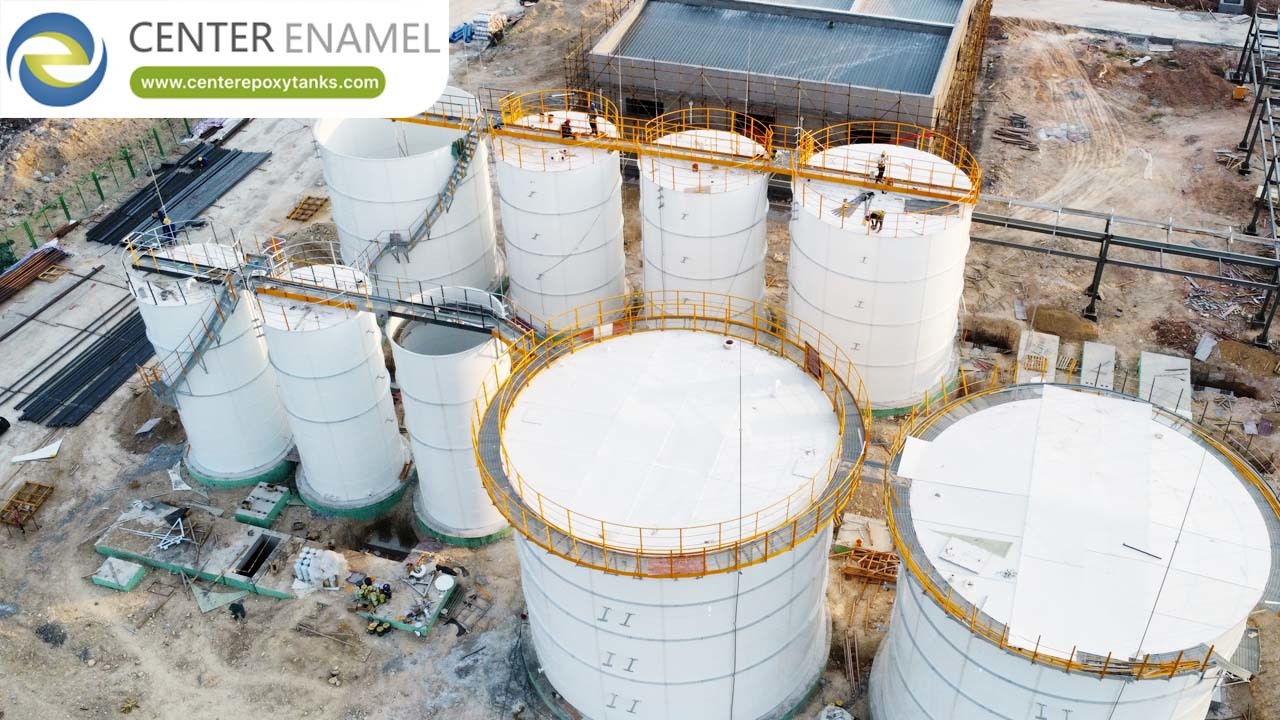
In 2026, the transition toward sustainable and rapidly deployable infrastructure has established Fusion Bonded Epoxy (FBE) water tanks as a primary choice for global liquid storage. Unlike field-applied coatings, FBE tanks utilize a factory-controlled thermoset polymer process that creates a high-tenacity, chemically inert barrier.
1. Technical Excellence: The Fusion Bonded Process
FBE is a high-performance coating where epoxy resin is electrostatically applied to a pre-heated steel substrate and thermally cured at temperatures between 180°C and 250°C. This process causes the resins to cross-link, forming a high molecular weight binder system.
Core Performance Matrix
2. Key Advantages of FBE Bolted Steel Tanks
Modern engineering favors FBE over traditional concrete or Glass-Fused-to-Steel (GFS) for specific environmental and operational profiles:
-
Field Repairability: Unlike glass-lined tanks, which can spall or crack upon impact and cannot be easily fixed, FBE coatings are resilient and can be repaired in the field using specialized epoxy kits.
-
Edge Protection: The electrostatic "powder-on-powder" application ensures complete wrap-around coverage on panel edges and bolt holes, eliminating the common failure points of galvanized or painted systems.
-
Rapid Assembly: As modular bolted systems, FBE tanks are assembled on-site using specialized sealants. This reduces installation time by up to 60% compared to concrete tanks.
-
Maintenance Efficiency: The non-porous surface inhibits the growth of algae and bacteria, making it an ideal choice for potable water storage.
3. High-Demand Industrial Applications
FBE tanks are engineered for versatility across several critical sectors:
-
Potable & Rural Water Supply: Certified to NSF/ANSI 61 and WRAS standards for safe human consumption.
-
Fire Protection Reservoirs: Integrated into industrial fire suppression systems in compliance with NFPA 22.
-
Industrial Wastewater (ETP/STP): Handles process water and mild wastewater effluents that would typically corrode unprotected steel.
-
Agricultural & DM Water: Ideal for irrigation, demineralized water, and livestock slurry storage.
4. Engineering Standards & Compliance
For global project bankability, FBE tanks are designed to rigorous international codes:
-
AWWA D103-09/19: The gold standard for factory-coated bolted steel water tanks.
-
ISO 28765:2016: Governing vitreous and porcelain enamels for bolted steel tanks.
-
ASCE 7-22: Ensuring structural resilience against high wind loads and seismic activity.
5. Frequently Asked Questions (FAQ)
Q: What is the design life of an FBE water tank?
A: With professional factory application and standard maintenance, these tanks have a design life exceeding 25–30 years.
Q: Can FBE tanks withstand coastal environments?
A: Yes. When paired with a Super Durable Polyester (SDP) exterior topcoat, FBE tanks offer excellent UV resistance and protection against salt-spray corrosion.