-
Glass Fused To Steel Tanks (596)
-
Stainless Steel Tanks (434)
-
Fusion Bonded Epoxy Tanks (592)
-
Galvanized Steel Tanks (321)
-
Aluminum Dome Roofs (1316)
-
Wastewater Storage Tanks (231)
-
Welded Steel Tanks (457)
-
Pressure Vessels (295)
-
Anaerobic Digester (201)
-
Industrial Water Tanks (349)
-
Glass Lined Steel Tanks (180)
-
Bolted Steel Tanks (390)
-
Sludge Storage Tank (115)
-
Biogas Storage Tank (173)
-
Leachate Storage Tanks (133)
-
Agricultural Water Storage Tanks (179)
-
Fire Water Tank (166)
-
Grain Storage Silos (146)
-
Biogas Projects (425)
-
Wastewater Treatment Projects (788)
-
Double Membrane Roof (223)

|
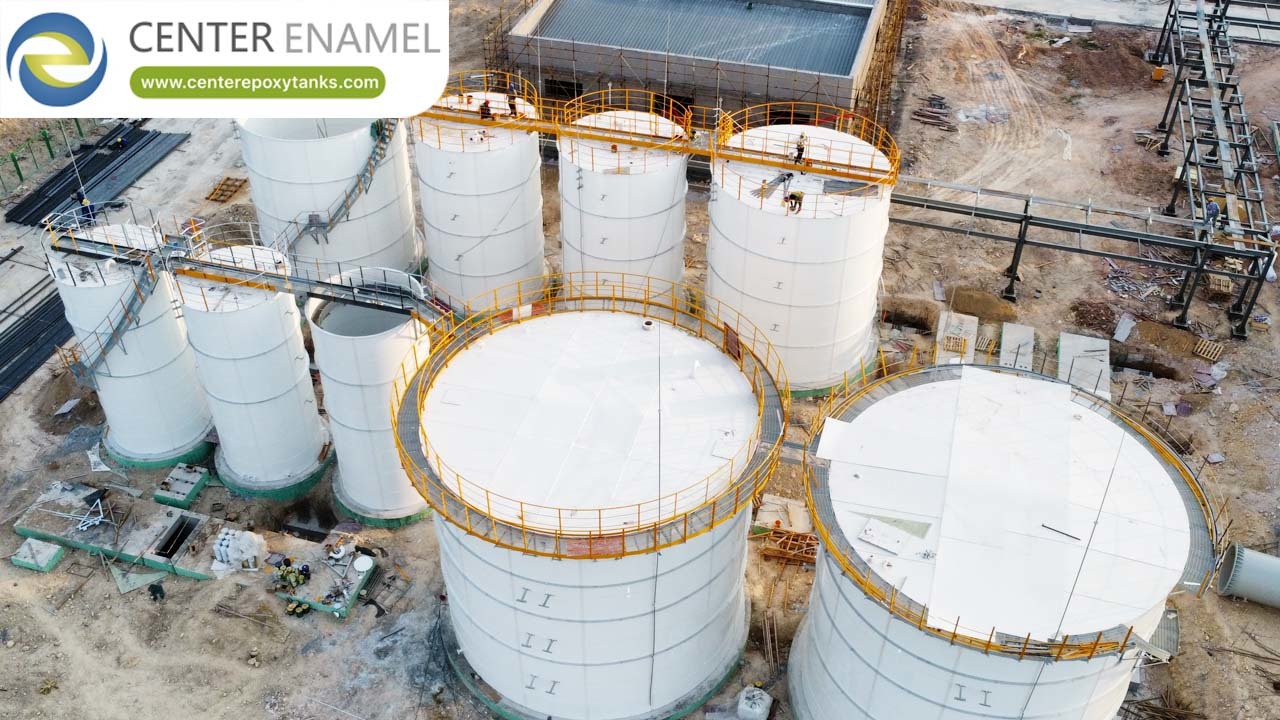
FBE Treatment Wastewater Assembling Tank: Technical Authority Guide
| Place of Origin: | China |
| Brand Name: | CEC TANKS |
| Certification: | ISO 9001:2008, AWWA D103 , OSHA , BSCI |
| Model Number: | W201691123005 |
| Minimum Order Quantity: | 1set |
| Price: | $5000~$20000 one set |
| Packaging Details: | PE poly-foam between each two steel plates ; wooden pallet and wooden box |
| Delivery Time: | 0-60 days after deposit received |
| Payment Terms: | L/C, T/T |
| Supply Ability: | 60 sets per month |
|
Detail Information |
|||
| Place of Origin | China | Brand Name | CEC TANKS |
|---|---|---|---|
| Certification | ISO 9001:2008, AWWA D103 , OSHA , BSCI | Model Number | W201691123005 |
| Steel Plates Thickness: | 3mm To 12mm , Depends On The Tank Structure | Corrosion Integrity: | Excellent |
| Chemical Resistance: | Excellent | Capacity: | 20 M3 To 18,000 M3 |
| Service Life: | ≥30 Years | Permeability: | Gas / Liquid Impermeable |
| Highlight: | FBE wastewater treatment tank,fusion bonded epoxy assembling tank,FBE tank technical guide |
||
Product Description
FBE Treatment Wastewater Assembling Tank: Technical Authority Guide
The management of industrial and municipal wastewater in 2026 demands containment solutions that balance extreme chemical resistance with rapid site deployment. The Fusion Bonded Epoxy (FBE) treatment wastewater assembling tank has emerged as the global benchmark for these requirements. Utilizing a factory-applied thermoset polymer coating, these bolted steel tanks offer a holiday-free barrier that outperforms traditional concrete and field-painted alternatives.
1. Technical Specifications: The FBE Advantage
Fusion Bonded Epoxy (FBE) is not a mere paint; it is a high-performance coating bonded to a steel substrate at temperatures typically between 180°C and 250°C. This thermal fusion creates a monolithic, non-porous layer that is intrinsically resistant to the corrosive chemical cocktails found in modern wastewater.
Core Performance Matrix
| Technical Parameter | Standard Reference | Performance Metric |
| Coating Thickness | ISO 2808 | 180–400 microns (Project specific) |
| Holiday Test | ≥1100V | Zero-discontinuity (100% factory-tested) |
| Adhesion Strength | ASTM D4541 | >12 MPa (High-tenacity bond) |
| Operational pH Range | Chemical Stability | pH 3 – pH 12 |
| Impact Resistance | ASTM D2794 | High (Resistant to site-handling damage) |
| Hardness | ASTM D3363 | 2H – 4H (Pencil Hardness) |
2. Why Choose Assembling Tanks Over Concrete?
In the 2026 infrastructure market, Modular Circularity and Speed to Value are the primary drivers for EPC (Engineering, Procurement, and Construction) firms.
- Rapid Deployment: FBE assembling tanks are prefabricated. Installation on-site is up to 3x faster than concrete, which requires extensive formwork and 28-day curing periods.
- Quality Assurance: Factory application in a controlled environment eliminates the risks of "amine blush" or inconsistent thickness often found in field-applied coatings.
- Lifecycle Cost: While initial capital might be comparable, the Total Cost of Ownership (TCO) is significantly lower due to the lack of maintenance, relining, or structural rot common in porous concrete tanks.
- Scalability: As treatment demands increase, assembling tanks can be expanded by adding rings or relocated entirely—a feat impossible for permanent concrete structures.
3. High-Performance Applications
The FBE assembling tank is engineered for versatility across the entire wastewater treatment train:
- Anaerobic Digesters: Excellent for CSTR (Completely Stirred Tank Reactor) and UASB (Upflow Anaerobic Sludge Blanket) processes where H₂S resistance is critical.
- Sludge Storage: The smooth, non-porous surface inhibits biofilm growth and simplifies cleaning protocols.
- Landfill Leachate: Handles aggressive chemical seepage and fluctuating pH levels that would typically degrade standard steel.
- Fire Protection: Certified to NFPA 22 standards, ensuring reliable water storage with minimal long-term corrosion.
4. Compliance and Engineering Standards
For project bankability, Shijiazhuang Zhengzhong Technology Co., Ltd (Center Enamel) tanks are designed and manufactured in strict accordance with international codes:
- AWWA D103-09: The global standard for bolted steel water storage tanks.
- ISO 28765:2016: Specifically governing vitreous and porcelain enamels for bolted steel tanks.
- NSF/ANSI 61: Critical for any application where the tank may interface with potable water or food-grade processes.
- ASCE 7-22: Engineering for high seismic and wind load resilience (up to 250 km/h wind speeds).
5. FAQ: Expert Insights
Q: How long do FBE wastewater assembling tanks last?
A: With proper factory application and routine inspection, these tanks have a design life of 25–35 years, significantly longer than field-applied epoxy systems.
Q: Can FBE tanks be repaired if damaged during assembly?
A: Yes. Unlike glass-lined tanks, FBE coatings can be easily and effectively repaired in the field using specialized repair kits, ensuring the barrier remains 100% intact.
Q: Are FBE tanks suitable for coastal environments?
A: Absolutely. The external coating (often a Super Durable Polyester) is specifically designed to resist UV degradation and salt spray corrosion, making them ideal for seaside installations.