-
Glass Fused To Steel Tanks (596)
-
Stainless Steel Tanks (434)
-
Fusion Bonded Epoxy Tanks (592)
-
Galvanized Steel Tanks (321)
-
Aluminum Dome Roofs (1316)
-
Wastewater Storage Tanks (231)
-
Welded Steel Tanks (457)
-
Pressure Vessels (295)
-
Anaerobic Digester (201)
-
Industrial Water Tanks (349)
-
Glass Lined Steel Tanks (180)
-
Bolted Steel Tanks (390)
-
Sludge Storage Tank (115)
-
Biogas Storage Tank (173)
-
Leachate Storage Tanks (133)
-
Agricultural Water Storage Tanks (179)
-
Fire Water Tank (166)
-
Grain Storage Silos (146)
-
Biogas Projects (425)
-
Wastewater Treatment Projects (788)
-
Double Membrane Roof (223)
|
Welded Steel Jet Fuel Storage Tanks with Internal Floating Roofs: Maintain fuel dryness and purity for safety
| Brand Name: | Shijiazhuang Zhengzhong Technology Co., Ltd (Center Enamel) |
|
Detail Information |
|||
Product Description
Welded Steel Jet Fuel Storage Tanks with Internal Floating Roofs: Maintain fuel dryness and purity for safety
In the high-stakes world of aviation, where the margins for error are virtually non-existent, the integrity of jet fuel is a primary concern. Jet fuel, specifically Jet A and Jet A-1, must meet incredibly stringent quality standards from the moment it leaves the refinery until it is pumped into an aircraft's fuel tanks. Any compromise in fuel quality—whether through the introduction of particulate matter, microbial growth, or moisture—can lead to catastrophic engine failure at high altitudes. For massive storage facilities at airports, refineries, and strategic fuel hubs, the Welded Steel Jet Fuel Storage Tank with an Internal Floating Roof (IFR) has become the industry benchmark. This specialized containment system is utilized because it is engineered to maintain fuel dryness and purity for safety, providing a controlled environment that protects the fuel from the degrading effects of the atmosphere.
Shijiazhuang Zhengzhong Technology Co., Ltd, known globally as Center Enamel, is a premier leader in the design, engineering, and fabrication of advanced aviation fuel storage infrastructure. We specialize in Welded Steel Jet Fuel Storage Tanks that integrate sophisticated Internal Floating Roof technology and external protective covers. Our engineering philosophy is centered on the principle of absolute safety through purity. We recognize that jet fuel is a highly sensitive asset that requires more than just a sturdy container; it requires a proactive preservation system. By utilizing high-grade steel and precision welding techniques, we provide a robust containment shell that complies with international aviation standards such as API 650 and Joint Inspection Group (JIG) protocols. Our tanks are designed to serve as a fortress for aviation energy, ensuring that fuel remains dry, clean, and ready for flight, thereby safeguarding passengers and flight crews around the world.
The Critical Importance of Fuel Purity and Dryness
To understand why a Welded Steel Jet Fuel Storage Tank requires an Internal Floating Roof, one must analyze the specific vulnerabilities of aviation-grade kerosene. Jet fuel is unique among refined products because of the extreme environments in which it must perform.
The Threat of Water Contamination
Water is the single most dangerous contaminant in jet fuel. Because jet fuel is more viscous than gasoline and has a density closer to water, suspended water droplets take much longer to settle at the bottom of a tank. When an aircraft climbs to high altitudes, the surrounding temperature drops significantly, often reaching levels where any dissolved or suspended water in the fuel can freeze. These ice crystals can block fuel filters and fuel lines, leading to engine starvation. Furthermore, liquid water provides a breeding ground for microbial colonies (bacteria and fungi) that feed on the hydrocarbons at the fuel-water interface, creating a corrosive sludge that can damage the tank shell and aircraft components.
The Role of the Internal Floating Roof (IFR)
In a standard fixed-roof tank, a large volume of air (the vapor space) sits above the fuel. As the tank "breathes" during day-to-night temperature cycles, moisture-laden air is drawn into this space. When the temperature drops, the water vapor condenses on the cold internal walls of the tank and falls into the fuel. The Internal Floating Roof eliminates this risk by sitting directly on the liquid surface. By removing the vapor space, the system prevents the condensation cycle entirely. This proactive approach maintains fuel dryness and purity for safety by ensuring that atmospheric moisture never has the opportunity to interact with the fuel surface.
The Strategic Integration of Aluminum Dome Roofs
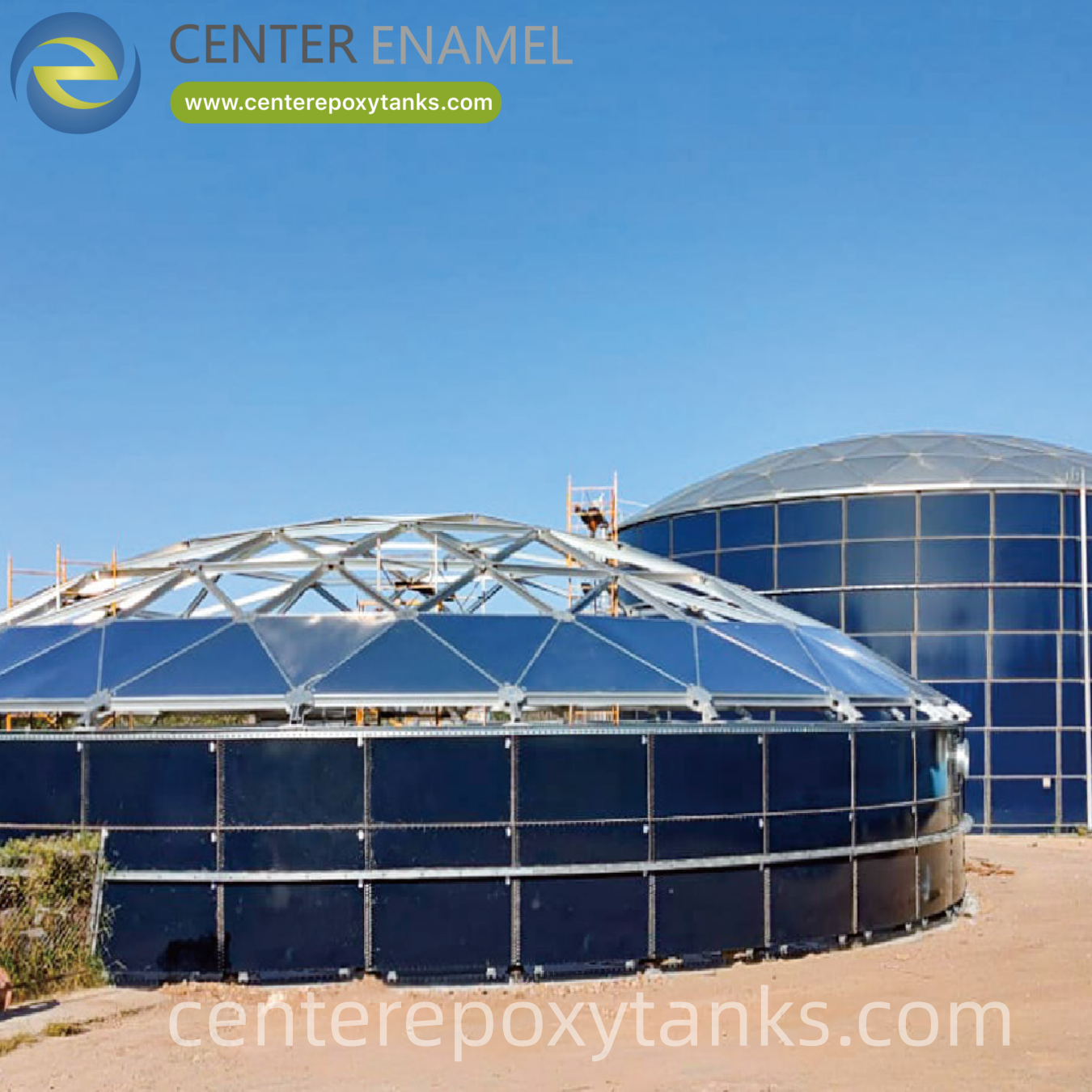
To provide a comprehensive protective envelope for aviation fuel, modern engineering standards increasingly mandate the use of Aluminum Dome Roofs in conjunction with internal floating decks. While the IFR manages the fuel surface, the Aluminum Dome Roof provides the primary external defense for the entire storage structure.
Advanced Weather Shielding
An Aluminum Dome Roof is a self-supporting, clear-span structure that covers the top of the welded steel shell. Its primary function is to provide a permanent, weather-tight seal that protects the internal floating roof from rain, snow, and wind-blown debris. Without a dome, rainwater would accumulate on the floating deck, potentially overloading its buoyancy or leaking past the seals into the high-purity jet fuel. The dome ensures that the internal components of the tank remain in a pristine, dry environment.
Maintenance-Free Durability
Aluminum is naturally resistant to atmospheric corrosion and does not require the frequent sandblasting or repainting associated with steel fixed roofs. This is a critical advantage for airport fuel farms, where maintenance activities must be minimized to avoid operational disruptions. The lightweight nature of the aluminum dome also reduces the structural load on the tank's foundation and shell, allowing for more efficient engineering designs without sacrificing strength.
Vapor Suppression and Aerodynamics
The spherical geometry of the Aluminum Dome Roof is highly effective at managing wind loads. More importantly, it creates a stagnant, stable air buffer above the internal floating roof. This configuration prevents wind-induced pressure differentials from "pulling" vapors out of the tank or forcing moist air into the seals. By stabilizing the internal environment, the dome reinforces the IFR's ability to maintain fuel dryness and purity.
Structural Excellence through Welded Steel Fabrication
The outer shell of an aviation fuel tank must provide the ultimate structural integrity to ensure secure, long-term containment. Welded Steel is the undisputed material of choice for this application due to its physical properties and reliability.
Continuous Integrity: Unlike bolted tanks, a fully welded steel tank is a monolithic structure. Precision welding ensures that every joint is as strong as the parent metal, providing a leak-proof fusion that is essential for preventing environmental contamination and maintaining the vacuum-like seal required for high-purity storage.
Resistance to Hydrostatic Stress: Large jet fuel tanks must withstand immense pressure from the contained liquid. The thickness of the steel plates is calculated based on the maximum height and density of the fuel, ensuring that the shell remains stable and perfectly cylindrical. This perfect roundness is vital for the smooth vertical movement of the Internal Floating Roof.
Compliance with Global Standards: Our welded steel tanks are engineered to comply with API 650, the global standard for atmospheric storage tanks. This includes rigorous calculations for seismic activity, wind loads, and internal pressures, ensuring that the tank remains a dependable asset even in the most challenging environmental conditions.
Internal Lining Compatibility: To further ensure fuel purity, the internal surfaces of the welded steel shell are often coated with high-performance, aviation-approved epoxy linings. These linings prevent the steel from corroding and ensure that no iron oxide (rust) particulates are introduced into the jet fuel.
Advanced Features of the IFR Sealing System
The effectiveness of an Internal Floating Roof depends entirely on the quality of its seals. To maintain fuel dryness and purity for safety, Center Enamel utilizes advanced sealing technologies that provide a continuous, airtight barrier against the tank wall.
Primary and Secondary Seals: Our IFR systems utilize a double-seal configuration. The primary seal (often a mechanical shoe or foam-filled seal) provides the initial barrier, while a secondary wiper seal ensures that any trace vapors are captured and that no atmospheric contaminants can enter the liquid space.
Full Contact Design: We offer full-contact honeycomb internal floating roofs that eliminate even the smallest pockets of air between the fuel and the deck. This is the most effective way to prevent the formation of vapor and the subsequent condensation of moisture.
Conductivity and Grounding: Because jet fuel is a static-accumulating liquid, the internal floating roof is equipped with electrical shunts and grounding cables to safely dissipate any static charges generated during the filling process, ensuring maximum fire safety.
Product Advantages and Features
The Welded Steel Jet Fuel Storage Tank with an Internal Floating Roof provides a suite of benefits that are essential for modern aviation infrastructure:
Uncompromising Purity: By blocking air and moisture, the system prevents the two primary causes of fuel degradation: oxidation and microbial growth.
Maximum Safety: Eliminating the vapor space removes the risk of an explosive fuel-air mixture forming inside the tank, protecting the airport and its personnel.
Operational Efficiency: Reducing fuel loss through evaporation provides significant economic returns over the life of the tank, while also meeting environmental regulations for vapor emissions.
Long-Term Reliability: The combination of a robust welded steel shell and a corrosion-resistant Aluminum Dome Roof ensures a service life that can span many decades with minimal maintenance.
Dynamic Response: The internal floating roof moves seamlessly with the fuel level, ensuring that the fuel surface is protected whether the tank is nearly empty or at maximum capacity.
Product Applications
The specialized design of these tanks makes them indispensable for various sectors within the aviation industry:
International Airport Fuel Farms: These facilities require massive, high-reliability tanks to store the huge volumes of Jet A-1 needed for daily flight operations.
Refinery Storage Terminals: Refineries use these tanks to hold finished jet fuel before it is pumped into pipelines or loaded onto tankers for transport.
Military Air Bases: Strategic defense facilities rely on the secure, long-term containment provided by welded steel tanks to ensure that their aircraft are always mission-ready with high-purity fuel.
Strategic National Reserves: Governments utilize these tanks for the long-term stockpiling of aviation fuel, where the preservation of quality over many years is a critical requirement.
Hydrant System Feeders: Large tanks with internal floating roofs act as the primary supply for high-pressure hydrant systems that deliver fuel directly to the aircraft at the gate.
Company Advantages: The Center Enamel Commitment
Choosing Center Enamel as your partner for aviation fuel storage means investing in a legacy of engineering precision and quality. Our Welded Steel Jet Fuel Storage Tanks are the result of a deep understanding of the unique challenges of the aviation sector.
Bespoke Engineering: We do not offer generic solutions. Every tank is custom-engineered to meet the specific requirements of the client, taking into account local climate, seismic activity, and the required flow rates for fueling.
Rigorous Quality Control: Every weld is subjected to non-destructive testing, including radiography and vacuum box testing, to ensure that the shell is completely flawless. We maintain a zero-tolerance policy for defects in aviation infrastructure.
Integrated Solutions: We provide the entire storage system, including the welded shell, the internal floating roof, and the Aluminum Dome Roof, ensuring that all components work together in perfect harmony.
Global Technical Support: From initial design to final commissioning and maintenance training, our technical teams provide comprehensive support to clients on every continent, ensuring that our storage solutions perform at the highest level throughout their service life.
Conclusion
In the aviation industry, safety is a product of meticulous attention to detail. The Welded Steel Jet Fuel Storage Tank with an Internal Floating Roof is a testament to that commitment. By creating a sealed environment that maintains fuel dryness and purity for safety, and reinforcing that environment with an Aluminum Dome Roof, we provide the most secure and reliable fuel storage solution available today. At Center Enamel, we are proud to provide the infrastructure that keeps the world's aircraft flying safely, one tank at a time.